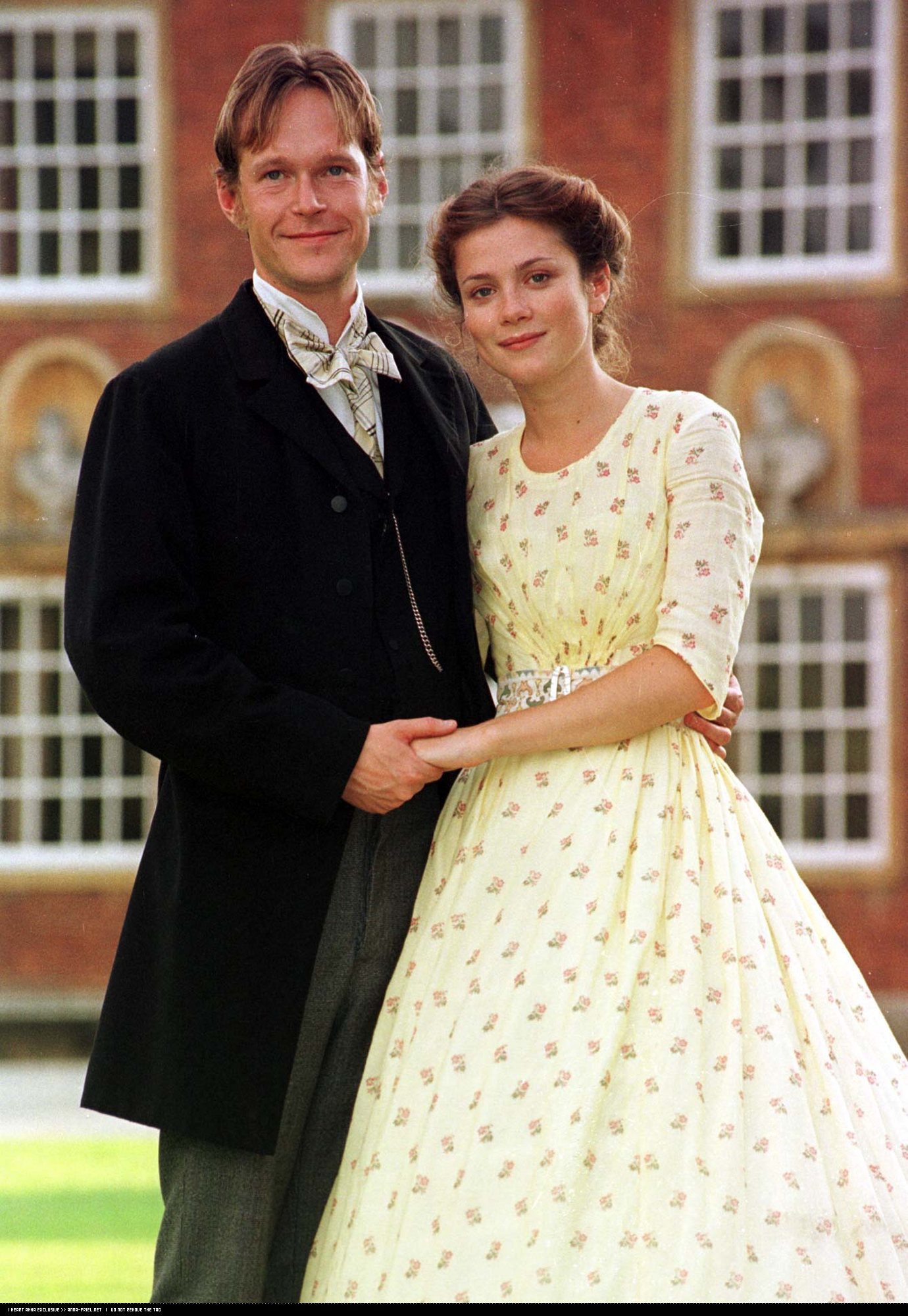
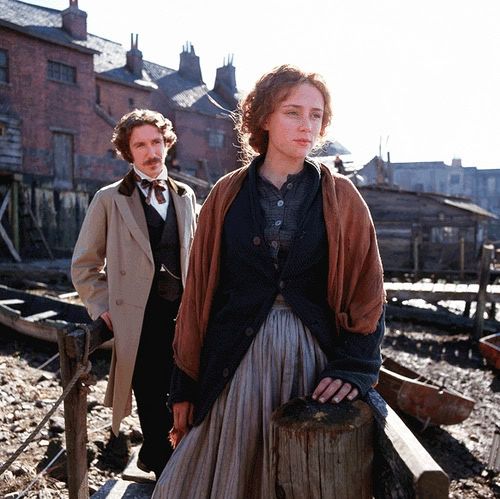
To celebrate Dickens’ Birthday on the 7th, I decided to re-watch Our Mutual Friend: one of the best miniseries ever produced by the BBC and one I had not seen in an age.
Our Mutual Friend has long been one of my favourite Dickens’ novels ( next to Great Expectations it is, indeed, my favourite) because it is such a whirling universe unto itself. We are forever see-sawed from the murky depths of the Thames to the furnished, veneered ponce and circumstance of London’s elite. It is Victorian overload: propelling us from one end of the social sphere to the other, reminding us that there was no way for middleground to subsist.
From the moment we meet the Lamleys: fated to spend a life of misapprehension due to their failure to recognize that neither had property or wealth upon their wedding, we realize that this will be Dickens' thesis on wealth and greed: on new money and old, on the violence and mystery shrouding wills and estates, of a Jarndyce and Jarndyce scale of horror at the supposed death of heir to the dust fortune, John Harmon.
Dickens does nothing shoddily and every character and every well-developed scene serves its purpose in building the blocks of this intricate universe. Our shift from Gaffer Hexam and his gloriously mute daughter Lizzie dragging corpses from the Thames on a moonlit night to the flash of the Lamley’s wedding party is meant to beguile and shake our senses and it does. Like the best adaptations, the miniseries does well at offering screentime to all major players while slowly and painstakingly doling out the Dickensian secrets of history and mystery that will all add up together in the end.
To walk you through a recap of all the minute details of the plot would be to no avail. Like all complicated Dickens (think Bleak House! Think Little Dorrit !) it is best for you to see and unravel the mysteries on your own. This was Dickens' last completed novel and it is certainly his most competent. While critics argued that Oliver Twist was a hodgepodge of loose plot ends, Dickens has tightened his style, has mapped out an impressive amount of well-developed and dimensional characters and has excelled at his forte: bringing seemingly unrelated circumstances together and welding them into revelations about the characters, their story, and the plight and injustice of society.
Our Mutual Friend is notable for colouring two of Dickens’ most beguiling heroines and their respective love stories (Bella Wilfer and John Rokesmith, Lizzie Hexam and Eugene Wrayburn), for introducing us to the charmingly bored pair of Eugene and Mortimer Lightwood, for ushering us into the world of the Boffins: well-deserving folk with hearts as big as their new fortune, to Sloppy, the slow and happy child-like mangler, to Venus who deals in bones and Rogue Riderhood who scrapes the Thames for fortune, to Bradley Headstone who hovers with passionate possession in the foreground and traipses the streets of London at night (Dickens was known to spend many evenings plotting while strolling the maze of his favoured city and we can see where his efforts paid off in his well-drawn descriptions), to Mr. Tremlow: the oft silenced voice of reason in a hodge-podge of socially stuffy nonsense.
The casting of the miniseries is perfect. I first watched it after finishing the book for a Dickens’ seminar in university and I was impressed at exactly how faithful to the broad and intimidating breadth of the text it was. Our Mutual Friend is often overlooked when we recount our favourite Dickens and our favourite characters. The problem(?) is that he wrote so prolifically and introduced us to such a multi-layered universe constructed with such intricate detail and such a plethora of pervading and flamboyant characterization---from social high to degrading low—that it is as easy to narrow in on a favourite Dickens as it is to choose a member of your family. You can’t cut one part out without understanding the whole. So, if you have yet to read Our Mutual Friend, I envy you for you have yet to stumble upon a wealth of mystery and intrigue of aliases and romance I wish I had yet unread and in my reading future…. And if you haven’t seen the miniseries yet; I highly, highly recommend it as one of the strongest BBC adaptations ever produced.
"A plate of apples, an open fire, and a 'jolly goode booke' are a fair substitute for heaven", vowed Barney. -L.M. Montgomery, 'The Blue Castle'
Thursday, February 09, 2012
Wednesday, February 08, 2012
Rachel's Favourite Romances
Soon it shall be Valentine's Day and soon this Romantic will celebrate her birthday ( which, coincidentally, is also on Valentine's Day). I wanted to share some love.... some wonderful, chocolatey, delicious, cheeks-burning, breath-catching, finger-tingling love... in all of its beautiful literary and literary adaptation form.....My countdown of my top 10 romances of all-time leading to my NO. 1 FAVOURITE
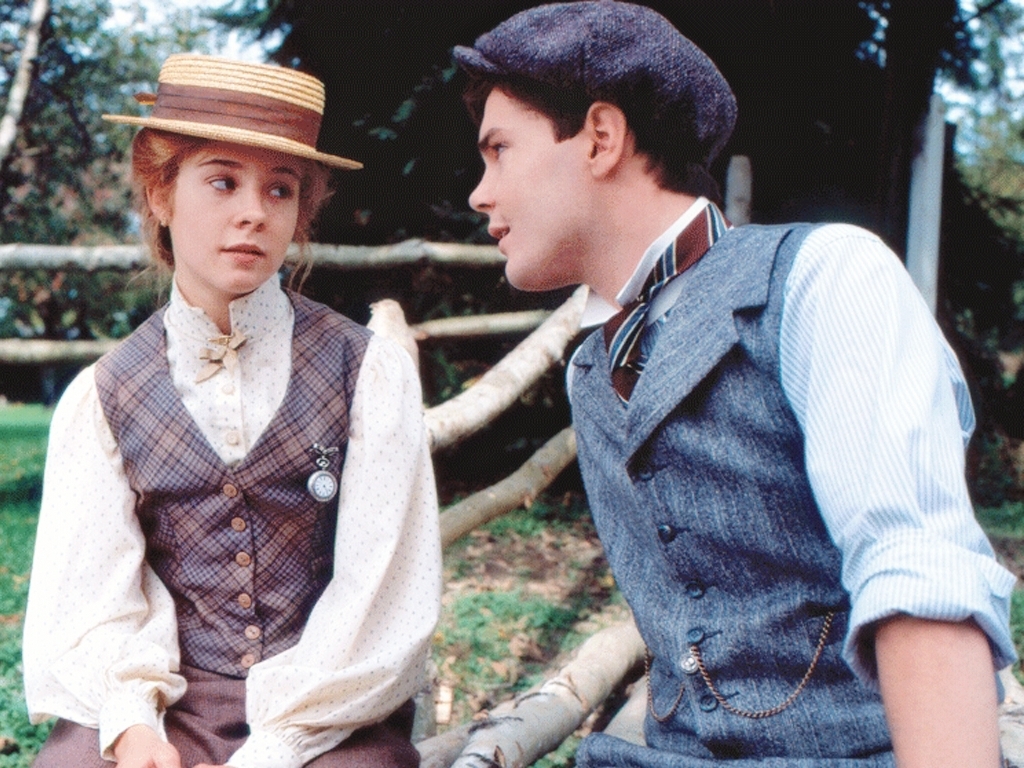
10.) Anne and Gilbert: Anne of Green Gables., etc., L. M. Montgomery
I include them because they were my first introduction to romance as a child. That infamous kissing scene on the bridge at the end of the miniseries was, in all of its dusty purpled light, my first realization of a boy and girl falling in love. I love stories of unrequited love and of passionate persistence: both of which Gilbert epitomizes in his steadfast patience for Anne. Like all of Montgomery’s love stories, she champions the imaginative, creative and eccentric woman. Gil loves Anne because she is different: thus validating so many of us ---especially in our formative years—when we creative bookish types were more likely to go off on imaginative sprees than engage in the real world. Ironically, I prefer Anne and Gil in the Sullivan miniseries to the series of books. Odd, I know.
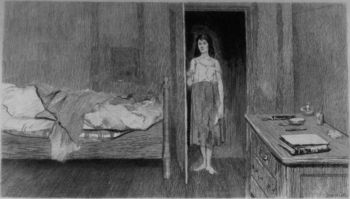
| 19th C. Illustration: Eponine: a Rose in Misery |
People will automatically assume I’m speaking to the musical and I’m not (though the musical is the strongest adaptation I have seen of the book in any medium). Eponine’s love for Marius is complex and unrequited. She, the daughter of the malevolently scheming Thenardier--- a soldier to whom Marius’ father owed his life at Waterloo--- has fallen into disgrace and poverty. Gap-toothed with stringy hair and a voice sounding like a piano missing keys, she pines for the bookish student who lives next door. She doesn’t know how to feminize herself with the coquettish glances he reaps from Cosette; but she does love devoutedly and passionately---so much so she dies in his arms after saving him from a bullet during the student uprising of the July Revolution. Eponine’s plight: from the steeped underworld of the Seine, through her goblin-like appearance hovering in the corner of some of the major intertwining plotlines gives her an almost every-person status. Like her brother Gavroche, she acts as median between the rapidly twirling plots. Her sister Azelma does not require the same flesh and blood treatment upon growing up---she is left darkly in the shadows: Eponine’s inherent goodness, her crassly endearing way of talking, her dirty vulnerability and her efforts to act on a love never reciprocated speak to one of the many emblems of pathos in this aptly titled novel.
8) Jasper and Venetia: Venetia, Georgette Heyer. Heyer is a Jane Austen fan’s dream. She pens willful heroines and whirling plots of mistaken identity from the lusciously ornamented ton to abandoned country estates. The latter finds the intelligently well-read Venetia on the shelf looking after her younger, scholarly brother and avoiding the suits of two nearby men so dull and boring and foppish she cannot bear to look at them. Enter Jasper Damerel: he is a RAKE if ever there was one. Upon their first meeting he steals a kiss from our pretty Venetia which would send London high society reeling. What follows is a long-stemmed, slow-churning romance that involves some sacrifice and some swallowed pride. What stands out is the preternatural marriage of minds that meld both Venetia and her mental equal. Their banter, his abandoned thought at his love for her and their eventual fireworks and sass proposal is one of my favourites to revisit.
7) Rhett and Scarlett, Gone With the Wind, Margaret Mitchell: When I was 10 years old I had the flu and watched Gone with The Wind which my dad had taped from television on vhs over and over again. I was in love with the dresses and the decline of the Antebellum period, yes, and also by Scarlett’s ridiculous reserves of strength and panache; but I also loved roguish Rhett, the indelible Clark Gable with his rakish moustache, dimples and alert ears. I loved the passion he felt for Scarlett and how he kept insisting that, though she try to avoid it, they were so very much the same. Later, I read the book several times and though it departs strongly from the film ( one of the rare cases where I prefer a film to its source material; perhaps because it was my first introduction to the story), it maintained the sizzle and spark I liked between Rhett and Scarlett. I love this story. I love when she slaps him! I love when he devastatingly admits to Melanie the extent of his love. Ashley Wilkes is a dull dreamer; Rhett the perfectly irreverent man of action.
6) Amy and Arthur Little Dorrit, Charles Dickens: This is another story that I prefer on screen. If you watch the Derek Jacobi version you are once again reminded of the stern age difference between Amy Dorrit and Arthur Clennam. In the recent BBC adaptation, they seem a little more on equal terms and the expression of their love and Arthur’s gradual realization is heart-stopping. Like so many of my favourite stories, it is, for the most part, one of persistent, unrequited love. Amy Dorrit falls in love with the kind-hearted Arthur near the very beginning: well aware of her social seclusion as a daughter of the Marshalsea prison and that Arthur’s interests lie elsewhere. Every moment shared between these two, as Amy steals one his shirt buttons, as Amy listens to Arthur express his love for another are heart-wrenching. Finally, when their respective fortunes seem dissolved and the mysteries of their parentage and long-time link is revealed, they can fall against each other in bliss. Arthur cannot say when he realized that Amy was a woman hidden inside the girl he was so very fond of; but relationships borne out of respect, equality and friendship are my favourite
5) Emma and Knightley, Emma, Jane Austen: Another love story born out of friendship. I really want to leave this one to the reader; but think it is best represented in the 2009 BBC version of the tale at the pivotal moment when Knightley leads Emma to the dance floor. Johnny Lee Miller does an incredible job of repressing gushing feelings, expressing confusion and inwardly recognizing the change in his feelings toward Emma:
4)Olivia and Jasper Dale, Road to Avonlea (inspired by the tales of L M Montgomery) R to A took a lot of liberties with both of these characters: sometimes melding instances from Montgomery’s Chronicles of Avonlea, The Story Girl and the Golden Road to make it more engaging for a television audience. Like Anne of GG, the love story of the stuttering befuddled inventor Jasper Dale and Sara Stanley’s adorably scattered and sweet aunt Olivia was one of my first introductions to the world of romance. I love the chemistry between these two and how they so devotedly believe in each other’s pursuits: Olivia as a newspaperwoman and Jasper as a budding inventor. It really is one of the sweetest courtships explored in television and I can’t help but re-watch the scene when Olivia *finally* tells Jasper she loves him and throws her arms around his neck, near tipping over their horse-drawn carriage in her fervor
3) Percy and Marguerite, The Scarlet Pimpernel, Baroness Orczy. The Elusive Pimpernel and the beautiful French stage actress. This is the stuff that dreams are made of. Whether in musical, televised or film format, I will never stop loving the treatment given to the dashing English aristocrat who becomes the first super-hero in many ways by disguising his identity as a clothes-obsessed fop to make several trips into Paris: only to secure the lives of those threatened by the guillotine. Percy is the perfect hero: gaily poetic, smart, intelligent and honourable and willing to sacrifice his pride to save the innocent. He is tricky and clever and balances his passion for his cause with his troubled love for his beautiful wife. When they first meet he is nothing short of besotted by her beauty and charm. Once they marry and he is misinformed as to her part in the renouncement of a prominent family, he hides his love beneath a mask that will ensure his role as the pimpernel is secure. But, even when he cannot trust her, he worships her enough to kiss the steps where her feet have trod. This story is wonderfully frustrating to the reader/audience who knows that if they JUST TALK IT OUT, the two equally capriciously clever duo will be a perfect pair. It takes a long time and a lot of misunderstanding before they finally, married as they are, are able to enjoy their deserved wedded bliss. [my favourite version]
| For the love of ALL THAT is HOLY read the BOOK! read the BOOK! I just added this for fun; but they take too many liberties in the cheesy TV show |
2) Neil MacNeill and Christy, Christy, Catherine Marshall: The devout, seeker Christian and the Agnostic Doctor. Catherine Marshall planted strands of her own history and that of her mother’s into her Christian fiction masterpiece, Christy: I argue that her father the minister is doled out in David Grantland, one of Christy’s ardent suitors when she moves to the Mission in Cutter Gap, Tennessee, while her own husband, Peter Marshall infused some of the fiery Scottish conviction of Neil MacNeill. I love this love story. I love how fascinated Neil is with Christy and how he pressures her to discover herself and her faith. Neil is a catalyst and part of their relationship involves how he can push her to tipping point and force her to discover her own values and opinions. If only every relationship had such a supremely intelligent model. MacNeill believes that “love is the most creative force in the world” and a force that spirits a young teacher to Tennessee to thaw the heart of one who long ago gave up on God is a potently creative one indeed.
![]() |
| My FAVOURITE ROMANCE OF ALL TIME |
1)Barney and Valancy, The Blue Castle, LM Montgomery:The Blue Castle is my wish book. In fact, should I ever get married, I have pictured Bala as a possible location. There are so many things I love about this: one such being the fact that Valancy falls in love with Barney long before he does her. I love stories where the female pursues the man as this is not always the most popular case in literature. Seemingly relegated to spinsterhood by her over-bearing community, Valancy changes her life at 29: at the time this was published, this was way past marriageable age where, like so many Heyer heroines, she was well on the shelf. Upon receiving the letter that will change her life, Valancy shakes off her shackles, acknowledges there is worth in defiant independence and is rewarded with romance beyond her wildest imaginings. Again, a preternatural kinship between hero and heroine pulses between Valancy and Barney who are best friends before they become lovers and lovers before they realize that their happy ending is forever after.
And, finally, my absolute favourite love story of all time is an ancient and sacred one and can be found in the Book of Ruth (read online here)
HAPPY VALENTINE'S DAY
Sixty Acres and a Bride by Regina Jennings
In Sixty Acres and a Bride we move to 19th Century Texas: the heart of the romanticized West. Here, the young Mexican widow, Rosa Garner and her mother-in-law are forced to return to the family ranch after falling on hard times. Rosa is like a flood of colour and light, breaking the American traditions with her spicy personality and exotic looks. Like the ostracized Ruth in the Bible story, Rosa is immediately an outsider and speculation as to this girl straight from mountains of Mexico leads to conflict. Rosa tries to grow accustomed to the American way; but her flavour and flair cannot help but stick out. While her exotic beauty tantalizes some; it repels others and it is in the hands of the decent Weston Garner that her fate will be changed.
Weston Garner is our Boaz of the Biblical re-telling. He is nursing his own broken heart, is steadfast and strong, is shrouded in mystery and genuine goodwill. It takes quite a lot for these two to jump through the hurdles to secure their respective happiness; but when they do, the reader is well-rewarded. Weston’s view of love as sacred and true is well-developed and happily meted out when he finally does come to an agreement with our heroine. Like the best love stories, it is not the surprise of love, rather its fulfillment and that is what makes the Book of Ruth the fairytale of the Bible (God loves a Cinderella ending as much as we do) as it does this book an inventive way of discovering a well-known tale in a different setting.
I don’t always speak to literary and descriptive devices when I write a book review; but I was taken by some of Jennings’ innovate infusion of consonance and imagery in her debut novel. A few sentences of note: “By the time the bats were swooping in the twilight…” was one such instance and “the treetops where swinging around like the tip of a whip.” I really liked the unexpected placement of these creative and colourful lines in a straight forward historical romance.
The American West has long acted as a favourite canvas for Christian historical series and I appreciate Jennings using her obvious passion for its gritty and lovely dissonance to paint the well-known story here.
Her website is here
Buy the book on amazon
Ruth is not only four chapters long (short), it's my favourite Book of the Bible. You can read it herehttp://www.readbibleonline.net/?page_id=15
note: this book has been provided for my review courtesy of Baker Publishing Group and Graf-Martin Communications, Inc. It is available at your favourite bookseller from Bethany House, a division of Baker Publishing Group.
Tuesday, February 07, 2012
200
| John Harmon wins the love of Bella Wilfer in "Our Mutual Friend" |
You let me hide between your pages when the world seemed ostracizing
Somehow you understood me so much you threw Amy Dorrit and Bella Wilfer in my way.
You hold a mirror up to myself when I am in need of self-reflection: when greed and jealousy blights my path when I need to be re-told that love leads to redemption and that characters from the lowest depths to the highest heights can pepper a graceless world with a sense of ardent light
You string romance and set my cheeks burning
You paint pathos and my eyes will never cease to tear
There are times when living in the vast world you created usurps my present reality as I slink, comfortably, as if to the hearth of a friend.
Many have been the times when I have looked up, enraptured, frazzled and heated from a spree between your pages and been surprised not to find you sitting across from me: spilling your strange head-tilts and myriad of dialects and voices from across a table or beyond my bedpost.
| Lucie and Sydney Carton in "A Tale of Two Cities" |
I have friends, yes, of the flesh and blood sort; but sometimes we imaginative types are beyond the grind of the traditional world. I yearn for sentiment and the groggy depths of your mired world; of the bells tolling and ash on cobblestone, of the wayward path that leads orphans to makeshift home and teaches the ungrateful of higher power and metes justice and humanity to those deserving.
It's not just a case of your indelible print on social construction or the way that people were forced to extend a knowing hand to charity, to wake up and realize the potently unscrupulous world around them, it is the light and happy way you doled out moments of sheer trifle.... they are, as you said, the sum of life.
| Arthur Clennam, "Little Dorrit" |
Sometimes my life is tumultuous and my world doesn't make any sense so, without you minding, I hope, I slink into yours. I have for years. You teach me about myself time and again, you urge me to strive to see people as my equals, to extend a hand of courtesy, to take a moment and steal a thought for the downtrodden. I never met you and yet I have spent more time with you than I have people of my nearest acquaintance. It's because I cannot separate myself from your thumbprint: your existence has stolen miles of my imaginary construct and not one day goes by when something you taught me: consciously or inadvertently doesn't scrape across my mind's eye.
Sunday, February 05, 2012
Author Interview: Nina Benneton, "Compulsively Mr. Darcy"
There seems to be an enduring universal passion when it comes to revisiting the world of Pride and Prejudice in both Historical fiction and Contemporary re-tellings like yours. Why do you think this particular Austen novel is the most popular when it comes to re-imagination?
Mr. Darcy and Elizabeth Bennet. Both are flawed yet relatable characters. Flawed because both have varying degrees of pride and prejudice in them. Relatable because these are the two flaws we like the least in ourselves, yet we know they're there inside us. If one considers Pride and Prejudice as simply a Literary novel, then the deep navel-contemplation by the characters about their flaws throughout the novel satisfies. If one considers this novel purely a Women's Fiction, then Elizabeth truly grew at the end to see how wrong she was to judge a bad man favorable by a pleasant countenance and gentleman-like manners, and a good man unfavorable because he appeared proud and haughty. If one considers it a Romance, what makes it so satisfying for a romance reader is how both hero and heroine overcame and grew through their pride and prejudice to a gratifying, believable happily ever after.
There are several ways to re-tell Darcy and Elizabeth's story and I have to admit, Compulsively Mr. Darcy was the most original I have read thus far ( and I have read many, fan that I am!) What led you to explore the characters in this particular way?
Oooh. A fellow fanatic! How lovely.
I wanted something in this vein, yet with some original twist. I reread and reread Pride and Prejudice, and what stood out for me was her tendency to make snap judgment of people based on the exterior. She wasn't a shallow person, but she's so convinced she's right in her initial impression of people that it's a turning point for her to acknowledge she's not as insightful as she thinks she is.
It is obvious that you are as passionate about Pride and Prejudice as the rest of us! What was your first experience with the novel and has it influenced your writing beyond Compulsively Mr. Darcy?
My first experience with Pride and Prejudice was in school. As a fourteen-year-old girl, I was enthralled with how funny Mrs. Bennet was with her theatrics and how much she resembled many of the women in my family. I thought Elizabeth should have ended up with Wickham (aghast!) or Bingley, because Mr. Darcy was just too much work. Blech. Who'd want a boyfriend that complex. He didn't seem to be a bundle of joy to be mated with for life.
Maturity and wisdom came years later, after I've gone through a few Wickhams and Bingleys in my life and was bored. Simply bored. When I stumbled into some re-imaginings and re-tellings of Pride and Prejudice, I began to look at the novel differently. It became a romance for me.
The Vietnamese setting of the novel ---and the well-researched action at the orphanage and the hospital, as well as the local flavour, is a spicy, sassy, exotic and throughly unique setting when held up against other Jane Austen "pastiches." What inspired you to set the novel here?
The exotic setting came to me because I was reading some old tabloid issues where Brad and Angelina had just adopted a Vietnamese orphan. I had some familiarity with Vietnam and adoption, and it tickled my funny bone. I had very good idea how the locals would have reacted to Brad and Angelina —a la Mrs. Bennet upon hearing Netherfield being leased by Bingley. Da Nang, Vietnam as Hertfordshire. Perfect.
Yet, I didn't want it to be a travelogue story. I wanted the setting to be organic to the story line but not overtake it. What worked in my favor was it had been some years since I last visited Da Nang, so all that was left in my memory was an emotional geography of the place, but not the guidebook details. I actually had to hit travel books and read some descriptions for research, but quite honestly, I had a migraine headache almost the entire visit (Darcy suffers from migraines in the story) so the landscape, where things were located etc… were all a blur. My weakness is that I'm the kind of person who has to be alerted to the mountain range right in front of me, for I'm always too busy trying to listen to conversations around me. In the end, I focused more on the cultural aspects of the setting.
The initial misunderstanding between Elizabeth and Darcy strays far beyond the first impressions of behavior and attitude we find in the book. Can you speak to your decision to have Elizabeth perceive Darcy's relationship with Bingley as she does?
An irreverent story needs to have a bit of a farce to it, I think, and thus the comic potential of such a misunderstanding appealed to me. Though, at first, I did hesitate to use this angle, for I was fearful of being perceived as unPC. But, you can't write 'honest and funny' if you're fearful.
Your Dr. Elizabeth Bennet is the prototype of a modern literary heroine: intellectual, independent and very much a career woman. How do you think the original Elizabeth Bennet set the stage for her fictional descendants?
I think the original Elizabeth Bennet did what many of us might not do—turn down a proposal from a rich man and a life of ease, when, at that time, marrying well was the only viable option for a woman of her genteel means.
At fourteen, when I first read Pride and Prejudice, I was coming from a place in life where I was feeling acutely the lack of material comfort, and, honestly, I thought Elizabeth was a bit of a fool to turn down an estate full of servants. (Remember, I didn't think much of Mr. Darcy, then). Teenagers tend to be very materialistic, and I was no exception.
In preparing to tell Elizabeth and Darcy's story in a modern context, did you refer to any other re-tellings of the book; or strictly to the source material?
Nina Benneton:
If I'd relied strictly on source material, I think I would not have been so bold in my attempt to write a modern myself. I'm not that talented or audacious.
When you write a modern retelling, it's very freeing in many ways because you have more leeway in character interpretations and plot. Two hundred years ought to have effected some changes. Darcy and Elizabeth and company should have evolved to fit their modern time, though still retain enough of the essentials of the originals to resonate with readers.
Yet, in many ways, it's very hard because you now do not have a rigid set of Regency rules and boundaries to keep you contained as a writer. You have to world-build and create a believable modern imitation, and that can be a daunting challenge.
Can we anticipate other revisions of Jane Austen stories penned by you in the future? What other book would you like to find a modern home for?
I'm editing a Pride and Prejdudice Regency Romantic Suspense novel that I've completed six months ago. (Simply because I wanted to explore Regency boundaries and then break them.)
I'm currently writing a time travel, haven't decided whether it would be a Jane Austen or not, since…ahem…I tend to tackle strange twists to characterizations and plots, and I may hit it too much out of the Jane Austen realm.
Northanger Abbey. Catherine Moreland as a girl from the project invited to an exclusive gated community called Northanger Abbey.
Emma as a stagemom-handler to a young actress Harriet Smith.
Find her on facebook
Find her on twitter
Goodreads
Barnes and Noble
I would like to thank Sourcebooks for the review copy and for the opportunity to interview this exciting author!
Stand-in Groom by Kaye Dacus
Anne Hawthorne is 35, overweight and married to her job as the proprietor of Happy Endings, Inc.: Bonneterre, Louisiana's prime stop for wedding planning. Successful, renowned and popular-- thanks to her panache for throwing a great wedding and for exposure in some of the South's prime social sections and magazines, Anne should be happy with the independent nature of her life. Instead, she spends her days meticulously infusing romance into the lives of other women while forcing herself to realize that her chance at the same may have left her behind.
Struggling with a broken heart, a long-time grudge that forced her life to take a completely different turn and the untimely death of her parents, Anne is certain her path will be a lonely one until George Laurence arrives on the scene. Laurence, a dashing Brit who is desperate to hang on to a Permanent Residency in the US is at the beck- and- call as personal assistant to a celebrity whose schedule keeps him from planning his own wedding. Posing as the groom, George is to accompany the pretty young fiance everywhere and make sure the wedding and engagement party come off without a hitch until the real groom can stand back in. Problem is, George is falling head-over-heels for the wedding planner who thinks he is well off the market.
I really liked the twist in Brides of Bonneterre from the traditional wedding planner chicklit tropes and its plot around "posing" for a story reminded me of Jenny B. Jones' Save the Date: a book I read at Christmas and really enjoyed. As mentioned previously, I enjoy how Dacus champions a different type of heroine in her Christian chicklit: over 30, often full-figured ,not the most graceful or well-dressed, flawed and open about their misfortune in love and willing to unabashedly bear their souls when it comes to trying to accept their singleness in a sphere where marriage and family is seen to be a natural trajectory.
I was very pleasantly surprised when what seemed to be the prime conflict in the plot was wrapped up mid-way through only to usher in another unanticipated conflict to keep Anne and George at bay from their chug to their well-deserved happy ending and I applaud Dacus for "throwing me off", as it were, as I was happy that their budding relationship loaned itself to a few more hoops to jump through.
I also very much enjoyed the quintessential Southern flavour of the book best exuded in the architecture Dacus describes, the Southern dialect dripping from the soft accents of our main characters, and the delicious dishes served which just goes to prove further the love of Southern natives for mounds of fattening, decadent food. I vacationed in New Orleans last summer and I was thrilled to revisit some of the words and labels and dishes that are completely anamolous to Louisiana. In fact, reading about the heat, the sun, the damp humidity and the yawned pace that stretches over the gorgeous old plantation homes and Victorian mansions, you quite believe you are stepping into a belle epoque.
I found some of George's British idioms to be a little scattered and heavily laid on (toodles, lord love a duck, cheerio, etc., ) and there are some italicized prayers which readers of this blog know to be a device I am not fond of; but, all-in-all, those are just little squibbles. This was a pleasant book to wile away a grey February Saturday. I purchased the Brides of Bonneteere 3-in-1 set so have just started A Menu for Romance.
Struggling with a broken heart, a long-time grudge that forced her life to take a completely different turn and the untimely death of her parents, Anne is certain her path will be a lonely one until George Laurence arrives on the scene. Laurence, a dashing Brit who is desperate to hang on to a Permanent Residency in the US is at the beck- and- call as personal assistant to a celebrity whose schedule keeps him from planning his own wedding. Posing as the groom, George is to accompany the pretty young fiance everywhere and make sure the wedding and engagement party come off without a hitch until the real groom can stand back in. Problem is, George is falling head-over-heels for the wedding planner who thinks he is well off the market.
I really liked the twist in Brides of Bonneterre from the traditional wedding planner chicklit tropes and its plot around "posing" for a story reminded me of Jenny B. Jones' Save the Date: a book I read at Christmas and really enjoyed. As mentioned previously, I enjoy how Dacus champions a different type of heroine in her Christian chicklit: over 30, often full-figured ,not the most graceful or well-dressed, flawed and open about their misfortune in love and willing to unabashedly bear their souls when it comes to trying to accept their singleness in a sphere where marriage and family is seen to be a natural trajectory.
I was very pleasantly surprised when what seemed to be the prime conflict in the plot was wrapped up mid-way through only to usher in another unanticipated conflict to keep Anne and George at bay from their chug to their well-deserved happy ending and I applaud Dacus for "throwing me off", as it were, as I was happy that their budding relationship loaned itself to a few more hoops to jump through.
I also very much enjoyed the quintessential Southern flavour of the book best exuded in the architecture Dacus describes, the Southern dialect dripping from the soft accents of our main characters, and the delicious dishes served which just goes to prove further the love of Southern natives for mounds of fattening, decadent food. I vacationed in New Orleans last summer and I was thrilled to revisit some of the words and labels and dishes that are completely anamolous to Louisiana. In fact, reading about the heat, the sun, the damp humidity and the yawned pace that stretches over the gorgeous old plantation homes and Victorian mansions, you quite believe you are stepping into a belle epoque.
I found some of George's British idioms to be a little scattered and heavily laid on (toodles, lord love a duck, cheerio, etc., ) and there are some italicized prayers which readers of this blog know to be a device I am not fond of; but, all-in-all, those are just little squibbles. This was a pleasant book to wile away a grey February Saturday. I purchased the Brides of Bonneteere 3-in-1 set so have just started A Menu for Romance.
Saturday, February 04, 2012
BBC Merlin: The Last Dragonlord
The Last Dragonlord
Okay, I can’t help myself. I have seen all four series (as televised thus far); but I just can’t quite Merlin.
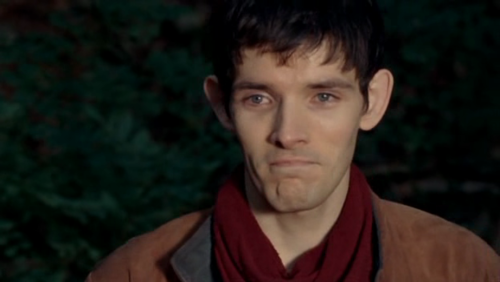
This doesn’t mean I necessarily want to go back and watch more (near the end it almost killed me it was SO REPETITIVE and silly); but it is so enjoyable that I missed blogging about it and watching Colin Morgan smile at things.
So,
THE LAST DRAGONLORD
Opening: CAMELOT
Merlin has set free THE DRAGON VOICED BY JOHN HURT and there is MUCH pandemonium throughout Camelot as the DRAGON VOICED BY JOHN HURT takes revenge on Uther for forbidding magic and chaining him in the bowels of the dungeon and so on and so forth.
DRAGON VOICED BY JOHN HURT: *breathes a lot of fire and propels a lot of destruction*
ARTHUR: OH NO! Dragon terror. Whatever shall we do?
UTHER PENDRAGON (looks like Rupert Giles): KILL ALL MAGICIANS
GAIUS: My Lord, I think we need a Dragonlord
UTHER PENDRAGON(looks like Rupert Giles): this is obviously the work of Magic. KILL EVERYBODY. Also, I think I KILLED all the dragonlords because they were MAGIC and in case you haven’t heard, I HATE MAGIC as will my son and heir after I am gone when he is King so watch out, magicians. I hope there are NO magicians here in the castle at all … because that, well…. that would just be dramatic foreshadowing!
MERLIN: *whistles and looks sheepishly away*
Meanwhile, back at Gaius’ house:
Merlin: Arthur and I are gonna go look for help with the dragon problem
Gaius: fortuitous! I know of a dragonlord.
Merlin: I thought they were dead. All of them!
Gaius: no! there is one left. I helped him escape under Uther’s dastardly purge of magicians. His name is Balinor. He will be played by John Lynch. Also, he is your father.
Merlin: WHAAAT???????
--Merlin and Arthur GO TO FIND BALINOR
Meanwhile at BALINOR’S CAVE:
Arthur is ASLEEP
John Lynch: I am grumbly and my hair is long and straggy and oily because I have left the world to hide my dragonlord abilities in shame. I don’t want to help Uther. I hope the dragon destroys Camelot because I am bitter. Though, I am bitter, I have very compassionately soulful eyes, rather like a young warlock with prominent ears who shall remain nameless.
Merlin: I thought you would help us! Gaius said you would help us! I am so disappointed *does not tell Balinor he is his son. Just mopes*
John Lynch: Fine! I’m over being bitter. I will help you.
--John Lynch, Arthur and Merlin leave the CAVE and head back towards Camelot through the forest
It is NIGHT, they make camp:
Arthur is ASLEEP
Merlin: By the way, John Lynch, I am Merlin. I am your son.
John Lynch: WHAT? That’s COOL! I am now more ridiculously fond of you than I was before. Look, your ears!
Merlin: Will you teach me how to tame dragons and stuff? I have magic? See? *is all bright-eyed with endearing boyish WONDERMENT and ACCEPTANCE*
John Lynch: Go to sleep. I will carve you a dragon out of driftwood
Merlin: OK!
Meanwhile, it is MORNING and ARTHUR wakes up and HENCEFORTH will NOT SHUT up and will interrupt EVERY DRAMATICALLY TENSE AND EMOTIONALLY MOVING MOMENT with his PROPENSITY to NOT SHUT UP.
Arthur: PRAT
Merlin: I think we are being intercepted by baddies in the forest. That NEVER happens in this show! Look, they come out of NOWHERE!
John Lynch: Merlin, Look out!
*dives in front of an ARROW and DIES!*
Merlin: Oh no! I just met you…. NOOOOOOOOOOOOOOOOOOOOOOOOOOOOOOOOOOO (indeed, there is slow motion)
John Lynch: I am proud that you are my son
Arthur: WILL NOT SHUT UP
Merlin: sniff….
MEANWHILE, BACK at the CASTLE:
Arthur: The last dragonlord is dead so I am gonna take some knights out there and END THIS!
Okay, I can’t help myself. I have seen all four series (as televised thus far); but I just can’t quite Merlin.
This doesn’t mean I necessarily want to go back and watch more (near the end it almost killed me it was SO REPETITIVE and silly); but it is so enjoyable that I missed blogging about it and watching Colin Morgan smile at things.
So,
THE LAST DRAGONLORD
Opening: CAMELOT
Merlin has set free THE DRAGON VOICED BY JOHN HURT and there is MUCH pandemonium throughout Camelot as the DRAGON VOICED BY JOHN HURT takes revenge on Uther for forbidding magic and chaining him in the bowels of the dungeon and so on and so forth.
DRAGON VOICED BY JOHN HURT: *breathes a lot of fire and propels a lot of destruction*
ARTHUR: OH NO! Dragon terror. Whatever shall we do?
UTHER PENDRAGON (looks like Rupert Giles): KILL ALL MAGICIANS
GAIUS: My Lord, I think we need a Dragonlord
UTHER PENDRAGON(looks like Rupert Giles): this is obviously the work of Magic. KILL EVERYBODY. Also, I think I KILLED all the dragonlords because they were MAGIC and in case you haven’t heard, I HATE MAGIC as will my son and heir after I am gone when he is King so watch out, magicians. I hope there are NO magicians here in the castle at all … because that, well…. that would just be dramatic foreshadowing!
MERLIN: *whistles and looks sheepishly away*
Meanwhile, back at Gaius’ house:
Merlin: Arthur and I are gonna go look for help with the dragon problem
Gaius: fortuitous! I know of a dragonlord.
Merlin: I thought they were dead. All of them!
Gaius: no! there is one left. I helped him escape under Uther’s dastardly purge of magicians. His name is Balinor. He will be played by John Lynch. Also, he is your father.
Merlin: WHAAAT???????
--Merlin and Arthur GO TO FIND BALINOR
| John Lynch! What are YOU doing here? |
Meanwhile at BALINOR’S CAVE:
Arthur is ASLEEP
John Lynch: I am grumbly and my hair is long and straggy and oily because I have left the world to hide my dragonlord abilities in shame. I don’t want to help Uther. I hope the dragon destroys Camelot because I am bitter. Though, I am bitter, I have very compassionately soulful eyes, rather like a young warlock with prominent ears who shall remain nameless.
Merlin: I thought you would help us! Gaius said you would help us! I am so disappointed *does not tell Balinor he is his son. Just mopes*
John Lynch: Fine! I’m over being bitter. I will help you.
--John Lynch, Arthur and Merlin leave the CAVE and head back towards Camelot through the forest
It is NIGHT, they make camp:
Arthur is ASLEEP
Merlin: By the way, John Lynch, I am Merlin. I am your son.
John Lynch: WHAT? That’s COOL! I am now more ridiculously fond of you than I was before. Look, your ears!
Merlin: Will you teach me how to tame dragons and stuff? I have magic? See? *is all bright-eyed with endearing boyish WONDERMENT and ACCEPTANCE*
John Lynch: Go to sleep. I will carve you a dragon out of driftwood
Merlin: OK!
Meanwhile, it is MORNING and ARTHUR wakes up and HENCEFORTH will NOT SHUT up and will interrupt EVERY DRAMATICALLY TENSE AND EMOTIONALLY MOVING MOMENT with his PROPENSITY to NOT SHUT UP.
Arthur: PRAT
Merlin: I think we are being intercepted by baddies in the forest. That NEVER happens in this show! Look, they come out of NOWHERE!
John Lynch: Merlin, Look out!
*dives in front of an ARROW and DIES!*
Merlin: Oh no! I just met you…. NOOOOOOOOOOOOOOOOOOOOOOOOOOOOOOOOOOO (indeed, there is slow motion)
John Lynch: I am proud that you are my son
Arthur: WILL NOT SHUT UP
Merlin: sniff….
MEANWHILE, BACK at the CASTLE:
Arthur: The last dragonlord is dead so I am gonna take some knights out there and END THIS!
Merlin: sniff…
Uther Pendragon (looks like Rupert Giles) That’s too bad. But, he got what he deserved, stupid magician
Merlin: sniff MEANWHILE, back at GAIUS’ house
Gaius: So you see, Merlin, conveniently your dragonlord powers are inherited from your father---passed down from son to son…. And, though I never mentioned any of this before because the lore never really fit into the plotlines in the first two series, you are only dragonlord when your father is dead. And, it appears your father is dead. So, go out and get the dragon.
MEANWHILE, in Arthur’s Chambers:
Merlin: helps Arthur with his armor. Is sad.
Arthur: WILL NOT SHUT UP
Merlin: I will go with you to defeat the dragon
Arthur: WILL NOT SHUT UP *but endearingly gives Merlin a playful punch*
--The Knights of Camelot and Arthur and Merlin go forth to DEFEAT THE DRAGON
Dragon Voiced by John Hurt: GRRRROWL!
Arthur: is knocked unconscious as, conveniently, are ALL THE OTHERS except for MERLIN…
Merlin: *in angry latin-like chant* I am now a dragon! Look, I am tearing because I am so EMOTIONALLY INVESTED IN THIS ROLE and because MY FATHER just DIED And I CAN FEEL HIM WITH ME rather like SIMBA CAN FEEL MUFASA when he is DEFEATING SCAR.
Dragon Voiced by John Hurt: I will do your bidding, young warlock/dragonmaster
Merlin: Go away and leave Camelot alone!
Gaius: So you see, Merlin, conveniently your dragonlord powers are inherited from your father---passed down from son to son…. And, though I never mentioned any of this before because the lore never really fit into the plotlines in the first two series, you are only dragonlord when your father is dead. And, it appears your father is dead. So, go out and get the dragon.
MEANWHILE, in Arthur’s Chambers:
Merlin: helps Arthur with his armor. Is sad.
Arthur: WILL NOT SHUT UP
Merlin: I will go with you to defeat the dragon
Arthur: WILL NOT SHUT UP *but endearingly gives Merlin a playful punch*
--The Knights of Camelot and Arthur and Merlin go forth to DEFEAT THE DRAGON
Dragon Voiced by John Hurt: GRRRROWL!
Arthur: is knocked unconscious as, conveniently, are ALL THE OTHERS except for MERLIN…
Merlin: *in angry latin-like chant* I am now a dragon! Look, I am tearing because I am so EMOTIONALLY INVESTED IN THIS ROLE and because MY FATHER just DIED And I CAN FEEL HIM WITH ME rather like SIMBA CAN FEEL MUFASA when he is DEFEATING SCAR.
Dragon Voiced by John Hurt: I will do your bidding, young warlock/dragonmaster
Merlin: Go away and leave Camelot alone!
| Reason we watch the BBC Merlin: I LOVE this kid. |
Dragon Voiced by John Hurt: I guess!
Arthur wakes up and WILL NOT SHUT UP
Merlin: you slayed (slew?) the dragon, Arthur. You are a hero!
Arthur*clueless*:AWESOMEMeanwhile, back at Camelot:
Arthur: I DEFEATED THE DRAGON *hugs Guinevere*
Merlin: I DEFEATED THE DRAGON *hugs Gaius*
The End
Thursday, February 02, 2012
Just in Time for Valentine's Day: Sourcebooks E-Book Promotion
SPECIAL VALENTINE E-BOOK PROMOTION froom SOURCEBOOKS
Do you love Love and Romance?....especially in February?
Then you might want to consider stocking up on some of these spicy titles currently on promotion from our friends at Sourcebooks!
Until February 15th, 2012, a select number of titles found here on the Sourcebooks website are on special. From FREE to 2.99 a plethora of romantic titles are easily purchased and downloadable. I'd like to highlight two of the titles below: First, who doesn't want to read a book called The Man Who Loved Pride and Prejudice?
Secondly, I am an avid reader of Smart Bitches, Trashy Books ---'cause those gals are HILARIOUS and Everything I Know About Love I Learned From Romance Novels was written by "Smart Bitch" Sarah Wendell.
Sourcebooks often has e-book specials so make sure you schedule some return visits to their website
Do you love Love and Romance?....especially in February?
Then you might want to consider stocking up on some of these spicy titles currently on promotion from our friends at Sourcebooks!Until February 15th, 2012, a select number of titles found here on the Sourcebooks website are on special. From FREE to 2.99 a plethora of romantic titles are easily purchased and downloadable. I'd like to highlight two of the titles below: First, who doesn't want to read a book called The Man Who Loved Pride and Prejudice?
Secondly, I am an avid reader of Smart Bitches, Trashy Books ---'cause those gals are HILARIOUS and Everything I Know About Love I Learned From Romance Novels was written by "Smart Bitch" Sarah Wendell.Sourcebooks often has e-book specials so make sure you schedule some return visits to their website
Wednesday, February 01, 2012
In which I write about "Great Expectations" for FEMNISTA
Hello all, Femnista is celebrating the Dickens Bicentenary with an issue wholly devoted to the Great Victorian Author we LOVE!
My article can be found here on p.26 entitled "Unconditional Love" and our good friend Gina (of Dickensblog) also has an exceptionally eye-opening piece about the enigma that is Sydney Carton.
As per always, there is a faith-driven slant to Femnista matched with some great literary thoughts and ideas. I was super excited to be part of this endeavour.
Check out at Charity's Place for more editions of this awesome e-zine.
I will be featured in two upcoming editions of Femnista as well and will keep you posted when they go live!
My article can be found here on p.26 entitled "Unconditional Love" and our good friend Gina (of Dickensblog) also has an exceptionally eye-opening piece about the enigma that is Sydney Carton.
As per always, there is a faith-driven slant to Femnista matched with some great literary thoughts and ideas. I was super excited to be part of this endeavour.
Check out at Charity's Place for more editions of this awesome e-zine.
I will be featured in two upcoming editions of Femnista as well and will keep you posted when they go live!
Subscribe to:
Posts (Atom)