For the 8th (8th!!!) time, Lynn Austin won the Christy Award for Best Historical novel. Far and away she has won more Christys than any other author and deservedly so: she is the best in the business.
Read my review of the award-winning Wonderland Creek
Read the full list of Christy Award winnners here
Showing posts with label christy awards. Show all posts
Showing posts with label christy awards. Show all posts
Tuesday, July 17, 2012

Wednesday, May 04, 2011
Courting Miss Amsel by Kim Vogel Sawyer

Courting Miss Amsel was the perfect Easter read to take to my favourite little market/coffeeshop in my hometown for the long weekend. It was definitely a cozy book and wills in the spring with its colourful world and warm-fuzzy feelings. We Christians LOVE our one-room-schoolhouse-marm stories and Ms. Edythe Amsel was the perfect match for the delightful, rambunctious and high spirit litter of children she was supplied with. She had the spunk and innovation of a teacher like Anne’s Miss Stacey ( see Anne of Green Gables) even when pestered by an older, mischevious student ( see Lundy Taylor in Catherine Marshall’s Christy). She met each challenge head on and with a surprisingly independent intelligence all while ironing out wrinkles in her personal life, learning to reconcile her past with her promising future and drawing closer to a God she had never learned to lean on.
Two of Miss Amsel’s favourite students ( and the reader will learn why when they encounter these endearing boys), are the blonde-curled nephews of upstanding workman Joel Townsend: a husky, kind-hearted man who raises his orphaned nephews as if they are his own. There are many touching scenes developing this family dynamic. When Joel sees how deeply and genuinely Edythe cares for his charges and how the sun catches the glistening lines of her well-manicured hair, he falls promptly in love. Circumstances, misunderstandings and timidity keep them both from acknowledging their feelings for one another, though the romance blossoms, slowly, swiftly and gradually with a knowing wink at the reader who is eons ahead: waiting for the clueless lovers to catch up.
One of the most interesting strands of the novel was Edythe’s burgeoning interest in feminine equality: especially pertaining acts forbidding women to own land. At one point, she causes more than bit of a kerfuffle with the town council when she is inspired to take her students to hear the famed Susan Anthony speak. If I have one criticism about the book, it is that this wasn’t pursued more ( however, Edythe’s growing interest and passion is left high and prospective at the end--- and perhaps, someday, Sawyer could think of writing a sequel). I completely related with Joel and his desire to find a mother for his boys in the same way I understood Edythe’s conflicts and crises of faith. This was a solid, engaging read with lots of historical anecdotes and tidbits painting an accurate picture of a young teacher in the latter 19th Century. In my opinion, this is Kim Vogel Sawyer’s strongest offering to date.
My thanks to Bethany House for the review copy
Friday, October 15, 2010
Courting Morrow Little by Laura Frantz


This is one spicy Christian novel. I loved Courting Morrow Little It shook up the tradition of historical Christian fiction quite a bit and was an earthy and passionate read. Morrow Little has recently returned to frontier Kentucke life following a stint in "civilized" Philadelphia with her dress-maker aunt. Back with her widowed father, Morrow tries to reconcile her future with the Shawnee Warrior attack that killed her mother and younger sister. Her brother, Jess, as is made apparent in an opening flashback, is never found. Though her minister father reaches out to the Shawnee ( especially Surrounded by the Enemy and his son, Red Shirt), Morrow consistently struggles with comprehension of a merciless act. How could an all-loving God expect her to forgive the warriors that stole such a vital part of her childhood?
Pursued by a dashing redcoat and many of the town's more affluent beaux, Morrow finds herself at a crossroads as she spends more and more time with Red Shirt ( so called as a play on British "red coat" when he acts as a spy for the British Army). As she inches closer and closer to forgiveness she finds the Shawnee way of life and adventuresome grasp of nature unsettlingly attractive. As Red Shirt reveals more of his past ( his mother was a white woman held captive by the Shawnee) and his decision to follow his father and embrace the Shawnee way of life, Morrow becomes beguiled by the people who once so repulsed and frightened her. Embracing forgiveness ultimately leads to a forbidden love. The chemistry between the hero and heroine of this novel was palpable.
Often Christian readers talk about Julie Lessman and how she ignites a passionate, physical spark in a relatively tame genre... I found Frantz's book to contain this amount of spice... and more. It certainly doesn't hinge on indecent, rather threads a passionate and physical attraction between two young people from opposite walks of life. A fun, sensual book, Courting Morrow Little reclaims a healthy normalcy often lost in overtly "preachy" Christian fiction. Morrow is a living, breathing human girl whose religious walk is made more believable due to her wrestling with growing attraction. Not once is God or Faith absent; rather woven seamlessly into the infrastructure of a playful and passionate historical romance. Frantz's attention to historical detail and dialect (especially in her knowledge of Shawnee language) was quite welcome. A sassy, intelligent read, Courting Morrow Little strays from conservative Christian historicals. Frantz has embraced a time and locale unique to Christian fiction and placed an indelible stamp on it.
As mentioned, I am privileged enough to be reading for the historical category of the INSPYs this year and immediately ordered this alongside The Frontiersman's Daughter when I learned of Frantz's appearance on the shortlist.
Has my reading ever sparkled this week!
Check out Laura's website: she likes the BBC North and South and ( as is evident from The Frontiersman's Daughter) has a thing for Neil MacNeill from Christy by Catherine Marshall. A literary kindred spirit, methinks. She also lists The Blue Castle as one of her favourite books and readers of this blog know that is a HUGE thing for me....
Friday, April 30, 2010
An Absence So Great by Jane Kirkpatrick

rating: ***
publisher: WaterBrook
An Absence So Great by Jane Kirkpatrick continues where the excellent A Flickering Light left off. Small-town girl Jessie has honed her photography skills thanks to preparatory apprentice work at the Bauer Studio. In possession of her own camera and fleeing the budding mutual attraction she shares with the very married FJ Bauer, Jessie strives to carve her own path in a society where women’s professional roles are limited.
I really enjoyed the unique premise of the story--- especially in the canon of Christian Historical fiction. Rarely is the romance pursued a forbidden one bordering on an extramarital affair--- a heartbreakingly valid one, here, at that. The story also resonates truth: with striking verisimilitude ( we can thank the source, Kirkpatrick’s feisty great grandmother, for this page turner).
As featured in the first book, photographs and Jessie’s comments on their light and technique and also their back-story help transplant the reader into Jessie’s world.
While Jessie is a flawed character ( refreshingly and believably so), I rooted for her as she endured the prejudices of the era: including one section of the novel when Jessie has trouble securing a bank loan for her own studio because of her sex and the rather harsh treatment given her by FJ’s wife as well as her sternly religious mother.
A real story well-drawn and expertly told, I was pleased to read another erudite addition of Kirkpatrick’s ever-growing bibliography of excellent fiction.
Congratulations to Jane Kirkpatrick for her Christy nomination for the first book in the series. Read my review of A Flickering Light here
Thanks to WaterBrook for the review copy!
I really enjoyed the unique premise of the story--- especially in the canon of Christian Historical fiction. Rarely is the romance pursued a forbidden one bordering on an extramarital affair--- a heartbreakingly valid one, here, at that. The story also resonates truth: with striking verisimilitude ( we can thank the source, Kirkpatrick’s feisty great grandmother, for this page turner).
As featured in the first book, photographs and Jessie’s comments on their light and technique and also their back-story help transplant the reader into Jessie’s world.
While Jessie is a flawed character ( refreshingly and believably so), I rooted for her as she endured the prejudices of the era: including one section of the novel when Jessie has trouble securing a bank loan for her own studio because of her sex and the rather harsh treatment given her by FJ’s wife as well as her sternly religious mother.
A real story well-drawn and expertly told, I was pleased to read another erudite addition of Kirkpatrick’s ever-growing bibliography of excellent fiction.
Congratulations to Jane Kirkpatrick for her Christy nomination for the first book in the series. Read my review of A Flickering Light here
Thanks to WaterBrook for the review copy!
Monday, January 25, 2010
Thicker than Blood by C.J. Darlington

rating: ***
publisher: Tyndale
First off, it is nice to kick off my return from a holiday hiatus from blogging with a new author.
Thicker Than Blood by C.J. Darlington smells of old books and promise and is a welcoming frosty January read.
I must admit I have been impressed with C.J. Darlington’s tenacity in promoting her book. She has used an author’s seemingly most valuable marketing resource ( the internet) to tweet, facebook and blog about her first novel.
Moreover, I was eager to read the book because Darlington had won a major first writing award from Tyndale House for it. I think that is incredible and I congratulate her on her meticulous work. You glean from her bio and from the book itself that this is a labour of love and interest that has been lulling around in Darlington’s mind for a long while.
Christy is overcoming an addiction to alcohol and addressing issues of loneliness and the abandonment of love when the unthinkable happens: her beloved job at an Antiquarian bookstore and her burgeoning friendship with co-worker Hunter is disrupted but the sinister doings of Vince, an old flame.
Christyfinds herself drawn back to her roots--- and in particular the sister she has not seen in years ----to try and patch together the fragments of a life she learns is still valued: as valued as the first edition Twains and Hemingways she finds at auction.
Overtly Christian and filled with themes of redemption and grace, Thicker Than Blood is a thesis on the power of family, God and change ….
I commend Darlington on her first-hand knowledge of the antiquarian book world. I found Hunter and Christy's forays into auctions and appraisals fascinating and Darlington’s fascination with the world was meted out in a true and sustained fashion throughout the novel.
There were a few “rookie”moments that trailed the book:
First, the shaky transition from Christy's story and life to May’s didn’t flow smoothly. Secondly, the dialogue at times seemed forced and stiff as if taken straight from a Writer’s How-To guide.
Finally, Darlington doesn’t have a convincing grasp of anything secular: possession, tumultuous relationships, alcoholism: these all seemed like inserted bits of research and were not naturally ingrained in the novel.
Darlington is proud of her home-schooled Christian heritage but in this rare fact a writer’s background adds a friction and strips some of the validity and natural fruition of some very importantly bold and over-arching themes.
I am in no way suggesting a writer become “method” in obtaining this sort of information--- but when it is forced it is something very noticeable and can detract from the book’s potential to slip into the secular realm.
I was so happy for the chance to review this book because Darlington’s personality and passion shine through: two things I grant great merit to when discovering an author for the first time.
The book was not pitch-perfect but it does show some great seeds of potential. I look forward to reading more from Darlington---especially if infused with her first-hand and erudite knowledge of the antiquarian book world.
Thicker Than Blood by C.J. Darlington smells of old books and promise and is a welcoming frosty January read.
I must admit I have been impressed with C.J. Darlington’s tenacity in promoting her book. She has used an author’s seemingly most valuable marketing resource ( the internet) to tweet, facebook and blog about her first novel.
Moreover, I was eager to read the book because Darlington had won a major first writing award from Tyndale House for it. I think that is incredible and I congratulate her on her meticulous work. You glean from her bio and from the book itself that this is a labour of love and interest that has been lulling around in Darlington’s mind for a long while.
Christy is overcoming an addiction to alcohol and addressing issues of loneliness and the abandonment of love when the unthinkable happens: her beloved job at an Antiquarian bookstore and her burgeoning friendship with co-worker Hunter is disrupted but the sinister doings of Vince, an old flame.
Christyfinds herself drawn back to her roots--- and in particular the sister she has not seen in years ----to try and patch together the fragments of a life she learns is still valued: as valued as the first edition Twains and Hemingways she finds at auction.
Overtly Christian and filled with themes of redemption and grace, Thicker Than Blood is a thesis on the power of family, God and change ….
I commend Darlington on her first-hand knowledge of the antiquarian book world. I found Hunter and Christy's forays into auctions and appraisals fascinating and Darlington’s fascination with the world was meted out in a true and sustained fashion throughout the novel.
There were a few “rookie”moments that trailed the book:
First, the shaky transition from Christy's story and life to May’s didn’t flow smoothly. Secondly, the dialogue at times seemed forced and stiff as if taken straight from a Writer’s How-To guide.
Finally, Darlington doesn’t have a convincing grasp of anything secular: possession, tumultuous relationships, alcoholism: these all seemed like inserted bits of research and were not naturally ingrained in the novel.
Darlington is proud of her home-schooled Christian heritage but in this rare fact a writer’s background adds a friction and strips some of the validity and natural fruition of some very importantly bold and over-arching themes.
I am in no way suggesting a writer become “method” in obtaining this sort of information--- but when it is forced it is something very noticeable and can detract from the book’s potential to slip into the secular realm.
I was so happy for the chance to review this book because Darlington’s personality and passion shine through: two things I grant great merit to when discovering an author for the first time.
The book was not pitch-perfect but it does show some great seeds of potential. I look forward to reading more from Darlington---especially if infused with her first-hand and erudite knowledge of the antiquarian book world.
I would very much like to thank C.J. Darlington for the opportunity to read her promising first novel.
Visit C.J. here; follow her updates on the Christian culture world at TitleTrakk and follow C.J. on twitter!
Monday, October 26, 2009
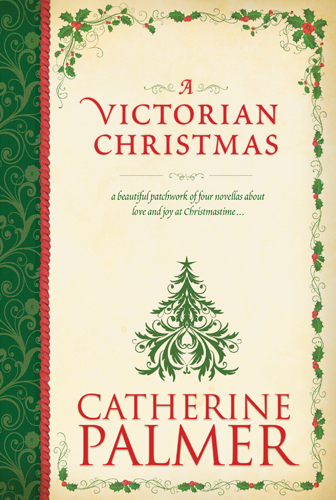
A Victorian Christmas by Catherine Palmer
rating:***
publisher: Tyndale
It's a little early, yes, but when Tyndale sent me this copy for review, I was eager to get started. You see, I am quite excited about Christmas: ALL YEAR ROUND! I love the music, the ambience and the glittery feeling you get. Pair my favourite holiday with my favourite period of history and you have a winning combination.
Here, noted Christian novelist and Christy-award winning Catherine Palmer has provided her readership with a glimpse into the lives of very different women who experience Christmas in decidedly different ways. Palmer delves into issues of social class and the restrictions placed upon women victim to a conservative structure, to spin a tale of determined women who find hope, love and often independence at Christmas time.
I most appreciated the first two stories. The first Angel in the Attic spotlights a winning and spunky heroine who is just as comfortable with her rifle as she is planning the annual Christmas tea for the local orphans. When a mysterious stranger shows up, Fara raises her guard but secrets will be revealed and her truest strength will get a chance to shine.
Fara is my kind of woman and certainly an oddity in the usual mix of Christian heroines who subscribe to the "angel of the hearth ideal" ( as befits the Victorian Era, ironically).
The second story is a love story not constricted by social bounds, Star is an endearingly vulnerable newcomer to the taut English Society of a high-brow manor. Promised to marry as a pawn to secure a symbiotic business deal in the best interest of her father and his English counterpart, Star doesn't count on falling in love with her intended's brother.
I read most of the stories during some train travel over the past few weeks and I was utterly delighted!
Consider these stories as the perfect stocking stuffer! Or treat yourself---coupled with a steaming cup of candy cane hot chocolate, you will relish the transport into a simpler time.
Kudos to Palmer for embroidering a perfectly Victorian atmosphere and peppering her snow-globe world with bright, resourceful heroines and dashing suitors at turn in top hats and cowboy boots.
Don't just take my word for it, here is another review
Friday, September 18, 2009
Dogwood by Chris Fabry
publisher: Tyndale

This is going to be a bit of a differently shaped review for me.
First off, I am not going to rate Dogwood because I don’t know how best to. If the rating were for quality of writing alone, then Fabry would get 4 stars. He is exceptional at spinning a slow, rumbling West Virginia Yarn. He puts me in mind of Faulkner and Steinbeck and I have no qualms about his prose.
[somewhat irrelevant aside: Fabry also *cough* shares my LOVE for Harper Lee as is blatantly evident when he remarks on Atticus charming ( or attempting to charm) the surly Ms. Dubose in her front garden. I caught that, Chris Fabry. Just as I caught your speaking to a “midnight bathroom pilgrimage” in June Bug--- those are the exact words Scout uses when lying awake afraid that Atticus will notice Jem has gone to retrieve his torn trousers. Maybe its just an American phrase, but to me, I know my Lee) ]
If the rating were for best, flummoxed end since the days when M. Night Shamalyan wrote good movies then he would also get 4 stars. This book has an incredible twist. Even when you think you have figured out the “shock”, you realize you haven’t and you re-trace your steps by fanning pages backward in attempt to find any hints missed. 4 stars.
If the rating considered breadth of voice and the validity of four different narratives it would also get 4 stars ( though I tend to think that one---or at least two--- of the narrative voices could have been whittled away; but that could just be my reticence for a multiple-voiced structure).
But, I cannot rate Dogwood because I usually rate on my overall, post-reading euphoric, oft-jubilant impression.
That inherent sense-- that Ahh! This book spoke to me and it will to you and yay for literature
I am not sure what Rachel the person thinks of Dogwood. Rachel the Reader is impressed. Outside of the fact that it is an exceptionally well-written novel and completely worth your time and bursting with literary merit (I can think of few of its ilk or quality in Christian literature), it left a bad taste in my mouth. Not, of course, from the actual novel but the events and the end they catapulted into.
This reading experience (it gripped me in a tangible way so that I exhaled and felt immediate relief when the last page was turned so experience is the right word) was terse and melancholy. Bravo to Fabry for exploiting emotion on every page. But, rather than feel redeemed by the end, I felt somewhat hollow.
Certainly the book’s pivotal moment involves a sacrifice of great magnitude and grace: but at such tragic ramifications I was left deflated throughout.
I loved the character of Will Hatfield. I wish they made them in “real life”, so to speak. Recently released from Prison, mild-mannered Hatfield’s struggle to reintegrate into society reminded me of Jean Valjean and, thus, June Bug (see previous blog review).
I felt very untrustworthy of Karin, Will’s former flame but the realization of the novel in its entirety spoke to my bias.
All-in-all: I am perplexed, I am flummoxed, I am bewildered and a little saddened and frustrated and “what the heck!?” but that in itself is testament to the book’s QUALITY. For it is only in true reading experiences that the world you temporarily inhabited on page saturates your real life--- if only for awhile.
Another shout-out to Chris Fabry!: two books in one week read by me and both super! I am just needing some time to wrap my head around Dogwood. Perhaps, when I put my finger on the elusive “it”, I will come back and stamp a few stars on it.
First off, I am not going to rate Dogwood because I don’t know how best to. If the rating were for quality of writing alone, then Fabry would get 4 stars. He is exceptional at spinning a slow, rumbling West Virginia Yarn. He puts me in mind of Faulkner and Steinbeck and I have no qualms about his prose.
[somewhat irrelevant aside: Fabry also *cough* shares my LOVE for Harper Lee as is blatantly evident when he remarks on Atticus charming ( or attempting to charm) the surly Ms. Dubose in her front garden. I caught that, Chris Fabry. Just as I caught your speaking to a “midnight bathroom pilgrimage” in June Bug--- those are the exact words Scout uses when lying awake afraid that Atticus will notice Jem has gone to retrieve his torn trousers. Maybe its just an American phrase, but to me, I know my Lee) ]
If the rating were for best, flummoxed end since the days when M. Night Shamalyan wrote good movies then he would also get 4 stars. This book has an incredible twist. Even when you think you have figured out the “shock”, you realize you haven’t and you re-trace your steps by fanning pages backward in attempt to find any hints missed. 4 stars.
If the rating considered breadth of voice and the validity of four different narratives it would also get 4 stars ( though I tend to think that one---or at least two--- of the narrative voices could have been whittled away; but that could just be my reticence for a multiple-voiced structure).
But, I cannot rate Dogwood because I usually rate on my overall, post-reading euphoric, oft-jubilant impression.
That inherent sense-- that Ahh! This book spoke to me and it will to you and yay for literature
I am not sure what Rachel the person thinks of Dogwood. Rachel the Reader is impressed. Outside of the fact that it is an exceptionally well-written novel and completely worth your time and bursting with literary merit (I can think of few of its ilk or quality in Christian literature), it left a bad taste in my mouth. Not, of course, from the actual novel but the events and the end they catapulted into.
This reading experience (it gripped me in a tangible way so that I exhaled and felt immediate relief when the last page was turned so experience is the right word) was terse and melancholy. Bravo to Fabry for exploiting emotion on every page. But, rather than feel redeemed by the end, I felt somewhat hollow.
Certainly the book’s pivotal moment involves a sacrifice of great magnitude and grace: but at such tragic ramifications I was left deflated throughout.
I loved the character of Will Hatfield. I wish they made them in “real life”, so to speak. Recently released from Prison, mild-mannered Hatfield’s struggle to reintegrate into society reminded me of Jean Valjean and, thus, June Bug (see previous blog review).
I felt very untrustworthy of Karin, Will’s former flame but the realization of the novel in its entirety spoke to my bias.
All-in-all: I am perplexed, I am flummoxed, I am bewildered and a little saddened and frustrated and “what the heck!?” but that in itself is testament to the book’s QUALITY. For it is only in true reading experiences that the world you temporarily inhabited on page saturates your real life--- if only for awhile.
Another shout-out to Chris Fabry!: two books in one week read by me and both super! I am just needing some time to wrap my head around Dogwood. Perhaps, when I put my finger on the elusive “it”, I will come back and stamp a few stars on it.
by the way: this book won the Christy!

Monday, September 14, 2009
June Bug by Chris Fabry

publisher: Tyndale
rating: ***1/2
Let's get something straight----- you cannot market your book ( or have a publisher's weekly endorsement on the front ) as a contemporary re-telling of Les Miserables and not expect me to whimper until it is in my greedy little hands.
Save the Bible, Les Miserables has been the most profound and life-changing book of my life. I first read it at age 13 ( the Penguin unabridged Norman Denny translation) and have read it probably as many times as there are pages in the novel.
After I get said novel in my greedy little hands you should know that I will a.) spend the entirety of the novel with pencil brandished; post-it note near wrist finding unending parallels ( some probably unintentional) and b. ) that I will count it as a reading experience.
I was a little nervous. This is sacred territory for me. But Christy Award-winning Fabry
PULLED IT OFF.
The eponymous June Bug and her father travel the American backgrounds in a worse-for-wear RV.
Parking at Wal Marts across the States, they revel in the glorious American geography. At One Walmart, June Bug sees an age-progressed photo of a child missing since the age of two. June Bug recognizes the photo of herself.
From there, stories intertwine and Johnson, the only father she has ever known, is forced to exhume the past.
Backstories of kind-hearted folks ( like the Wal Mart employee Sheila) and the restless pursuit of justice by a dogged Sheriff ( think Hugo's Javert) thread throughout a fable of grace and redemption. Pieces of the puzzle slowly meld together in fast-paced perfect narrative and the truth is eventually told: candlesticks, Christ and all.
Fabry (like Harper Lee before him) does an exceptional job of adopting the voice of a sweet, spunky child. He is more than a competent writer, he is a natural storyteller who reminds me a lot of Dale Cramer ( a favourite of mine). Les Miserables is a daunting book to undertake and my apprehension was eased somewhat when I discovered that Fabry's book is not so much a re-telling as a nod to the gargantuan book's theme of Grace. An homage, per se, to one of the greatest Christian stories ever told.
At first read, I thought there was a tendency for the novel to seep into "propaganda" type territory: the Iraq war; the unparalleled heroism of the American man when held up to the rest of the world; the overt patriotism turning every corner. But this in itself mirrors Hugo: whose novel is very much an exhibition of his love for France: in its highs and lows. The military motif and the need to better oneself through national service is not unlike Valjean's role in the National Guard at the July Revolution of 1832.
I am near-finished Dogwood and am absolutely thrilled to add this writer to my roster of perennial favourites.
I enjoy Fabry's quick and easy story telling; his candid shots of real life in all of its gritty grace and humanity; and his strong narrative.
I really liked the TitleTrakk review of this book and invite you to visit Chris Fabry at his blog
or at his official website
Monday, August 10, 2009
Listed: Favourite Male Characters
Courtney has been doing some lists over the past weeks and I thought I would jump on this one....because, seriously, what girlie bibliophile doesn't want to talk favourite fictional men?
Ahem!
Without further ado!
The list!
1.) Sherlock Holmes ---he needs no introduction. He is not at all how he is usually portrayed in film. He is, instead, young, spry, athletic and sharp. Oh! and he may loathe all of humanity but he loves Watson!
2.) Melrose Plant from Martha Grimes' Richard Jury series. Melrose leapt off the page at me when I first read him in "The Man with a Load of Mischief" ---e'er since I pine for the next Jury installment---especially the first obligatory scene in Long Pidd where Melrose is spotted at the Jack and Hammer: perhaps languidly reclining with his nose in Rimbaud. This Lou Reed-loving; emerald eyed; gold-rimmed bespecked wonder is an absolute fictional favourite!
3.) Stephen Maturin from the Aubrey and Maturin series by Patrick O'Brian.
Stephen is just so demmed interesting. So complex and so vulnerable. I sort of want to brush him up and put him in my pocket. Plus, I love that he plays the cello and that his heart "beats to quarters" every time he sees his one love , Diana Villiers
4.) Horatio Lyle from Catherine Webb's The Extraordinary and Unusual Adventures of Horatio Lyle, etc., Sort of a Horatio Lyle/ Doctor Who hybrid, Horatio sprung off of the page and into my heart within ten pages of his first, eponymous novel. I LOVE him! I love that a young adult series boasts an adult protagonist and I LOVE that he loves the children: his proteges Tess and Thomas. His repartee with Tess is one of the best bits of Webb's sparkling writing.
5.) Dr. Neil MacNeil from Catherine Marshall's Christy. Oh goodness. Neil MacNeil sets my heart all aflutter. A smart, rapier-witted Scottish doctor whose loyalty to his people keeps him sequestered amidst poverty and ignorance in the Great Smokies of Tennessee. Young, impressionable Christian school teacher Christy is given more than she bargained for in this stern agnostic. The two spar and battle and fight through one of the most palpable chemistries I have ever read.
6.) Sir Percival Blakeney --The Scarlet Pimpernel of Baroness Orczy's series.
Percy is a swashbuckling; sword-wielding; romantic. He loves stealing to France to slight the intelligence of Robespierre and his personal rival, Chauvelin. Indeed, he may just be the first costumed superhero: disguising himself as a fop to slip into France under guise of attractive clothes. From lavish balls at Lord Grenville's to imprisonment to banter with the Prince Regent himself, Percy is ready for anything. Perhaps what most endears me to him is his adoration of his wife Marguerite. He kisses the stones her feet have trod.
7.) Dean Priest --from the Emily Trilogy by LM Montgomery
Someone please tell me what he is doing in what are otherwise harmless kunstleroman novels? Hunchbacked, emerald eyed and honey-tongued, "Jarback" Priest is undoubtedly the most complex of Montgomery's heroes ( followed closely by Andrew Stuart of Jane of Lantern Hill and Barney Snaith of The Blue Castle). He saves Emily from death and then claims her life for his own. All the while, exorcising his inner Rochester and proving himself the most byronic of byronic heroes. Wracked with jealousy and with a tendence to oddly skulk in corners, Dean just gives me shivers and keeps me diving back for more. I wrote my thesis on Montgomery and Dean figured prominently; creeping into each paragraph, but also into my thoughts for a year consistently. Montgomery mentions a novel-in-embryo she thought might have been her crowning glory entitled "Priest Pond." Perchance Maud shelved the epic that would never be but kept dear Dean and slid him into some of her best work.
8.) Sydney Carton from A Tale of Two Cities ( Dickens)
Sydney Carton is a drunk lawyer who wears his wig askew, who piddles around his office with Stryver long after closing time and who loves Lucie Manette with all of his heart. Sydney never quite lives up to his vast potential. Moreover, he knows it. Instead he bottles all heroism into one of the most shockingly redemptive acts in all of literature. A very big literary crush of mine.
( I made him a facebook account).
9.) Barney Snaith from Montgomery's Blue Castle.
Barney is sort of my leading man. I adore him. I just want to put him in my pocket. In many ways he embodies my ideal: well-read; sarcastic; adventurous; thoughtful; bookish and smart. Barney's independent and has a wonderful, quick humour. He is also the best companion a gal could have. He respects Valancy ( his leading lady) and treats her as an equal. They share one of the most romantic friendships I have ever read. I like that their romance blooms out of comradery: the preternatural kinship Maud often writes of. Barney also has dimples and just happens to be an author---triple word score!
10.) Joseph Gargery from Great Expectations
I am not in love with Joseph; nor do I find him a particuarly attractive hero. He is not, indeed, the hero of the tale at all. But, without Joe, there would be no Pip to star in the tale and to have great expectations realized. Joe is the salt-of-the-earth blacksmith who would give his right arm to make his young, orphaned brother-in-law happy. No matter how badly the rich Pip hurts and mistreats Joe, Joe always holds the forge door wide open.
Joe also boasts a tremendous respect and tolerance of women: even his treacherous wife, Mrs. Joe. The son of an abused mother and a drunken father, Joe vowed never to see a woman put in such a shameful position again. Thus, he bears a difficult marriage having saved his wife and her young brother from destitution.
Honourable Mentions:
Alan Woodcourt (Dickens' Bleak House)
Patrick Harper ( the Sharpe series by Bernard Cornwell)
Locke Lamora and Jean Tannent ( by Scott Lynch)
Horatio ( from Shakespeare's Hamlet)
Ahem!
Without further ado!
The list!
1.) Sherlock Holmes ---he needs no introduction. He is not at all how he is usually portrayed in film. He is, instead, young, spry, athletic and sharp. Oh! and he may loathe all of humanity but he loves Watson!
2.) Melrose Plant from Martha Grimes' Richard Jury series. Melrose leapt off the page at me when I first read him in "The Man with a Load of Mischief" ---e'er since I pine for the next Jury installment---especially the first obligatory scene in Long Pidd where Melrose is spotted at the Jack and Hammer: perhaps languidly reclining with his nose in Rimbaud. This Lou Reed-loving; emerald eyed; gold-rimmed bespecked wonder is an absolute fictional favourite!
3.) Stephen Maturin from the Aubrey and Maturin series by Patrick O'Brian.
Stephen is just so demmed interesting. So complex and so vulnerable. I sort of want to brush him up and put him in my pocket. Plus, I love that he plays the cello and that his heart "beats to quarters" every time he sees his one love , Diana Villiers
4.) Horatio Lyle from Catherine Webb's The Extraordinary and Unusual Adventures of Horatio Lyle, etc., Sort of a Horatio Lyle/ Doctor Who hybrid, Horatio sprung off of the page and into my heart within ten pages of his first, eponymous novel. I LOVE him! I love that a young adult series boasts an adult protagonist and I LOVE that he loves the children: his proteges Tess and Thomas. His repartee with Tess is one of the best bits of Webb's sparkling writing.
5.) Dr. Neil MacNeil from Catherine Marshall's Christy. Oh goodness. Neil MacNeil sets my heart all aflutter. A smart, rapier-witted Scottish doctor whose loyalty to his people keeps him sequestered amidst poverty and ignorance in the Great Smokies of Tennessee. Young, impressionable Christian school teacher Christy is given more than she bargained for in this stern agnostic. The two spar and battle and fight through one of the most palpable chemistries I have ever read.
6.) Sir Percival Blakeney --The Scarlet Pimpernel of Baroness Orczy's series.
Percy is a swashbuckling; sword-wielding; romantic. He loves stealing to France to slight the intelligence of Robespierre and his personal rival, Chauvelin. Indeed, he may just be the first costumed superhero: disguising himself as a fop to slip into France under guise of attractive clothes. From lavish balls at Lord Grenville's to imprisonment to banter with the Prince Regent himself, Percy is ready for anything. Perhaps what most endears me to him is his adoration of his wife Marguerite. He kisses the stones her feet have trod.
7.) Dean Priest --from the Emily Trilogy by LM Montgomery
Someone please tell me what he is doing in what are otherwise harmless kunstleroman novels? Hunchbacked, emerald eyed and honey-tongued, "Jarback" Priest is undoubtedly the most complex of Montgomery's heroes ( followed closely by Andrew Stuart of Jane of Lantern Hill and Barney Snaith of The Blue Castle). He saves Emily from death and then claims her life for his own. All the while, exorcising his inner Rochester and proving himself the most byronic of byronic heroes. Wracked with jealousy and with a tendence to oddly skulk in corners, Dean just gives me shivers and keeps me diving back for more. I wrote my thesis on Montgomery and Dean figured prominently; creeping into each paragraph, but also into my thoughts for a year consistently. Montgomery mentions a novel-in-embryo she thought might have been her crowning glory entitled "Priest Pond." Perchance Maud shelved the epic that would never be but kept dear Dean and slid him into some of her best work.
8.) Sydney Carton from A Tale of Two Cities ( Dickens)
Sydney Carton is a drunk lawyer who wears his wig askew, who piddles around his office with Stryver long after closing time and who loves Lucie Manette with all of his heart. Sydney never quite lives up to his vast potential. Moreover, he knows it. Instead he bottles all heroism into one of the most shockingly redemptive acts in all of literature. A very big literary crush of mine.
( I made him a facebook account).
9.) Barney Snaith from Montgomery's Blue Castle.
Barney is sort of my leading man. I adore him. I just want to put him in my pocket. In many ways he embodies my ideal: well-read; sarcastic; adventurous; thoughtful; bookish and smart. Barney's independent and has a wonderful, quick humour. He is also the best companion a gal could have. He respects Valancy ( his leading lady) and treats her as an equal. They share one of the most romantic friendships I have ever read. I like that their romance blooms out of comradery: the preternatural kinship Maud often writes of. Barney also has dimples and just happens to be an author---triple word score!
10.) Joseph Gargery from Great Expectations
I am not in love with Joseph; nor do I find him a particuarly attractive hero. He is not, indeed, the hero of the tale at all. But, without Joe, there would be no Pip to star in the tale and to have great expectations realized. Joe is the salt-of-the-earth blacksmith who would give his right arm to make his young, orphaned brother-in-law happy. No matter how badly the rich Pip hurts and mistreats Joe, Joe always holds the forge door wide open.
Joe also boasts a tremendous respect and tolerance of women: even his treacherous wife, Mrs. Joe. The son of an abused mother and a drunken father, Joe vowed never to see a woman put in such a shameful position again. Thus, he bears a difficult marriage having saved his wife and her young brother from destitution.
Honourable Mentions:
Alan Woodcourt (Dickens' Bleak House)
Patrick Harper ( the Sharpe series by Bernard Cornwell)
Locke Lamora and Jean Tannent ( by Scott Lynch)
Horatio ( from Shakespeare's Hamlet)
Sunday, July 12, 2009
Christy Awards: Lynn Austin.... again !

Congrats to one of my favourite novelists, Lynn Austin, for winning yet another Christy award!
Read more about last night's winners here.
Read Until We Reach Home
and visit the Christy awards website
and follow them on twitter!
Though not my favourite Austin novel, Until We Reach Home definitely had that "a-ha! well-played, Lynn Austin" literary moment that I always so enjoy in her novels.
I love Austin! I love the Christys!
[and....on an unrelated note.... I loved the production of Cyrano de Bergerac I saw at the Stratford Festival this past weekend. All Canadian readers should get tickets. 'Tis an exceptional production.]
Monday, June 22, 2009
blog recommendation: Deanne Gist

I have a confession to make: I was not a fan of A Bride Most Begrudging: no matter how popular it became. I found it flimsy and implausible and ...well...another post may see my rant at some of its loopholes. I did, however, think Gist had some potential and I sought out The Measure of a Lady which I enjoyed. I remember sitting on vacation, reading it in one sitting, fairly happy at the ending and the strength of its moralistic woman. The lady-on-a-mission motif smacked of Christy ( against Dr. Neil MacNeil in Catherine Marshall's story ) or even Sarah Brown ( in Guys and Dolls).
Courting Trouble and Deep in the Heart of Trouble took some risks that made this thinking girl very happy. Even though Gist reined in when she could have taken a bold step, she was moving in the right direction: for this courage I applaud her.
I have a review copy of A Bride in the Bargain sitting near me and I mean to crack it open soon.
On a slightly unrelated note,I am balancing my Christian fiction dosage with a re-reading of the Aubrey-Maturin canon by Patrick O'Brian and am just starting HMS Surprise ( my favourite in the 20 volume series). Whilst I sail away with Jack and Stephen --- I leave you with Deanne Gist's blog.
Gist is a far superior writer to her most similar contemporary, Cathy Marie Hake, and I urge you to check out The Measure of A Lady at the very least.
To find out more about Deanne Gist and order some books see here.
To read Deanne's blog (which, to my delight, sported a recent entry with a lovely picture of Hugh Jackman when I clicked on it this evening) see here.
Wednesday, April 01, 2009
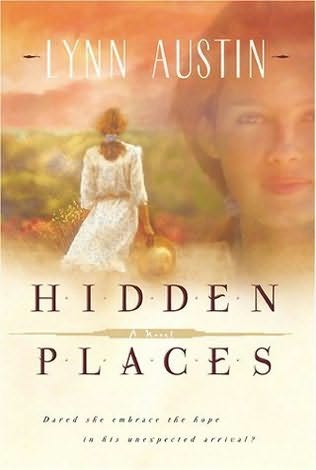
Christy Awards: Hidden Places by Lynn Austin
rating:****
publisher: Bethany House
I have decided to read a selection of past winners of the Christy Awards in anticipation for the 2009 ceremony in July.
I started with Lynn Austin's well-deserving Hidden Places.
In Hidden Places, Lynn Austin has crafted a near-perfect novel. I am surprised I had not read this before now because, as you are well aware, I am a fan of Austin's and I recognize this as a modern classic of the genre.
Eliza Wyatt is hit hard by the Depression, especially after her husband and her father-in-law pass on leaving Eliza and her children with the vast responsibility of maintaining Wyatt Orchards and its on-property homestead.
Just when it seems that her faith(already on tinterhooks) is going to droop completely, Eliza is sent an angel( well he might as well be an angel). In human form, he is Gabriel Harper: an enigmatic presence who vows he is a journalist riding the rails capturing the stories of out-of-work, hard-on-luck nomads. He knows everything about farming and the Wyatt Orchards and may be the answer to the prayers Eliza is reticent will ever be heard. ( Note: this "angel" figure put me in mind of Cramer's Sutter's Cross)
But, there is something familiar about the "angel" Gabriel---something that Eliza cannot put her finger on. It could be that he is the elusive Matthew Wyatt: the rightful owner of Wyatt Orchards who can, at any moment, remove Eliza and take ownership of the land.
Although the aforementioned plot is at the core of this exceptionally-structured novel, we are given leave to open the dusty curtains and delve into the past of Wyatt Orchards and the people who have seen it through hardship and prosperity; war and peace; abuse and love.
One major component of the story focuses on the eccentric Betsy: now christened Aunt Batty a bookish old woman and an epoch of faith who, due to an unfortunate storm, finds herself nestled in a family-in-embryo with Eliza, Eliza's children and Gabriel.
Batty's story, for me, was the most poignant and exceptional testament of Austin's resounding faith. Like W. Dale Cramer, Austin need not rely on evangelizing us --- rather she uses her gift of prose to slowly unfurl a gripping family saga with roots in Charity, Hope and Love.
There are certain authors whose works so transplant you there is an immediate connection: a kinship that makes you feel that the author is speaking directly to you---sitting across from you---treating you as a confidante ---voice rushing so quickly in utter need to reveal every detail that the turning of pages cannot keep pace.
Austin is an author whose words spill lucidly. She restores my faith in everything: colours seem brighter after reading her, nature is more noticeable and I walk around giddily replaying some of "gasp!" moments she imparts on her readership.
From a literary perspective, Hidden Places is far more than a Hallmark escape into romance and love. Though the heroes of Lynn Austin novels always see heroines as more than they see themselves, the real love of the novel is founded in an acceptance of God's purporse. Austin weaves this deftly, yet its impact is powerful
Batty's faith is the most resonant in it solidity: "God didn't have to make apple trees and peach trees burst into flower and fragrance", she explains jubilantly, "But God just loves to splurge. He gives us all this magnificence and, if that isn't enough, He provides fruit from such extravaganze!"
Her warm heart and brainy mind are well-suited to Walter: the bookish and sickly man she recalls marrying. "Don't ever settle for any other life except the one for which God created you." Walter insists of her.
Lynn Austin allows her characters to be splayed flawed and humane on each page. We are supposed to take note and example from their successes in Christ as well as recognize the common threads that link us to them: just another way Austin pulls us into her world and confides in us as if we were a part of the drama unfolding.
Hidden Places could refer to the family secrets deeply rooted in the orchard and burrowed on each page; to a scripture verse quoted; to Batty's money hidden in her vast library; to a clue from Gabe's rucksack as to his true identity; to what the erudite Walter sees in the self-proclaimed homely and awkward Batty; to the secret furrowing Eliza's brow with guilt and shame.
For me, the title was most resonant when little gems of phrase or humour or literary reference were spilled onto pages unexpectedly---Like the time when Batty pretends she has been reading Les Miserables to charade her sadness over a seeming rift with Walter.
I have a feeling each reader will glean something unique from this exceptional novel.
I highly recommend it and hope to bring more Christy Award winners to light as we approach the 2009 event this July.
Wednesday, March 25, 2009
A new take on TOP FIVE
My friend Courtney tagged me in a meme which asked me to write about five things that I love.
I thought I would tweak it to reflect the subject matter of this blog.
Thus, I give you ( and ever so delightedly) five leading men I love from Christian novels.
These are my top five, so to speak and I hope you enjoy reading about them ....and will be inspired to hunt down the excellent books they live in.
1.) Neil MacNeill from Christy (Catherine Marshall)
has this book EVER been published with a good cover?
Dr. Neil MacNeill is a fiery Scotsman who sacrificed a prestigious city medical career to serve his mountain people in Cutter Gap ( the small populus ensconced in the Great Smokies of Tennessee).
Neil is a little bit different than numerous Christian heroes because he begins the book as an agnostic. He has a lineage tracing back to Bonnie Prince Charlie and a fiery temper to match his heritage. He is a skilled and brilliant doctor who is seemingly well ahead of the game dappling with groundbreaking cures ( for diseases like trachoma) while having some of the most rudimentary resources at his disposal. It is funny to see him as a suitable match for the coming-of-age schoolteacher Christy Huddleston, but they share a similar passion for the people and a desire to see more in the region than anyone in the "outside" world ever will. This not only solidifies their relationship ( even if it is interspersed with some incredibly verbal battles), it helps Christy grow into the strong and independent woman she is to become...all the while turning Neil back to faith.
(note: they made a rather horrific family television series which diluded all of the serious subject matter of the powerful book. But they did one thing right. They gave Neil MacNeill a pension for opera and flyfishing. I thought this was a poignant touch and very much in character: delineating him from the mountain people he was descended from while sewing a common thread to Christy's cultural background in upscale Ashville).
2.) John Murphy Vienna Prelude (Bodie Thoene)
I think I can safely say that John Murphy was my first fictional crush. I had turned 12 when I read Vienna Prelude for the first time ( I have read it every year since at Christmas time) and I immediately fell under the spell of this brash, quick-witted New York Times reporter. I first fell for him when he was saving Theo Lindheim and his beautiful violinist daughter from a Nazi interrogation at a Berlin train station. Murphy snappingly responded to a mousy Gestapo's "Heil Hitler" with a quick "Twenty Three Skidoo". Some things just don't translate.
Not a spineless, mopey lover, Murphy pursues Elisa doggedly---even accepts her proposal of an arranged marriage , crashes a Kosher Zionist party with ham as a gift, and buys a multitude of symphony tickets in a seat and row which directly align with her chair in the orchestra section. In later novels in the series (The Zion Covenant) , Thoene tells us that John Murphy resembles Jimmy Stewart. Sign me up! Like Neil MacNeill, Murphy does not begin the novel as a Christian allowing the reader to be ministered through those who minister and challenge him.
3.) Silas McClure A Proper Pursuit (Lynn Austin)
I'm reticent to reveal the delicious secret surrounding Silas in case you have yet to read the novel ( please go get it now ). Suffice it to say, Silas is one of my all time favourite leading men. Sort of Harold Hill ( think the charm of the Music Man) without the sly ulterior motives. Silas is an elixir salesman: a drummer clad in saddle shoes and bright suits with stunning blue eyes and a candleabra smile. Silas is light-hearted, adventurous and funny with a fire crackery "gee whillicker" boyish charm. He provides heroine Violet Hayes with a taste of the penny novel adventures she longs for, takes her up Mr. Ferris' Wheel at the Chicago World's Fair and engages in bouts of a "would you rather" game." He is also one half of the most tingly, joyous kissing scenes I have ever read.
One thing I am learning as I read more Austin is that her best heroes have a tendency to see more in the heroines than they do in themselves. This has always been a romantic trait for me. Well-done Silas! And he's a Christian! Praise the Lord. I wish I could bring him home to meet my mother.
4.) Phineas Snowe All the Tea in China (Jane Orcutt)
What I like most about Phineas is that he is part of the reason Orcutt's novel strays from falling into convention. He is sneaky and not always truthful but he treats sword-wielding wordsmith Isabella as an equal. Phineas doesn't shy away from teaching Isabella the finest of Chinese combat and legend and martial arts. Further, he engages in many a match of witty repartee with Isabella which adds to the novel's sheer brilliant, diamondy dialogue. He's not who he seems but he is a lot of fun and gives a fresh and unexpected twist to a taut and tantalizing Regency adventure.
I think I knew from the first scene ( which plays like something out of a Jane Austen drawing room with a careful match of well-strung words) that he and Isabella would provide me with hours... meaning pages... of blissful entertainment.
5.)Wynn Delaney The Canadian West series (Janette Oke)
Who doesn't love a man in uniform? Face it, these books may have as much depth as a tea spoon but they are classic. In a wonderful twist relating to her subject matter, Oke is very much a pioneer in the genre: paving the way for other Christian novelists as Wynn and Elizabeth were part of the mass settlement in the Canadian West.
Well, I AM biased. As a Canadian, I have a soft spot for the tales about a gorgeous, steadfast mountie of impeccable character whisking a courageous and refined schoolteacher to a remote post in the Canadian West. The scenery is beautiful ( and not just Wynn in scarlet) and the episodic events create inspiring terrain for Christian values and morals. I also really enjoy the close proximity of the Delaneys to the First Nations. We learn a lot about a rich and beautiful cultural heritage.
Honourable mention:
John Falconer Heirs of Acadia series (T.Davis Bunn)
I read the entire series for this former slavetrader whose dark, redemptive journey challenged and compelled me. I think Falconer is one of the most dimensional Christian heroes in years. I strongly recommend these books for those who hanker after solid character pieces.
I thought I would tweak it to reflect the subject matter of this blog.
Thus, I give you ( and ever so delightedly) five leading men I love from Christian novels.
These are my top five, so to speak and I hope you enjoy reading about them ....and will be inspired to hunt down the excellent books they live in.
1.) Neil MacNeill from Christy (Catherine Marshall)
has this book EVER been published with a good cover?
Dr. Neil MacNeill is a fiery Scotsman who sacrificed a prestigious city medical career to serve his mountain people in Cutter Gap ( the small populus ensconced in the Great Smokies of Tennessee).
Neil is a little bit different than numerous Christian heroes because he begins the book as an agnostic. He has a lineage tracing back to Bonnie Prince Charlie and a fiery temper to match his heritage. He is a skilled and brilliant doctor who is seemingly well ahead of the game dappling with groundbreaking cures ( for diseases like trachoma) while having some of the most rudimentary resources at his disposal. It is funny to see him as a suitable match for the coming-of-age schoolteacher Christy Huddleston, but they share a similar passion for the people and a desire to see more in the region than anyone in the "outside" world ever will. This not only solidifies their relationship ( even if it is interspersed with some incredibly verbal battles), it helps Christy grow into the strong and independent woman she is to become...all the while turning Neil back to faith.
(note: they made a rather horrific family television series which diluded all of the serious subject matter of the powerful book. But they did one thing right. They gave Neil MacNeill a pension for opera and flyfishing. I thought this was a poignant touch and very much in character: delineating him from the mountain people he was descended from while sewing a common thread to Christy's cultural background in upscale Ashville).
2.) John Murphy Vienna Prelude (Bodie Thoene)
I think I can safely say that John Murphy was my first fictional crush. I had turned 12 when I read Vienna Prelude for the first time ( I have read it every year since at Christmas time) and I immediately fell under the spell of this brash, quick-witted New York Times reporter. I first fell for him when he was saving Theo Lindheim and his beautiful violinist daughter from a Nazi interrogation at a Berlin train station. Murphy snappingly responded to a mousy Gestapo's "Heil Hitler" with a quick "Twenty Three Skidoo". Some things just don't translate.
Not a spineless, mopey lover, Murphy pursues Elisa doggedly---even accepts her proposal of an arranged marriage , crashes a Kosher Zionist party with ham as a gift, and buys a multitude of symphony tickets in a seat and row which directly align with her chair in the orchestra section. In later novels in the series (The Zion Covenant) , Thoene tells us that John Murphy resembles Jimmy Stewart. Sign me up! Like Neil MacNeill, Murphy does not begin the novel as a Christian allowing the reader to be ministered through those who minister and challenge him.
3.) Silas McClure A Proper Pursuit (Lynn Austin)
I'm reticent to reveal the delicious secret surrounding Silas in case you have yet to read the novel ( please go get it now ). Suffice it to say, Silas is one of my all time favourite leading men. Sort of Harold Hill ( think the charm of the Music Man) without the sly ulterior motives. Silas is an elixir salesman: a drummer clad in saddle shoes and bright suits with stunning blue eyes and a candleabra smile. Silas is light-hearted, adventurous and funny with a fire crackery "gee whillicker" boyish charm. He provides heroine Violet Hayes with a taste of the penny novel adventures she longs for, takes her up Mr. Ferris' Wheel at the Chicago World's Fair and engages in bouts of a "would you rather" game." He is also one half of the most tingly, joyous kissing scenes I have ever read.
One thing I am learning as I read more Austin is that her best heroes have a tendency to see more in the heroines than they do in themselves. This has always been a romantic trait for me. Well-done Silas! And he's a Christian! Praise the Lord. I wish I could bring him home to meet my mother.
4.) Phineas Snowe All the Tea in China (Jane Orcutt)
What I like most about Phineas is that he is part of the reason Orcutt's novel strays from falling into convention. He is sneaky and not always truthful but he treats sword-wielding wordsmith Isabella as an equal. Phineas doesn't shy away from teaching Isabella the finest of Chinese combat and legend and martial arts. Further, he engages in many a match of witty repartee with Isabella which adds to the novel's sheer brilliant, diamondy dialogue. He's not who he seems but he is a lot of fun and gives a fresh and unexpected twist to a taut and tantalizing Regency adventure.
I think I knew from the first scene ( which plays like something out of a Jane Austen drawing room with a careful match of well-strung words) that he and Isabella would provide me with hours... meaning pages... of blissful entertainment.
5.)Wynn Delaney The Canadian West series (Janette Oke)
Who doesn't love a man in uniform? Face it, these books may have as much depth as a tea spoon but they are classic. In a wonderful twist relating to her subject matter, Oke is very much a pioneer in the genre: paving the way for other Christian novelists as Wynn and Elizabeth were part of the mass settlement in the Canadian West.
Well, I AM biased. As a Canadian, I have a soft spot for the tales about a gorgeous, steadfast mountie of impeccable character whisking a courageous and refined schoolteacher to a remote post in the Canadian West. The scenery is beautiful ( and not just Wynn in scarlet) and the episodic events create inspiring terrain for Christian values and morals. I also really enjoy the close proximity of the Delaneys to the First Nations. We learn a lot about a rich and beautiful cultural heritage.
Honourable mention:
John Falconer Heirs of Acadia series (T.Davis Bunn)
I read the entire series for this former slavetrader whose dark, redemptive journey challenged and compelled me. I think Falconer is one of the most dimensional Christian heroes in years. I strongly recommend these books for those who hanker after solid character pieces.
Christy Awards
Named after one of the greatest Christian fiction novels ever written, The Christy finalists are announced.
Interesting catagories and some excellent shortlists this year.
See here
and yes, Lynn Austin is nominated.
Interesting catagories and some excellent shortlists this year.
See here
and yes, Lynn Austin is nominated.
Tuesday, March 27, 2007
desert island.
Okay, unexpectedly ( and largely due to facebook and my part in the Spring Musical in my town ), I have been absent. I also joined two committees and finished my role as reader for a Canadian literary award.
That being done, and wanting to come back with a *bang! *, here I am again----with some desert island picks.
I have been skulking in the blogger background and reading some people's memes about the books they cannot live without.
I could never choose five ( are you kidding ) , or ten ( too low, still ) and so fifteen was a challenge for me:
but here it is:
DRUM ROLL:
FIFTEEN BOOKS I WOULD NEED WITH ME/CANNOT LIVE WITHOUT/WOULD DIE SHOULD THEY FALL FROM MY HANDS
In no particular order:
1.) Les Miserables by Victor Hugo--- the size itself would keep my happy for a long while.
2.) The Blue Castle by LM Montgomery----Barney has an island. Perchance if I am stuck on an island he will show up....wishful thinking.
3.)Jane Eyre by Charlotte Bronte ----funny thing is, from a literary standpoint, I always list Villette as my favourite of her works and one of my top five books, but I cannot imagine being stranded without Thornfield or Rochester
4.)Pride and Prejudice by Jane Austen-----we deserted castaways need something representative of Austen, so this is my pick of her works. It is my representation of the whole Austen canon, if not my personal Austen favourite.
5.) The Prince and the Pauper by Mark Twain ----I love this book. It makes me laugh, it makes me cry. It has that uncanny ability to capture Twain's humorous heart, acts as a perfect YA novel ( we all know how I love those ) and is a riproaring representative of the historical fiction genre.
6.)Vienna Prelude by Bodie Thoene---- not a great work of literature, no. But, it is my Christmas book ---and even we marooned on islands need to celebrate the holidays.
7.) The Complete Sherlock Holmes by Sir Arthur Conan Doyle ---Do not try to tell me this doesn't count because it acts as a range of different stories....they all come in the same friggin' book . I sell many editions that boast the "Complete" works. So there. It's in!
No cheating.
8.) Great Expectations by Charles Dickens---Once again, this is a tough choice because Our Mutual Friend is probably my favourite of all things Dickensian. However, GE and I have the most history and we go the furthest back. And, like Austen, I feel it is a good representation of his tone, voice, setting....tis a complete package
9.) North and South by Elizabeth Gaskell ---- I need Mr. Thornton. I need Mr. Thornton
10.) Christy by Catherine Marshall. Girl moves to the Smokies in the early 20th Century to teach school to the mountain people and live at a mission there. Upon arrival, she meets two fascinating men who both fall equally in love with her. Every girl's dream.
11. ) According to Jake and the Kid by W.O. Mitchell ----- We outcasts need to laugh and The King of All Country remains one of the funniest short stories in my memory. Further still, the Canadian content on my island needs to be maintained.
12.) HMS Surprise by Patrick O'Brian---- Picking one Aubrey/Maturin book out of the lot is a dismal prospect, but, being thus so, I cho-cho-choose this one !
13.) The Stargazey by Martha Grimes ---You think for one second I would go to my island without Melrose Plant. Humph!
14.) Gaudy Night by Dorothy Sayers ---- theologically intuned, romantically sprawled amidst gothic spires, lots of Wimsey and that brilliant, fiesty, feminist Harriet Vane, I am packing her in my bag!
15.) Horatio Lyle by Catherine Webb ----a recent acquistion, I have only been Lyle's acquaintance for a year, but he is the embodiment of everything that makes YA literature my passion. Funny, smartly written, filled to the brim with eccentric characters that make my heart leap---and all by a 19 year old.
Hope the hiatus is over. If anyone still reads this, welcome back.
OH ------------and by the way!!! The Lies of Locke Lamora is BRILLIANT !
I am getting the ARC for the second one and anxiously check my mailbox everyday!
That being done, and wanting to come back with a *bang! *, here I am again----with some desert island picks.
I have been skulking in the blogger background and reading some people's memes about the books they cannot live without.
I could never choose five ( are you kidding ) , or ten ( too low, still ) and so fifteen was a challenge for me:
but here it is:
DRUM ROLL:
FIFTEEN BOOKS I WOULD NEED WITH ME/CANNOT LIVE WITHOUT/WOULD DIE SHOULD THEY FALL FROM MY HANDS
In no particular order:
1.) Les Miserables by Victor Hugo--- the size itself would keep my happy for a long while.
2.) The Blue Castle by LM Montgomery----Barney has an island. Perchance if I am stuck on an island he will show up....wishful thinking.
3.)Jane Eyre by Charlotte Bronte ----funny thing is, from a literary standpoint, I always list Villette as my favourite of her works and one of my top five books, but I cannot imagine being stranded without Thornfield or Rochester
4.)Pride and Prejudice by Jane Austen-----we deserted castaways need something representative of Austen, so this is my pick of her works. It is my representation of the whole Austen canon, if not my personal Austen favourite.
5.) The Prince and the Pauper by Mark Twain ----I love this book. It makes me laugh, it makes me cry. It has that uncanny ability to capture Twain's humorous heart, acts as a perfect YA novel ( we all know how I love those ) and is a riproaring representative of the historical fiction genre.
6.)Vienna Prelude by Bodie Thoene---- not a great work of literature, no. But, it is my Christmas book ---and even we marooned on islands need to celebrate the holidays.
7.) The Complete Sherlock Holmes by Sir Arthur Conan Doyle ---Do not try to tell me this doesn't count because it acts as a range of different stories....they all come in the same friggin' book . I sell many editions that boast the "Complete" works. So there. It's in!
No cheating.
8.) Great Expectations by Charles Dickens---Once again, this is a tough choice because Our Mutual Friend is probably my favourite of all things Dickensian. However, GE and I have the most history and we go the furthest back. And, like Austen, I feel it is a good representation of his tone, voice, setting....tis a complete package
9.) North and South by Elizabeth Gaskell ---- I need Mr. Thornton. I need Mr. Thornton
10.) Christy by Catherine Marshall. Girl moves to the Smokies in the early 20th Century to teach school to the mountain people and live at a mission there. Upon arrival, she meets two fascinating men who both fall equally in love with her. Every girl's dream.
11. ) According to Jake and the Kid by W.O. Mitchell ----- We outcasts need to laugh and The King of All Country remains one of the funniest short stories in my memory. Further still, the Canadian content on my island needs to be maintained.
12.) HMS Surprise by Patrick O'Brian---- Picking one Aubrey/Maturin book out of the lot is a dismal prospect, but, being thus so, I cho-cho-choose this one !
13.) The Stargazey by Martha Grimes ---You think for one second I would go to my island without Melrose Plant. Humph!
14.) Gaudy Night by Dorothy Sayers ---- theologically intuned, romantically sprawled amidst gothic spires, lots of Wimsey and that brilliant, fiesty, feminist Harriet Vane, I am packing her in my bag!
15.) Horatio Lyle by Catherine Webb ----a recent acquistion, I have only been Lyle's acquaintance for a year, but he is the embodiment of everything that makes YA literature my passion. Funny, smartly written, filled to the brim with eccentric characters that make my heart leap---and all by a 19 year old.
Hope the hiatus is over. If anyone still reads this, welcome back.
OH ------------and by the way!!! The Lies of Locke Lamora is BRILLIANT !
I am getting the ARC for the second one and anxiously check my mailbox everyday!
Friday, December 22, 2006
Advent Tour Post
Hello everyone and welcome to the fabulous festivus world of Christmas Melrose!! Here you shall join in some of my Festive Favs and learn just what it means to be a gal so obsessed with Christmas and all things related, you top up your egg nog with more than a healthy dose of nostalgia, and break out the jingling carols the day after Remembrance Day ( November 11 here in Canuckville).
I thought I would take you through some of my ritualistic Christmas events. I am a very merry traditionalist who happens to be ( delightfully ) a Victorianist as well; that era full of Christmas traditionalist-making. So, bring out the figgy pudding and pull up a chair decked with bells and holly and what-not.
BOOKS:
Christmas without books is actually not Christmas; just some snow-filled phantom globe of a day where the supermarkets are not open. Christmas with books is worth waiting 364 days a year for. Me, traditionalist, Victorianist jingle-jangler, reads the same books every year around this holy, holly time.
Great Expectations the first of the Melrose Christmas picks. I first read this book on a snowy November night at the beginning of high school. The ambience was perfect for the windy chill. After all, the Dickens classic begins at Christmas. Indeed, Pip talks about hearing the carols sing ( feigning innocence to Mrs. Joe about his goings-on with Magwitch the criminal on the moors ), stirring figgy pudding and having a myriad of relatives ( including the unstoppable Uncle Pumblechook ) for a Christmas feast. Most humans are head over heels for Scrooge, I love GE. One of my favourite Christmases included a pack of Victorian classics from my parents---GE was one of them....after I had finished opening gifts and munching turkey, I rushed up to my room to read it once more.
Vienna Prelude by Bodie Thoene
As a minister's daughter, I spent a lot of time at church growing up. Before and after the morning service I would often prowl ( and later work ) in our church library. I pride myself in introducing churchgoers to a range of classics; such as Christy and Les Miserables. Though not a classic, I have re-visited Vienna Prelude every year since my first perusal from said church library. In essence, I have read Vienna Prelude fifteen times; always at Christmas. Much of the book is set in Austria during the Christmas season in the years leading up to WW II. Partly in the Tyrolean alps in a cozy farmhouse filled with warmth and tradition, at a small-spired church which puts me immediately in mind of the church I imagine was Franz Gruber's muse for Silent Night, and in the lofts and hay of a barn I see so clearly and smell so potently. There are sleighbells and horses and a clear, starry sky that spans for miles. Partly in a bustling Berlin department store filled with shoppers. And, as the titular city, Vienna stands in for Christmas; with street merchants selling carved creches, with fires burning in metal drums along the many winding streets, with a brasher report ducking out of the Sacher hotel and holding a fistful of tickets for Christmas concerts played by the Philharmonic.
Full of classical music and anecdotes of Dvorak, not to mention a swell love story, this is Christmas atmosphere at its best. Vienna became my dream city the moment after I read it.
Rose in Bloom and Eight Cousins by Louisa May Alcott
This tradition started in first year university. They quickly became my "home books", books I left at my parent's house when I returned to Toronto after visits. They are thoroughly Christmas for me. Anecdotal and almost ridiculous in simplicity, they are as comfortable as cider. Rose Campbell is sent to live with her Uncle Alec after her father passes away. It doesn't take long for the orphaned child to find complete happiness with her rowdy male cousins and her strong, Scots uncle who makes her eat "parrich" ( that's Alcottean for porridge) and let out her tight corsets. Early feminism disguised in anecdotal bliss.
MUSIC:
Music is my favourite part of the Christmas season. Nothing tugs me back to a particular time in my childhood than hearing my favourite carols. As an advocate for the reinstatement of hymnal traditions in church, and as a lover Church Music history, I relish the poetic words, strands and cadences of beautiful old Christmas hymns. From the Gregorian through the Baroque, through Handel to Bach's Arioso and to the Christmas hymns that permeate the 17th-20th Centuries with their haunting chords and t0-die-for lyrics, I am a Carol junkie. No secular Rudolph for me, Christmas songs must have religious meaning for it is those songs alone which leak an almost ethereal beauty.
I remember clearly listening to Elvis and the Carpenters' Christmas songs growing up; not to mention the old Bonanza tv show LP my dad has ( Christmas at the Ponderosa or some such ) which isn't so bad when Adam Cartwright sings an old negro spiritual.
Michael W. Smith's Christmas album remains ( I think ) his most credible endeavour. Partly because he uses Gregorian strain and influences, intersperses latin with the prophet Isaiah and enlists the Vienna Boys Choir to sing with dazzling orchestration. I usually don't pay attention this artist, but his Christmas cd is a work of art.
MOVIES:
BING CROSBY
The Sound of Music
The Muppet Christmas Carol
It's a Wonderful Life
the Sound of Music
RANDOM HIGGLETY FESTIVE PIGGLETY
Christmas at the World's Biggest Bookstore : stand at the front of the store, wear reindeer antlers or a santa hat, wear red or green ( thanks Christine ) and throw Hershey's kisses at people while making a penguin puppet form festive greetings. Too many late nights, too many free order-in lunches, thousands upon zillions of books sold.
Christmas at home: I take an annual walk ( I love walking ) mid afternoon just as it is getting dark so I can see the lights and wander in the snow. Sadly, there is no snow here yet which makes me think I might see my first green Christmas ever ( don't make me scream!! )
Christmas Eve service: a must, followed by a feast---my mom is a spectacular cook; we have spinach dip in sourdough bread, jalapeno poppers, brie, etc., etc.
The Answering of the Phone: ever since Elf was released, my sister Fruity and I started a tradition. From the 23rd through New Years' we answer the phone " Buddy the Elf, what's your favourite colour?" Fun people respond with their favourite colour and laugh, stupid people hang up thinking they reached some demented business.
Advent calendars: my mom still gets us each one every year. She sends them to us at university.
Narnia: a recent development but ever so Christmas what with Aslan and Father Christmas
The Bible: my dad reads a chapter ( usually Luke 2) before we open our presents. But there is always the Matthew/ Luke debate and yelps of "read the one with the wisemen."
Lots of presents, lots of reading, lots of laughs.
Hope you enjoyed reading about Christmas in the land of Moi!
Merry Christmas to all of you-----every single one. Have a bookish holiday and squeal a couple of your favourite titles at me if you want recommendations. I have sold hundreds upon hundreds of books this season. Here's hoping for many more.
I thought I would take you through some of my ritualistic Christmas events. I am a very merry traditionalist who happens to be ( delightfully ) a Victorianist as well; that era full of Christmas traditionalist-making. So, bring out the figgy pudding and pull up a chair decked with bells and holly and what-not.
BOOKS:
Christmas without books is actually not Christmas; just some snow-filled phantom globe of a day where the supermarkets are not open. Christmas with books is worth waiting 364 days a year for. Me, traditionalist, Victorianist jingle-jangler, reads the same books every year around this holy, holly time.
Great Expectations the first of the Melrose Christmas picks. I first read this book on a snowy November night at the beginning of high school. The ambience was perfect for the windy chill. After all, the Dickens classic begins at Christmas. Indeed, Pip talks about hearing the carols sing ( feigning innocence to Mrs. Joe about his goings-on with Magwitch the criminal on the moors ), stirring figgy pudding and having a myriad of relatives ( including the unstoppable Uncle Pumblechook ) for a Christmas feast. Most humans are head over heels for Scrooge, I love GE. One of my favourite Christmases included a pack of Victorian classics from my parents---GE was one of them....after I had finished opening gifts and munching turkey, I rushed up to my room to read it once more.
Vienna Prelude by Bodie Thoene
As a minister's daughter, I spent a lot of time at church growing up. Before and after the morning service I would often prowl ( and later work ) in our church library. I pride myself in introducing churchgoers to a range of classics; such as Christy and Les Miserables. Though not a classic, I have re-visited Vienna Prelude every year since my first perusal from said church library. In essence, I have read Vienna Prelude fifteen times; always at Christmas. Much of the book is set in Austria during the Christmas season in the years leading up to WW II. Partly in the Tyrolean alps in a cozy farmhouse filled with warmth and tradition, at a small-spired church which puts me immediately in mind of the church I imagine was Franz Gruber's muse for Silent Night, and in the lofts and hay of a barn I see so clearly and smell so potently. There are sleighbells and horses and a clear, starry sky that spans for miles. Partly in a bustling Berlin department store filled with shoppers. And, as the titular city, Vienna stands in for Christmas; with street merchants selling carved creches, with fires burning in metal drums along the many winding streets, with a brasher report ducking out of the Sacher hotel and holding a fistful of tickets for Christmas concerts played by the Philharmonic.
Full of classical music and anecdotes of Dvorak, not to mention a swell love story, this is Christmas atmosphere at its best. Vienna became my dream city the moment after I read it.
Rose in Bloom and Eight Cousins by Louisa May Alcott
This tradition started in first year university. They quickly became my "home books", books I left at my parent's house when I returned to Toronto after visits. They are thoroughly Christmas for me. Anecdotal and almost ridiculous in simplicity, they are as comfortable as cider. Rose Campbell is sent to live with her Uncle Alec after her father passes away. It doesn't take long for the orphaned child to find complete happiness with her rowdy male cousins and her strong, Scots uncle who makes her eat "parrich" ( that's Alcottean for porridge) and let out her tight corsets. Early feminism disguised in anecdotal bliss.
MUSIC:
Music is my favourite part of the Christmas season. Nothing tugs me back to a particular time in my childhood than hearing my favourite carols. As an advocate for the reinstatement of hymnal traditions in church, and as a lover Church Music history, I relish the poetic words, strands and cadences of beautiful old Christmas hymns. From the Gregorian through the Baroque, through Handel to Bach's Arioso and to the Christmas hymns that permeate the 17th-20th Centuries with their haunting chords and t0-die-for lyrics, I am a Carol junkie. No secular Rudolph for me, Christmas songs must have religious meaning for it is those songs alone which leak an almost ethereal beauty.
I remember clearly listening to Elvis and the Carpenters' Christmas songs growing up; not to mention the old Bonanza tv show LP my dad has ( Christmas at the Ponderosa or some such ) which isn't so bad when Adam Cartwright sings an old negro spiritual.
Michael W. Smith's Christmas album remains ( I think ) his most credible endeavour. Partly because he uses Gregorian strain and influences, intersperses latin with the prophet Isaiah and enlists the Vienna Boys Choir to sing with dazzling orchestration. I usually don't pay attention this artist, but his Christmas cd is a work of art.
MOVIES:
BING CROSBY
The Sound of Music
The Muppet Christmas Carol
It's a Wonderful Life
the Sound of Music
RANDOM HIGGLETY FESTIVE PIGGLETY
Christmas at the World's Biggest Bookstore : stand at the front of the store, wear reindeer antlers or a santa hat, wear red or green ( thanks Christine ) and throw Hershey's kisses at people while making a penguin puppet form festive greetings. Too many late nights, too many free order-in lunches, thousands upon zillions of books sold.
Christmas at home: I take an annual walk ( I love walking ) mid afternoon just as it is getting dark so I can see the lights and wander in the snow. Sadly, there is no snow here yet which makes me think I might see my first green Christmas ever ( don't make me scream!! )
Christmas Eve service: a must, followed by a feast---my mom is a spectacular cook; we have spinach dip in sourdough bread, jalapeno poppers, brie, etc., etc.
The Answering of the Phone: ever since Elf was released, my sister Fruity and I started a tradition. From the 23rd through New Years' we answer the phone " Buddy the Elf, what's your favourite colour?" Fun people respond with their favourite colour and laugh, stupid people hang up thinking they reached some demented business.
Advent calendars: my mom still gets us each one every year. She sends them to us at university.
Narnia: a recent development but ever so Christmas what with Aslan and Father Christmas
The Bible: my dad reads a chapter ( usually Luke 2) before we open our presents. But there is always the Matthew/ Luke debate and yelps of "read the one with the wisemen."
Lots of presents, lots of reading, lots of laughs.
Hope you enjoyed reading about Christmas in the land of Moi!
Merry Christmas to all of you-----every single one. Have a bookish holiday and squeal a couple of your favourite titles at me if you want recommendations. I have sold hundreds upon hundreds of books this season. Here's hoping for many more.
Sunday, July 23, 2006
No Brainer
Levi's Will by Dale Cramer aka the best Christian fiction writer on the market ( though I am still awfully fond of the Thoenes ) won the Christy Award. This may not mean a lot in the grand scheme of secular bookselling, but I have tried to inflitrate him into the Faulkner/Harper Lee/ Leif Enger readership so I hope my small contribution is somehow aiding a bigger effort. Namely, take the two Christian extremes ( Apocalyptical horror a la Frank Peretti and Jenkins/ Lahaye and Mail-Order Bride Historical series with amish people and goats ) and even them out into something greater; Something so fantastic you can slide it to a secular friend without them knowing what they are reading. The archetypal safe fare of poorly written first person romantic narratives paired with the recent fascination with celtic people, the slave trade and composers of hymns as the male leads, should instead be replaced by sterner stuff; books that are literary and challenging and substitute a bludgeon over the head with a more subtle ethical background. Grace at the foremost, yes, but not the kind of grace that expects your reader to be spoonfed the gospels.... or moreover, the kind that shovels it down your throat if your unsuspecting mouth seems to be drooping wide. I want to be proud of Christian fiction. I want to pair the Dostoyevsky and Hugo I slid into the Christian Library I worked at with contemporary pseudo-masterpieces.
A Retrospect: I once engaged in a book I thought held eons of potential. It was set in Oxford in the 1960's and its major motif was that of the Inklings---that famous theological grouping that held Lewis, Williams and Tolkien at the now infamous Eagle and Baby. Here, the aforementioned would gather and plot and discuss--Sometimes deliciously allowing a brilliant female to intercept their predominantly male gatherings. (Here, of course, I refer to my theological goddess/mystery maven Dorothy L. Sayers ). I eagerly read on gathering that the book was peppered with romance, and thought ....to my delight.... Shakespeare. However, there was a car crash, a weepy wide-eyed night worthy of Lavyrle Spencer and, horrifically, a sequel where the once ambitious Shakesperian scholar-to-be traded her Oxford education for a potential brood of children( at the tender age of 21, I believe ) because God had called her to raise a large family. Words cannot descibe how incensed I was at the author and the book. Who am I to question the Will of the Almighty when it comes to dropping higher education to raise children? But, with few other books to counter this familial archetype, I was distraught. If readers who dapple fleetingly in the Christian market are subjected to women adhering to a long-passe social role, how can we ever convince them that there is light outside of Mitford, that not all Christian women are baking in the kitchen, and that the whole of the Christian marketplace is not the rainy-day, feel-good squishiness of Karen Kingsbury.
I want Christian Fiction with heart and guts and brains. When I was in elementary school, my young and developing imagination had no problem seeping the works of Janette Oke and BJ Hoff. The italicized prayers were wonderfully appropos, the cheesy covers ( the gawdawful covers ) with their pastels and portraits of ladies bonneted and gentleman in strawhats and suspenders did not phase me. Then, I grew up and titles like " When Hope Springs New" didn't cut it anymore. For a long time the Christian market did not exist outside of the "prairie" romance; The long series where books 2 and 7 were always out of print or unavailable. And, when it did occasionally stray from the expected, it was only to delve into the antiromance, the antonym. Raise your hands if you're still freaked out by Peretti's Door to the Dragon's Throat. Throw in a Chuck Colson and a Grant Jeffrey for good measure and you have a wavering pendulum. Sappy historical and death, destruction apocalyptic with one or two of a Grisham like law book in between. And is it utterly impossible for these people to throw anything remotely literary into this jargoning jingoism? I was delighted to read " Because of Winn Dixie " by Kate Di Camillo because I found strings of religion in the figure of a mangy mutt. How desperate are we?!?!
Yet in lapses of despair, I have never ever given up on the potential of a great Christian read. Perhaps something that leans more to the Tolkienian ideal of Pre-Evangelim.... a Christian book that has more to do with ethical themes and a woven strand of subtle grace than down right allegory or sermonizing.
Ironically, the book Christy by Catherine Marshall , the namesake of Cramer's recent award, seems still ( and encouragingly) to be a placid middle ground for some readers. Even if it has never been published with a cover worthy of its inner-genius, it is the antidote for a the rumbling rant I have presently typed. I had a customer today come back after falling head-over-heels for Neil MacNeil ( hel-lo! She's human, isn't she? ) and tell me " My friend told me that this was a Christian book. Is that true?" Ahh.... bliss. Carry on Dale Cramer. Break down the barriers and please spare us from the sisterchicks, the uber-apocalyptic destruction scenes ( with the low budget Kirk Cameron spinoffs ) and most of all the new Austen-ish vein of taking a heroine and throwing her in calamitous situations only your great grandmother would find even remotely amusing. If she does crosswords in her spare time, even worse!
A Retrospect: I once engaged in a book I thought held eons of potential. It was set in Oxford in the 1960's and its major motif was that of the Inklings---that famous theological grouping that held Lewis, Williams and Tolkien at the now infamous Eagle and Baby. Here, the aforementioned would gather and plot and discuss--Sometimes deliciously allowing a brilliant female to intercept their predominantly male gatherings. (Here, of course, I refer to my theological goddess/mystery maven Dorothy L. Sayers ). I eagerly read on gathering that the book was peppered with romance, and thought ....to my delight.... Shakespeare. However, there was a car crash, a weepy wide-eyed night worthy of Lavyrle Spencer and, horrifically, a sequel where the once ambitious Shakesperian scholar-to-be traded her Oxford education for a potential brood of children( at the tender age of 21, I believe ) because God had called her to raise a large family. Words cannot descibe how incensed I was at the author and the book. Who am I to question the Will of the Almighty when it comes to dropping higher education to raise children? But, with few other books to counter this familial archetype, I was distraught. If readers who dapple fleetingly in the Christian market are subjected to women adhering to a long-passe social role, how can we ever convince them that there is light outside of Mitford, that not all Christian women are baking in the kitchen, and that the whole of the Christian marketplace is not the rainy-day, feel-good squishiness of Karen Kingsbury.
I want Christian Fiction with heart and guts and brains. When I was in elementary school, my young and developing imagination had no problem seeping the works of Janette Oke and BJ Hoff. The italicized prayers were wonderfully appropos, the cheesy covers ( the gawdawful covers ) with their pastels and portraits of ladies bonneted and gentleman in strawhats and suspenders did not phase me. Then, I grew up and titles like " When Hope Springs New" didn't cut it anymore. For a long time the Christian market did not exist outside of the "prairie" romance; The long series where books 2 and 7 were always out of print or unavailable. And, when it did occasionally stray from the expected, it was only to delve into the antiromance, the antonym. Raise your hands if you're still freaked out by Peretti's Door to the Dragon's Throat. Throw in a Chuck Colson and a Grant Jeffrey for good measure and you have a wavering pendulum. Sappy historical and death, destruction apocalyptic with one or two of a Grisham like law book in between. And is it utterly impossible for these people to throw anything remotely literary into this jargoning jingoism? I was delighted to read " Because of Winn Dixie " by Kate Di Camillo because I found strings of religion in the figure of a mangy mutt. How desperate are we?!?!
Yet in lapses of despair, I have never ever given up on the potential of a great Christian read. Perhaps something that leans more to the Tolkienian ideal of Pre-Evangelim.... a Christian book that has more to do with ethical themes and a woven strand of subtle grace than down right allegory or sermonizing.
Ironically, the book Christy by Catherine Marshall , the namesake of Cramer's recent award, seems still ( and encouragingly) to be a placid middle ground for some readers. Even if it has never been published with a cover worthy of its inner-genius, it is the antidote for a the rumbling rant I have presently typed. I had a customer today come back after falling head-over-heels for Neil MacNeil ( hel-lo! She's human, isn't she? ) and tell me " My friend told me that this was a Christian book. Is that true?" Ahh.... bliss. Carry on Dale Cramer. Break down the barriers and please spare us from the sisterchicks, the uber-apocalyptic destruction scenes ( with the low budget Kirk Cameron spinoffs ) and most of all the new Austen-ish vein of taking a heroine and throwing her in calamitous situations only your great grandmother would find even remotely amusing. If she does crosswords in her spare time, even worse!
Subscribe to:
Posts (Atom)