Thursday, January 20, 2011

Because it's not books all the time (although I wish it was!)


A few media type things:

FRAMED was produced by the BBC and aired on Masterpiece Contemporary recently. After reading favourable reviews (and needing something to budge me over the 25.00 free shipping limit on amazon), I went ahead and ordered it.


It was a delightful and quiet romance set in the Welsh highlands. In WWII, priceless masterpieces from the National Gallery were transported to a small village in Wales for safe keeping in a cave. When the National Gallery is flooded, the same precautious measures are taken and thousands of paintings are lorried up the hill in protective yellow cases. The custom in the war years was for one painting to be presented in London for a month at a time while all others were holed up. Apparently, the queues were quite monumental: locals trying to grasp some semblance of beauty and normalcy in their war-torn city.


I greatly enjoyed the interior shots of the National Gallery. It has been years since I was there; but I remember it clearly.

The portion of the story in Wales includes a soft and mature love story. It also paints wonderful characters of the townspeople. Quentin, the liaison from the National Gallery, who devotes his life to expressing the meaning behind countless works of art, is shocked by the perspective of art that comes from the Welsh countrymen. However, once he is able to comprehend art in the way they see it, and mostly as it pertains to their lives, his appreciation is shaken: for the better.


A poignant scene has the local schoolteacher guiding through works of art Quentin has known innately all of his life. She expresses a completely different viewpoint and his ideas of culture and beauty are stirred.

Based on the novel by Frank Cottrell Boyce (see: Millions) this was a great January escape.


THE GREEN HORNET

I loved this film. I remember watching snippets of the 1960s series with Van Williams and Bruce Lee and this is very much a homage rather than an adaptation. At the hands of Seth Rogen, it is ridiculously funny and I am warning you now: if you don’t prefer his type of humour and are not willing to separate yourself from the more serious hero and comic book movies of late ( Dark Knight, for example), this film is not for you.


The story is pretty basic: Britt Reid, heir to a vast newspaper empire and his innovator friend Kato decide to fight crime by infiltrating the city’s underworld. They wear slick masks and juice up their amazing super-car, the Black Beauty.


What I particularly enjoyed about this Green Hornet and what is, if anything, the centrifugal force propelling the film, is the partnership ( or lack thereof) between Britt and Kato. Kato is, at first, the kid who fixes the Reid’s cars and makes the outstanding coffee. Brit soon discovers that Kato is, in fact, a human “swiss army” knife: remarkable skilled, an innovative genius with a preternatural eye for trouble and resolution.


At first, as Kato and Britt speed off to take on the city, Kato assumes chauffeur role while Britt sits in the back playing rich kid. While Britt creates the image of the Green Hornet, Kato not only develops the name but is the reason the operation runs successfully (especially when it comes to weapons and gadgets). While Britt tries increasingly to assert himself as the hero and streamline Kato into the sidekick role, Kato is very aware of his lessened state and he rails against it! I LOVED when Kato punched his fist into a wall and threatened Britt should he ever ask him to run a coffee errand again.


The tension and jealousy between Kato and Britt( mostly on Britt’s side) results in a major physical blow-out for supremacy between the two. Britt becomes increasingly stubborn and just cannot admit that Kato has always had the upper hand. I loved this dynamic and I loved the growth of their relationship. In fact, slowly, but surely, Britt learns that the only way to be successful, get out of scrapes, and save his life is to move into the front seat aside Kato. Fabulous!


REPUBLIC OF DOYLE S2

(episodes 1 and 2)

I must confess that I mostly watch this show because it is set in gorgeous St. John’s, NL: a city I often have to visit for work ( and one of my favourite cities in Canada). The show, a sort of “Newfie Noir” features a father and son Private Investigator team battling crime in a colourful Atlantic Canadian community.


Jake is played by Alan Hawco ( I love his accent and his nonchalant air) and Mal is played by Sean McGinley ( a veteran of Bleak House and Braveheart). Reclaiming a vital Canadian space, Republic of Doyle flashes a Newfoundland rarely portrayed in cinema or television. It is a modern place, peppered with eccentrics and brimming with life. The music, as provided by Canadian legends Great Big Sea, as well as several guest-spots by Canadian actor greats ( Victor Garber! Gordon Pinsent!) make it the ultimate Canadian experience. Jake and Co.’s favourite pub on McMurdo’s Lane, the Duke of Duckworth, is also my favourite pub in NL!

The second season premiered this week and I caught up on Netflix.


Unfortunately, the writing this season is a mess. It seemed to drop a lot of threads sewn at the end of the first series and never really picked up speed. It is disjointed and lacks fluidity. Moreover, the scenes are clunky and awkwardly edited. The mystery at the heart of the first two episodes ( if we can indeed call it that) were lackluster. I hope they are just finding their sea legs again.

They make the most of glorious St. John’s, however, and as long as it remains at the forefront of the drama, I am apt to keep tuning in.


Glorious St. J's!:


Wednesday, January 19, 2011

Rachel's Certified Savvy Reads

Fellow Reader-friends,

I am all agog and aghast and ELATED because I am featured on the Savvy Reader blog from our EXCELLENT friends at Harper Collins Canada.

Please visit the website and see what I have to say and look at pretty pictures ( and watch pretty videos). While you're at it: you might want to visit them on twitter as well

A recap of the books I selected as my personal Harper Collins Savvy Reads:


This is my personal savvy read list (Hard to narrow down because Harper has AMAZING titles. In fact, you should separate them by genre! It’s too hard to pick generally!)
Deafening by Frances Itani : One of the most lyrical offerings in Canadian historical fiction to date. During my tenure as a bookseller (my part time job during my university years), I hand-sold this title more than any other. It appeals to teenagers, to grandmas, to men, women, girls, boys. The emotional resonance of the story and its harrowing (yet romantic) exposition is unparalleled.
The Book of Negroes by Lawrence Hill: I saved this for a 9 hour flight to Austria this summer and read it while the gentlemen adjacent me struggled to keep from snoozing on my shoulder. Not that I would have minded. Indeed, I saw, or heard, nothing else while enraptured by Hill’s convincing female narrative. Rarely have I read a historical novel with such a broad and impressive scope. Meticulously researched, un-put-downable and featuring one of the strongest and persistent heroines in CanLit to date, The Book of Negroesis a must read. As a Canadian, I especially enjoyed the interlude in Nova Scotia!
Wolf Hall by Hilary Mantel: I was in the subway last year when a lady, nose stuck-in-a-book ran directly into me and spilled tea down my coat. I wasn’t angry. She was reading Wolf Halland I completely understood. A mammoth novel, Mantel turns Tudor history into a captivating thriller. I loved the dialogue and the daily vignettes of court-life. A nice addition to renaissance of Tudor Romances with all the political and religious corruption still popping up in news stories today.
Town House by Tish Cohen: The thinking person’s vacation read! Deceptively fun to read, Cohen embroiders a funny and winsome tale about an unlikely man and his inability to leave his house. In fact, his house becomes a character of its own, especially when populated by the band of eccentrics that pepper our hero’s life. This would make a fabulous movie!
Ines of my Soul by Isabel Allende: Allende’s novels stay with me long after I turn the last page. You finish the book still with that pleasant, potent aftertaste of spice and adventure on your tongue. A tragic, earthy love story painted against a lush Chilean tapestry, Allende’s heartfelt desire to dig and excavate the deepest secrets of her country’s rich history is wonderfully rendered here. I loved this book. Chilling and surreal, it will transport you across time and space.

Friday, January 14, 2011

Alatriste: Elusive no longer


Remember this post? This is three years ago...I was pining then!!!

It seems like I have wanted to see the Alatriste movie since the dawn of time. Well, at least since I first got word of it.

I have read ALL of the Alatriste books since their English publications began being released. I love them. Veteran soldier and sword-for-hire, Diego Alatriste, runs around Madrid all swashbuckling. Sometimes there is a battle; or a lover; or a boat; or tavern-drinking; or swordplay and conspiracy… the surrender at Breda….the Spanish Inquisition and a particularly gruesome auto-da-fe.

All fun.

17th Century Madrid is a remarkable canvas ---especially when rendered by Alatriste’s page ( and the series’ narrator), Inigo Balboa. Inigo’s father, Lope, was a friend and comrade of Alatriste’s during one-of-the-many-wars-he-fights-in and after he is killed in action, Alatriste takes care of his son.


Both Inigo and Alatriste have complicated loves: Diego adores a married Spanish actress and Inigo pines for the Machiavellian temptress Angelica.

The film version captures most of it.


Be ye forewarned. If you have not read the books and are not familiar with the series, the movie will make no sense to you. Because, it doesn’t really have a plot. It is just a series of vignettes about Alatriste’s life: snatching the best moments of the books.


You know those VH1 countdowns where they pick the “Top 30 scandals of the 80s” or what have you? This is sort of like that: “ Top 50 Alatriste Book Moments” and they filmed them and patched them together and that’s what you get.

So, as a film separate from the series, it is not that good of an adaptation. But, as a companion TO the series, it is a wonderful homage.


Beautifully filmed: expertly sub-titled. The second most expensive film Spain has ever produced.


It looks and feels and tastes and sounds JUST as I imagined it to. The casting is PERFECTION: from Viggo Mortensen’s swarthy and silent Alatriste, to Inigo, to Angelica ( she is divine) … even to the peripheral characters like Don Francesco.


I have rarely seen a film that so matched my conceptualization of a fictional world. For that, I am so glad I waited ( and waited and waited ) for Alatriste to be released in Region 1.


The Alatriste books made me crave Madrid and the film makes me want to go there even more so.


I really enjoyed it. I REALLY loved the guy who played Inigo.

Sunday, January 09, 2011

Petite Anglaise by Catherine Sanderson


Catherine Sanderson, author of the highly popular blog Petite Anglaise has the type of life that bloggers only dream about: a platform that makes her rich and noticed and shoves her name into the spotlight. Moreover, provides a succulent and romantic real-life twist that in our age of get-famous-fast is the perfect basis for her chicklit memoir.


You'll think that she's making this up.


I have read Petite Anglaise on and off for the past few years. Only when I remember to read it, of course ( I am by no means an avid follower) and mostly because I relate to Sanderson's passion for a city.


Paris was her dream city since she was a little girl: just as Vienna was ( and is ) mine.


In fact, in the memoir ( of the same title as her blog), it is Sanderson's descriptive paragraphs of the magic Paris holds on her that most enraptured me. Sanderson has her highs and lows in the love life department ( and she is surprisingly blatent considering the widespread nature of her readers and the fact that those she is close to will no doubt regret being so present: regardless of their carefully Sanderson-sanctioned noms de plume). Sanderson works at a dead-end job, eats croissant and strolls down gardened streets. She sees film noir, gazes up at the Eiffel tower and falls in love with the french man of her dreams.


She blogs and blogs about her disintegrating relationship, her daughter ( referred to as Tadpole) and an articulate regular blog-commenter who becomes an eventual love interest. Sparks fly, first, in the comments box and then in real life: so much so, Sanderson's marriage reaches the last harrowing moment of its downfall.


Sanderson does a splendid job of discussing the way that her blog becomes a bit of an alter ego. Penning her everyday adventures in a decidedly different written voice colours perspective and memory in an interesting and somewhat biased way. Her readers are desperate for more of the drama that knits her existence. What they romanticize and yearn for: she would love to hold at bay.


Petite Anglaise is, at the very least, a very self-absorbed read. As I was pondering that effect and grumbling over how absorbed Sanderson seems in her life and tribulations, I concluded that she is not completely to blame: that's what blogging is.


Blogging is just a forum for us to talk non-stop about ourselves. If people jump on the train and follow us along our winding tracks then the audience is well-regarded. But, let us not disillusion ourselves by supposing that (most) blogging is in some way, shape or form a funnel from which we can impart something groundbreaking on the universe. That may be so for one blog or another; but, for most of us helpless, susceptible writer-minions, we just want to hear ourselves speak.


Listen to me ( no seriously: LISTEN TO ME!)


I finished Petite Anglaise in an afternoon at Starbucks taking very good advantage of their chai tea latte promotion.


This is not rocket science. This is not War and Peace. But, it is evidence of the power one's voice can find when it wiles its way through the computer screen of a reader ( or thousands ).


Sanderson will no doubt have a long and fruitful career as a chicklit writer. It is especially ironic that a stunning and engaging chicklit story just happened to be her own.


I didn't spend any money on this. The library helped.

Saturday, January 08, 2011

BOOKS in the NEWS!


Some books in the news:

EXTRA EXTRA!


The First (Ever) Mystery Novel -- and not Wilkie Collins (!??!)

Why, yes!!! Villette outshines Jane Eyre ( it always did so in my heart)

For the Love of Geekery! --David Tennant takes a turn as Benedick

He makes Christians look cool ( seriously... he does! he always does!): Eric Metaxas talks about his Bonhoeffer biography

Just in case you haven't been talking about Huck Finn this week or have been living in a vaccuum


Thursday, January 06, 2011

Emily of Deep Valley by Maud Hart Lovelace


Emily of Deep Valley by Maud Hart Lovelace was a book I had wanted to read since it popped up on numerous Christian fiction book blogs in the fall. I had first heard of the Besty-Tacy series ( surprisingly) in You’ve Got Mail: thanks to Meg Ryan’s gorgeous little Shop Around the Corner bookshop!

With the re-issue of many of Lovelace’s books, I really wanted to see what it was all about.


I was not disappointed. In fact, I can’t wait to read more. It is the prime sort of Americana that recalls soda shops and dime stores, parasols and bandstands, fourth of July fireworks and ice skating with your friends. It recalls a time of innocence so grandly painted in Pollyanna and the Music Man. In fact, the years preluding the First World War are a cocoon of splendid innocence and a wonderful setting for a great coming-of-age story.


Emily of Deep Valley made me nostalgic for a time I never lived in and made me steal into a cozy, snow-globed world of sparkle and sunshine and laissez-faire.


Emily is saddened at high school graduation. She feels like she has shut the door on a wonderfully potent part of her life and, due to her ailing grandfather and her inability to go to college as she so desires, she has little in her future to look forward to.


The sacrifice Emily makes to live with her sweet-tempered

( and awfully funny ) Civil war Veteran grandfather is at the heart of the novel and Emily’s core. So many of her flighty high school chums ( to whom a post-secondary education seems wasted amongst the debris of socializing and sororities) have fabulous stories to tell and places to go, Emily must reconcile herself to Deep Valley life.


What Emily lacks for in tangible opportunity, she makes up for in will and resourcefulness. While bound to Deep Valley, she will make the most of a life’s education that those at college could scarcely dream of. Whether it’s volunteering to plow through Browning with a favourite teacher one night a week in literary debate or helping the burgeoning immigrant Syrian community, Emily expands her circle and breaks the boundaries of her high school persona.


Moreover, she meets ( and eventually falls in love ) with a warm-heartedly delightful high school teacher whose interest in Emily stems from her social conviction.


There is a strong sense of social consciousness at the heart of the book: from Emily’s debate subjects to Emily and Jed’s recognizing of the world at the edge of Deep Valley and the immigrant community that expands their horizons.


From the moment Emily wears her hair up for the first time to a fateful New Year’s Dance, Emily establishes herself as a strong-willed, resilient, charitable and delightful heroine. Indeed, Jo March ( of Little Women) would probably have given an approving nod of Emily’s decidedly Pilgrim’s Progress spirit.


I highly recommend this to the Louisa May Alcott, Frances Hodgson Burnett and L M Montgomery sort. The Harper P.S. edition had interesting facts about Maud Hart Lovelace and her illustrator.


My sincere thanks to Harper Collins Canada for an engaging Christmas read!

Saturday, January 01, 2011

2010 in books (and more)


( above: me wearing my spectacular traditional Austrian hat in Innsbruck this summer)

A few favourite books and book moments of 2010:

I can't tell you how many books I read. I read every morning on the subway and average about 5 books a week. During holidays, that can inflate or deflate. I probably average about 100-125 books a year in all genres. Though I don't blog about every one ( because who has time? ), I try to read one non-fiction ( biography, memoir, history, literary criticism ) a month.

Lifelong dreams inspired by books that came true: A Trip to Vienna, inspired by my childhood ( and adult love) of Vienna Prelude. I traveled from coast-to-coast for work and my favourite re-visits were Victoria, BC, Charlottetown, Prince Edward Island and, of course, St. John's, Newfoundland.

I also had the privilege of attending the TD Canadian Children's Lit Awards at the CARLU (where Arthur Slade won for The Hunchback Assignments). Arthur Slade also wrote the single best author blog entry I read this year and we crashed his signing at Chapters

Once upon a time, I was a judge for the Stephen Leacock Award for Humour ( here in beloved Canada), and I knew if I put my mind to it, I could read and judge things again. So, when the call for INSPYs judges was sent out, I jumped at it! I was so fortunate to read for the Historical Fiction Category of the INSPYs ---and a fabulous book won!

Mystery:
-A Stranger in Mayfair by Charles Finch
-Silent in the Grave by Deanna Raybourn
-What Angels Fear by C.S. Harris
-Where Serpents Sleep by C.S. Harris
-A Royal Pain by Rhys Bowen
-The Keeper of Secrets by Judith Cutler

SERIES I GOT HOOKED ON: Victoria Thompson's Gaslight Mysteries, Elizabeth Peters' Amelia Peabody series, C.S. Harris's Sebastian St. Cyr series, Alexander McCall Smith's Isabel Dalhousie series.

Christian:
-She Walks in Beauty by Siri Mitchell
-Her Mother's Hope by Francine Rivers
-The Bridegrooms by Alison Pittman
-While We're Far Apart by Lynn Austin
-Hear No Evil by Matthew Paul Turner
-Courting Morrow Little by Laura Frantz


General Market:
-The Help by Kathryn Stockett
-Garden Spells by Sarah Addison Allen
-Emily of Deep Valley by Maud Hart Lovelace
-Venetia by Georgette Heyer
-Black Sheep by Georgette Heyer
-Scout, Atticus and Boo by Mary McDonough Murphy
-The Last Dickens by Matthew Pearl
-The Book of Negroes by Lawrence Hill
-The Piano Teacher by Janice K. Lee
-Friends, Lovers, Chocolate by Alexander McCall Smith
-Come, Thou Tortoise by Jessica Grant


YA
-Smith by Leon Garfield
-The Dream Thief by Catherine Webb
-The Dark Deeps by Arthur Slade
-Bright Young Things by Anna Godbersen
-Sloppy Firsts by Megan McCafferty


Favourite Book of 2010: The Dream Thief by Catherine Webb (unsurprisingly)


This was not a fantastic year for film; but there were a few stand-outs.

My favourite film of the year, is the King's Speech
followed closely by How to Train Your Dragon
I also enjoyed the return to vintage Disney with Tangled
As a Canadian, I enjoyed the Trotsky


Television was a bust this year; but I still watch House ( though it jumped the shark, in my opinion) and Republic of Doyle ( new season starts next week)


I watched Small Island this year and the 39 Steps, on the BBC front, as was the new series of Foyle's War. In media, my favourite offering of 2010 was the BBC Sherlock ( I adore it so much )

Thursday, December 30, 2010

Christmas is a Time ....to read Amelia Peabody ( and others)


I love getting hooked on a new series. I love having two weeks off wherein I can do full justice to said new series.

This Christmas, when I have sped through Elizabeth Peters at the speed of lightning and mentioned to my long-suffering family "I'm going up to the corner to get more crack!": I really mean that I am hopping up to the used bookstore here in small-town Orillia to buy them out of their Amelia Peabodys.

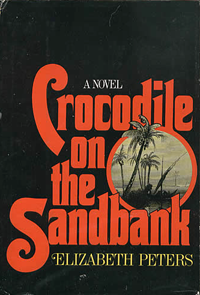
I started with one, The Crocodile on the Sandbank which I bought on a winter walk last week alongside a few Georgette Heyers (Georgette Heyer was supposed to be my Christmas project this year; but, poor Georgette is going to have to wait. I am nearly done Cotillion; but since I brought home Sylvester, Arabella and The Talisman Ring and have not started any of them, I am a little behind). I was immediately and completely hooked by forward thinking archaeologist-detective Amelia Peabody.

She is whip-smart, funny as hell and brandishes her parasol as others would a sword. She is a Victorian woman whose "well-done, sister suffragette" attitude dictates that her impending spinsterhood ( at the ripe age of 32) only means the opportunity to explore the world. She has the means, she has the spirit, the entirety of the globe awaits her perusal.

It's Egypt, though, that she likes the best. Alongside her adorably sweet and pretty companion, Evelyn, Amelia descends upon Cairo like a gust of desert storm. She immediately butts heads with the Emerson brothers: Egyptologists whose intense studies of the pyramids only counter the younger brother, David's, sweet disposition ( and automatic liking to Evelyn) and the older brother, Radcliffe's, Byronic rants. I ADORE RADCLIFFE EMERSON and I adore how quickly Amelia asserts herself as his equal.


Part romance, party mystery and all-parts snappy dialogue and humour, this is my favourite discovery in the mystery genre in an age.

I am completely hooked. I proceeded to gobble up the next three in sequence ( don't you love holidays: where reading late by the Christmas tree doesn't wreak havoc on the next day's delightful plans of nothingness??!) and am already on the fourth.

I have dappled in Heyer, have read a few Christian books ( to keep up with my publisher copies), have started Charles Finch's A Stranger in Mayfair (I DO love his Charles Lenox series), but Amelia and Emerson's adventures in Egypt are sort of prevailing here.


19th and early 20th C "seasons" in Egypt are just as romantic and exciting as the ton's best seasons in a Georgette Heyer Regency.

The wonderful thing about books is you can pick which adventure you want, what world you want to dwell in for awhile, what characters you want for companionship.... and travel space and time and continent in your mind's TARDIS ( so to speak).


CHRISTMAS READING: 2.0 weeks; tons of books ( also tons of social engagements, family stuff, etc., so I think I have done relatively well!)

Emily of Deep Valley by Maud Hart Lovelace ( review to follow)

Eight Cousins by Louisa May Alcott ( I read this every year!)

Black Jack by Leon Garfield ( review to follow)

This Fine Life by Eva Marie Everson ( review to follow)

The Crocodile on the Sandbank by Elizabeth Peters

The Mummy Case by Elizabeth Peters

The Curse of the Pharoahs by Elizabeth Peters

Head in the Clouds by Karen Witemeyer ( see previous blog posts)

Love's First Bloom by Delia Parr ( see previous blog posts)

The Lightkeeper's Bride by Coleen Coble


I have home-made fudge and Amelia Peabody awaiting me for the rest of this glorious day
( with an interruption to go to the gym! Need to counter all of this fudge and this sedentary reading!)

Tuesday, December 28, 2010

Head in the Clouds by Karen Witemeyer


This is how ridiculous I am: I purchased this because I liked the shoes the girl was wearing in the cover photo.

Well... that and I had heard good things about Karen Witemeyer as an up-and-coming historical novelist.

I have yet to read her first novel, A Tailor-Made Bride; but I am going to assume it is as pleasant as Head in the Clouds, which I easily finished in one sitting.

Adelaide Proctor is desperate to find a romance and subsequent family of her own. She spends her days literally with her head in the clouds, day-dreaming of the heroes in the stories she reads by the Bronte sisters and Jane Austen. When a knight-in-shining-armor turns out to be a rake in disguise, Adelaide throws caution to the wind and applies for a job as a governess to new rancher ( and British ex-pat) Gideon Westcott and his mute daughter.

Back story reveals that in true Valjean-Fantine tradition, Gideon is not Isabella's biological father; rather a stranger who promised to take her into his care upon the untimely death of her mother. Adelaide begins to fall madly for both of them and a happy ending can only be secured when dangers from Isabella's past and a hovering uncle bent on securing his niece's massive fortune is halted.


The story is very formulaic and will be very comfortable for those who enjoy this genre. There aren't any real surprises and it follows in the tradition of the Bethany House Historical Romance line. That aspect of the book, I found, to be a little too safe for me. I would love if Witemeyer had shaken and spiced the genre a bit; but I realize that my viewpoint and marketable interest are two very different things. Thus, for an offering in this often-frustrating genre, I found it to be above-average in execution and style.

I enjoyed the constant references into the actual literary world of Jane Eyre and the comparison of Jane's plight to Adelaide's own.

Readers who hanker after a great Romantic hero will be smitten with Gideon. Not only does he have dimples and a roguish sense of humour, Witemeyer does well to make him equal-parts rugged sheep herder and classic British gentleman. By day, he wears work clothes and rustles in the field; brandishing a gun at times, riding a horse and basically appealing to a girl who loves a cowboy. By night, the golden cufflinks are polished, the manners tamed and a starched white handkerchief dabs at his masculine jawline. Gideon's concern for his ward, Isabella, is a charming addition to the romantic plot between he and his governess.


The governess-master plot has seen a real renaissance in recent Christian Historicals and Witemeyer does well in a genre already well-established with a topic that, unfortunately, is becoming a bit too familiar and bordering on the verge of cliche.


I look forward to checking out more of her writing in the future.


Readers of Deeanne Gist and Cathy Mary Hake will feel right at home!

Thursday, December 16, 2010

Harper Collins: Certified Savvy Read Rachel-style


Now, all, I love me some Harper Collins.


First, they have the best YA and Kids catalogue on the MARKET ( bar none ) and they publish some of my favourite authors.


And they have themselves an AMAZING site which I visit daily.


I also follow them on twitter....


...and I attend their events....


...and I read The Literates...


...and they are nice enough to send me books and listen to me ramble.


But, their Certified Savvy Read shortlist just doesn't float my boat. Which is sad because I LOVE SUPPORTING THEM!


Love the idea--- just not as fond of the selections, having read them all. In fact, with the exception of Gilead, I wasn't remarkably fond of any of the novels listed.


Luckily, and as previously mentioned, HC publishes a wide array of awesome stuff that I love!!


So, if I were making a Certified Savvy Read List I would include the following:


-Deafening by Frances Itani


-The Book of Negroes by Lawrence Hill


-Wolf Hall by Hilary Mantel


-Town House by Tish Cohen


-Ines of My Soul by Isabel Allende


there are about 12 dozen more I could list; but these are a good snapshot.


Visit Harper Collins, buy their stuff for Christmas, pre-order Empire of Ruins , and so on and so forth.....and shop shop shop and read read read

Wednesday, December 15, 2010

Georgette Heyer: April Lady


Like A Civil Contract, April Lady revolves around a marriage of convenience. But, while the hero and heroine of A Civil Contract resolve to live in a mutual admiration and respect, the already married hero and heroine of our tale are madly in love with each other.

Viscount Giles Cardross has been in love with Nell ( his now wife) since he first set eyes on her. Made to think that it was a marriage of convenience by her mother, Nell is coached to hide her overflowing affection for her husband lest he find her too clingy.

Somewhat contented to be the tropy-wife, all the while assured that her beloved Giles may, at one point, turn to other female companionship, Nell spends her days with Giles’ half-sister Letty, buys extravagant dresses, rides a marvelous carriage ‘round the fashionable park and wiles her nights away at the most extravagant events of the season.


Giles loves Nell; Nell loves Giles, half-sister Letty loves the poor army- secretary, Jeremy Allandale and Jeremy Allandale loves Letty.

The entire plot is a mixed array of crossed paths, misunderstandings and love very passionate and squelched unknown.

Like the adorable Kitten in Friday’s Child, Nell’s modest circumstances in her youth have made her a poor fit for the excessive ton. Indeed, she is more often than not in scrapes involving over-expenditures she is sure will awake her husband’s wrath.

Desperate to conceal her folly and deeply ashamed at her innocence, Nell and Giles spend most of the book completely unaware of the other’s feelings.

The forbidden, cross-class romance of Letty and Jeremy Allandale complements the frustrating maze of Nell and Giles’ hidden emotions.


You know when you open a Georgette Heyer novel that you can bask in the certainty that all will end well. It’s like a Jane Austen novel, in that respect, it is a guaranteed certainty that all will tie with a neat little bow. But, like the most delicious romances, it is the topsy-turvey paths and cross-purposes leading you to the ultimate gold-at-the-end-of-the-rainbow that propel you onward.

April Lady is chock-full of frustrating “But you love Rhett, not Ashley!” moments and exceptional snapshots of the glorious ton at the height of its gilded Regency brilliance.

Another fabulous read from Georgette Heyer.

Tuesday, December 14, 2010

Georgette Heyer: Friday's Child


Everyone, I have an announcement:


You are going to be reading a lot about Georgette Heyer here in the coming posts because I have decided to just read-read-read them. I have enjoyed the ones I have read thus far ( especially Black Sheep which I cast a movie version for! ) and after Friday's Child, I decided it was time to just go and read as many as I could get my little fingers on.


A few weeks ago, Courtney and I spent a marvelously Christmas day wandering Toronto, seeing a film, drinking Starbucks festive drinks and basking in the city lights and window displays.


We both decided to buy Friday's Child together as she had heard it was one of the very best.


Well, I was delighted:


Lord Anthony Sheringham, Viscount of something or other, seeks to wed the gloriously “Incomparable” Isabella: the toast of the ton and society’s darling and basically the best thing in sprig muslin. But, alack, she refuses him! And zounds! Is that ever dashed inconvenient. You see, Sherry has raked up his bit of gambling debt from places thither and yon and he will not come into his inheritance until the ripe of old age of 25 if he doesn’t marry and prove he can get his act together. Thus, the inconvenienced Sherry proclaims that he will wed the first lady he sees. The first lady he sees is indeed his old childhood pal, Hero Wontage, whom he affectionately calls Brat. Hero is rather young and inexperienced and will set society asunder; but Sherry is demm’d hot-headed and so he does as he pleases and whisks her off to get a special license. His (adorable) friends Ferdy, Gil and George ( of the kind who would as soon fight a duel as drop a hankie ) help in his cause.


Soon, Sherry and Hero (whom he now calls Kitten because Hero is a dash’d unfortunate and misguided name, don’t y’know ), are set up in a fashionable house and Hero cannot help but get into scrapes here and there and all over; much to the chagrin of her young husband. This book is friggin’ adorable. Sherry grows up; Hero stands on her own two feet; Hero falls more deeply in love with the childhood playmate she has always pined for and Sherry realizes he cannot live without his unintentionally incongruous wife. This is one of the funniest Heyer novels I have read; namely because Sherry’s pack of friends, Gil, George and Ferdy play such a lovely role. They fall over themselves protecting Hero, enjoying Hero’s friendship and even going so far as to reprimand Sherry for not seeing what they see immediately: that he is completely in love with the wife he attained from a convenient marriage.


Friday, December 10, 2010

Advent Tour Blog: the Meaningful Music of Christmas


My favourite time of the year is Christmas and my favourite part of Christmas is the music. I am an evangelical Christian so the music that is of most importance to me is that which best conveys the true meaning of the holiday and resonates the scriptural foretelling and proclamation of the Messiah’s arrival. Whatever faith you do, or do not, take a part of, I am sure that music-lovers far and wide appreciate the haunting beauty and poetical nature of some of the most timeless Christmas carols. I thought I would provide a few interesting tidbits about religious seasonal music which I have gleaned from a long and intensive study on the history of church music and hymnody. Merry Christmas All!!


On Silent Night: When I was in Austria this past summer, I had the rare privilege of viewing the transcript of Franz Gruber and Joseph Mohr’s masterpiece, Stille Nacht: one of the most sung carols in the world. In fact, during the British-German Christmas truce in 1914, soldiers from both sides are recorded as having sung Silent Night across the trenches: it being the song that both sides knew with utmost familiarity. Silent Night boasts a miraculous heritage. Strewn from the makings of traditional alpine folk music and bearing resemblance to the famous structure of Austrian yodeling, Silent Night was composed in a small village called Oberndorf on Christmas Eve, 1818. For a small, lullaby-type carol to sift over the alps and into its subsequent publication by John Freeman Young in 1859 is rather miraculously baffling.


Oberndorf is a remote community somewhere outside of Salzburg. Visitors to this rural community would have been sparse ( due to its location and the rather rudimentary modes of transportation available to residents in the early 19th Century) and influence from the outside world would have been sparse as well. Thus, Gruber and Mohr drew on what musical resources were available. Sketching a haunting melody and simplistic words ( with a strangely powerful imagery), Mohr and Gruber crafted a legend: using the resources they had and the meager musical range they had. Sung on that first fateful night with just guitar accompaniment, Silent Night is now one of the most popular religious songs in the world. In fact, in a society so bent on stripping Christmas from the malls and the streets, Silent Night cannot be beaten. Retail stores strict on circulating non-religious music still include Silent Night in their compilations, films and television series use it quite prominently and in a growing tradition of carolers and children unfamiliar with the lyrics to religious carols, Silent night is universally known.


Poetically, Silent Night is divine. Using a simple cadence and painting a soft, still crèche ( not unlike those so famous at the Austrian Christmas markets in the Tyrol and Vienna), Silent Night boasts little glory. And yet, at its most resonant, it encapsulates the true meaning of the season. It offers redemption with “ the dawn of redeeming grace” , assurance “ Christ our Saviour is Born”; and even testaments Jesus as Messiah, “Son of God/ Love’s pure light” This song moves me beyond words


On Handel’s Messiah: Handel was a private person whose resounding masterpiece The Messiah transcends time and place with an almost ethereal energy. For such a commonplace vessel to be used as the champion of God is a miraculous story to behold. Handel’s piece, I argue, is moving because it strings us from the earliest prophesy of Jesus through His never-ending reign. Brimming with majesty and hope, Handel draws greatly from scripture and pieces his contrapuntal, multi—layered masterpiece with fragments of the Word of God. For a large majority of religious believers living in London in 1741 ( when the Messiah was composed), the scripture presented in church through music, sermons and narrative, would have been their only link to the Bible.


The limitations of the printing press ( even since Gutenberg’s publication of the King James Bible in 1611 ) were still pronounced and the greater part of the working class world still suffered from illiteracy. Thus, the scripture performed and presented in musical form would have been greatly admired and appreciated. It does little good to attempt to dissect each and every delicious part of the great opus; but I do want to point out a few areas of note: First, The Messiah is broken into a trinity ( as it were ) of Acts: from the Annunciation through the Passion ( and significantly Christ’s ascension) and finally the Aftermath ( the promise of redemption and the glorification of Christ). The famous Hallelujah chorus ends the second part of the three acts and is not ( as can be believed from its climactic feel), the end of the composition. The centuries old tradition of standing during a performance of the Hallelujah Chorus (No.44) was begun by King George II when he first heard and was moved by the piece. There are several explanations and theories as to why King George II first rose; but I like to think he was so moved by the piece ( Handel is noted as saying that while composing it, he saw the face of God) he was forced to stand erect.


On It Came Upon a Midnight Clear : this is one of the first Christmas carols penned by an American author. Christmas carols date back as early as Roman Times. From the Tudor Courts of England through the 18th Century writings of Charles Wesley (Hark the Herald Angels Sing), Carols experienced burgeoning and wide spread popularity especially in the 19th Century when this famous Carol was written. It Came Upon a Midnight Clear was written in 1849 by Edmund Sears, a pastor at a Unitarian Church in Wayland,Massachusetts . It was first published in the Boston Christian Register on December 29, 1849. Often set to one of 2 melodies, either “Carol” (composed by Richard Storrs Willis, a once student of Felix Mendelssohn, the famous composer) or “Noel” (adapted from a popular English melody).


A cross-denomination hymn, It Came Upon a Midnight Clear can be found in a myriad of hymnals from the Lutheran Book of Worship to the United Methodist Hymnal (which usually set the lyrics to the tune Noel mentioned above). While the “Carol” setting (written by Willis) is used commonly in Episcopal churches. It is the Carol setting that is most popular in pop recordings by famous artists. Edmund Sears was a prolific author of numerous works influencing 19th Century liberal protestants; but it is his haunting carol emphatically positioning the angel’s presence, not only at the birth of Christ, but still as Christ’s “guardians” here on Earth, that has lasted. Sears was educated at Harvard Divinity School and always showed a great propensity to understand and communicate tenets of theology.


When questioned how a Unitarian minister could write so passionately about the events surrounding the nativity (as outlined in his famous carol), Sears declared “I am more Unitarian in name than conviction.” In his book “Sermons and Songs of Christ’s Life”, published a year before his death, Sears wrote “Although I was educated in the Unitarian denomination, I believe and preach the divinity of Christ” There are several theories behind the inspiration behind It Came Upon a Midnight Clear and yet it is the resonance of the lyrics that are truly the most potent reflection of Sears’ intentionality. Some believe that it was penned at the request of a minister-colleague of Sears; others believe Sears originally wrote it as a melancholy reflection of contemporary circumstances (most notably on the Mexican American War, 1846-1848 and particularly the bloody annexation of Texas). Sears opposed the Mexican-American conflict due to his religious beliefs and his great belief in the American public which had, since the Revolutionary War, been thriving and peaceful.


The lyrics of It Came Upon a Midnight clear reflect a time when the United States was torn asunder yet reconciliation and hope, through Christ’s birth and everlasting presence, present a reconciliatory theme that the singer is left with far after the last stanza. Moreover, It Came Upon a Midnight Clear binds humanity with an ethereal presence and with heavenly divinity. “From angels bending near the earth to touch their harps of gold” provides a sense of solace to our gritty earth-bound souls. Here, as Christ came to touch the very lowest of humanity; so do the angels bridge the gap between earth and heaven intervening as heavenly hosts to a broken world much in the same way that Christ’s birth ransomed humanity, broke the “veil” and connected us with his golden and everlasting life through the Father.


Later, during the American Civil War, this particular song experienced resurgence in popularity. Sung in Civil War camps and throughout the nation, it once again spoke peace to a gravely desperate humanity in the same way it had expressed Sears’ frustration with the Mexican American War. Scripturally-sound and still relevant to Christian’s 160 years after its authorship, It Came Upon a Midnight Clear is as prevalent today as it was when Sears first took pen to paper. Still we struggle with hardship war and the evasion of Peace. Yet still, as in Sear’s days of yore, we recognize that Christ intervenes: be it through His glorious presence or the imagery of angels to re-iterate the promise of eternity and the peaceful glory that awaits believers.


On I Heard the Bells on Christmas Day: Renowned American poet, Henry Wadsworth Longfellow experienced great hardships to counter his beautiful and beloved poetry. “ How inexpressibly sad are all of the holidays”, he wrote in his journal on Christmas Day, 1862 after the untimely death of his wife to a tragic fire accident. “’ A merry Christmas!’, say the children,” Longfellow expressed in the same journal entry, “but that is no more for me.” In December 1863, tragedy struck again when Longfellow learned that his eldest son Charles, a lieutenant in the Army of Potomac during the American Civil War had been severely wounded in Battle . Shortly after a visit to his son a year later in December 1864 ( where Charles was still gravely ill), Longfellow penned the words to “ Christmas Day” a poem equally illustrating Longfellow’s despair of circumstances past and hope of assurance in the peace of the future. Later set to music and entitled “ I Heard the Bells on Christmas Day”, the song remains a Christmas standard.


It is Longfellow’s personal hardship which makes the lyrics to the carol a profound and simple exposition of God’s presence in a faltering world that remains so relevant today. There are two musical settings to this song. Both are widely used in modern recordings. One (as recorded by Elvis) is set to a composition written in the 1870s by English organist, John Baptiste Calkin and the other to a composition by Joseph Mainzer in 1845. It is my belief that the latter better houses the melancholy and reflective tone of Longfellow’s words.


Historically, the words of Longfellow’s poem resonate with the common experiences of many soldiers on both sides of the North and The South. Corporal J.C. Williams, Co. B, 14th Vermont Infantry, wrote this comment on Christmas Day 1862: “This is Christmas, and my mind wanders back to that home made lonesome by my absence, while far away from the peace and quietude of civil life to undergo the hardships of the camp, and may be the battle field, I think of the many lives that are endangered, and hope that the time will soon come when peace, with its innumerable blessings, shall once more restore our country to happiness and prosperity.”


Like the greatest works of literature, the above musical offerings continue to stand the test of time. Next time you are in the mall, on the street, or near your own fireplace harkening to your favourite renditions of traditional carols, spare a thought for their composers, their lyricists and the rich and resounding history that informs the most popular of Christmas carols and hymns.


Wednesday, December 08, 2010

TLC Blog Tour: A Secret Gift


In Depression-Era Canton, Ohio, a newspaper ran a remarkable ad offering cash to 75 needy families whose letters proved they were most in need of this strange gift. Incredible strains of hardship, family and dignity resulted in a series of letters collected by author and researcher Ted Gup. Gup traced every one of the distributed cheques to families with a wealth of history and information about the Depression years.


This unique patchwork of giving and humanity sews a compelling narrative and history lesson at once. Rather than another fact-laden exposition on the US depression years, Gup provides insight into the Human Condition through real stories. Equal parts tragedy and hope, A Secret Gift still resonates in today’s uncertain world. America, again, is under fierce economic strain and the stark joy of a small gift thoughtfully bestowed spans miles.


Gup’s meticulous research and overt passion (he traced families throughout the US and undertook numerous interviews ) help inform a triumphant and earth-shatteringly inspiring slice of history that reaches very close to Gup’s heart.

I was moved to tears and know that this is a book I will personally cherish; but also bestow on my loved ones. There is a communal meshing of worlds as every reader will relate to the cries of human despair echoed in the letters of these everyday people. An interesting parallel to the Canton letters is Gup’s presentation of the mysterious benefactor, pseudonym Mr. B. Virodot, whose own childhood as a Romanian Jew immigrated to America to seek his own American dream, is fully realized. From basic human necessity to seeming trifles which could inspire, help and save the soul, the letters and themes in A Secret Gift help fashion it as the ideal Christmas present.

For yourself or for a loved one, make sure that this amazing historical perspective finds itself somewhere near a stocking or Christmas tree.


My thanks to TLC Book Tours for the copy of this extraordinaire book


-Read more on A Secret Gift during tomorrow's tour stop at Knowing the Difference


-purchase A Secret Gift at amazon.com or your favourite online retailer


-learn more about Ted Gup and A Secret Gift's remarkable story at the book's official website


Tuesday, December 07, 2010

Blogging for Books: Two Tickets to the Christmas Ball by Donita K. Paul


Two Tickets to the Christmas Ball by Donita K. Paul is as Christmas as eggnog,cinnamon sticks and holly. A completely fresh addition to the usual CBA offering of seasonal fare, Paul uses her penchant for fantasy to infuse a charmingly cozy romance with wizards and magic.


Can a Christian book have wizards?, one might ask. Of course!, for wizard, in its etymological origin, namely refers to one who is sage or wise. It is this slant and the looming and enigmatic Wizard's Christmas Ball that is the strongest offering of the tale.


Cora and Simon have worked near each other for five years at the same consumer company. Their shoulders never bump, though recently they have been thrown together in the oddest circumstances: Simon's parking spot moved directly next to hers, they run into each other on mystical Sage street at a strangely wonderful bookshop and Cora draws his name in the annual Christmas gift exchange.


Enter Simon's sister, Candy, and her love for kittens and the story begins to melt into a snowglobe of possibility and romance! I really enjoyed this breezy read and when paired with a gingerbread latte it immediately put me in the festive mood. Christians will be challenged by Cora's skepticism of the Christmas commercialism and relate to her questions on how best to embrace the Season. Readers in general will be warmed by Simon's bond with his younger sister and by Cora's steadfast growth and independence, away from her abusive past.


While I found that the story developed-and-developed just to wrap up quickly with a neat little bow and while I question Paul's sensibility about young men and women in their late 20's and 30's ( no one says "good night" as an exclamation ), I found this a wonderfully unique option for those who revel in Christmas-themed tales.


This would make a fabulous tv movie so I hope that the Hallmark people are hovering close at hand.


I received this book from the publisher for review as part of the Blogging for Books program and was bid to give my honest opionion, as I have done above.


Monday, December 06, 2010

In which I ramble about Sherlock... elsewhere


Once Upon a Bookshelf was kind enough to let me shamelessly promote my main literary squeeze, Sherlock Holmes last week in the weekly LISTED feature.


Visit me there and see what I was up to:

http://books.moonsoar.com/archives/2010/11/29/listed-a-study-in-sherlock-10-books-for-sherlockians/