Showing posts with label siri mitchell. Show all posts

Tuesday, April 03, 2012

The Messenger by Siri Mitchell


Siri Mitchell’s work is often featured here because I think (nay… I KNOW) she is one of the strongest historical voices in the CBA.  One such reason for commending her is her wide range. Unlike many authors of her ilk, she stretches boundaries by playing with narrative voice and writing well-researched books about a variety of time periods.  She is clever, intelligent, writes inspiring heroines dealt interesting hands in a myriad of historical eras and fills her prose with acute verisimilitude which reads in a flawless, effortless manner.

Here, Mitchell’s canvas is the conflicts embedded in the Revolutionary War.  Philadelphia: from its higher society to its low tavern world is peppered with spy rings, mystery, heart-pulsing tension, and cloaked faith even while humanity pits against each other.  The Messenger is divided between the voices and perspectives of young Quaker woman Hannah Sunderland and Colonial spy Jeremiah Jones. Hannah, desperate to aid her rebel twin brother during imprisonment is forced to live outside of her usually rigid and conservative realm.  Jeremiah, knows he needs the guise of Hannah’s innocence to help permeate the prison walls; but is initially unsure if this strict young woman is up to task.  Both Hannah and Jeremiah will have to test their own wills, trust in each other and step outside of their comfort zones to achieve their mutual purpose.

There is a love story in the novel; but it takes back-burner to the well-wrought tension at the forefront. Indeed, Mitchell  does well at plotting and propelling action forward simultaneously developing her characters and their growing attachment in stride.  There is a palpable sense of dramatic irony felt from the first few pages for the anticipating reader; but Hannah and Jeremiah remain realistic unsure of their growing dependence on each other.  Thus, their relationship is meted out slowly and in a believable manner.

I read somewhere ( perhaps on the thread Siri Mitchell contributed to on the Bethany House facebook page) that Revolutionary History was is not deemed overly popular in the CBA: I, however, was fascinated by this unique setting and immediately want more.  It made me want to revisit the beautiful HBO John Adams film and re-read more about our American neighbours and their hard-fought forge toward independence.  I  appreciated Mitchell’s inherent grasp of Quaker traditions: including the “thees” and “thous” implanted in dialect.  This put me in mind of Alice Henderson in Catherine Marshall’s Christy and allowed me to readily establish a narrative constant in my head when reading Hannah’s version of the story.

I also very much enjoyed the unbreakable bond between Hannah and her twin brother. I had often heard that twins can experience the misfortune of one another and that indelible invisible thread that forces Hannah to risk all to save her beloved brother was quite moving.

There is an adamant and abundant theme of grace and trusting; yet, none of the characters are “sickeningly” Christian.  In fact, Mitchell excels at penning heroes and heroines tested by faith and plagued by the doubts that withstand any time period.  None of her heroines are perfect; yet all strive to live up to the metrics of their conscience: which is all that one can ask given the frustratingly blurred line between dark and light so apparent during this time in history.

A few Siri Mitchell review from the backlogs:


I received this review copy from Graf Martin Communications on behalf of Baker Publishing Group.

Thursday, February 23, 2012

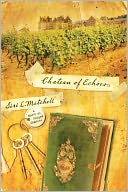
Chateau of Echoes by Siri Mitchell


Chateau of Echoes is my first “keeper” book of 2012.  The first book that makes me want to leaf through it again in search of all of the treasures and snippets and revelatory moments which may have evaded me during my inaugural reading.  Siri Mitchell, alongside Lynn Austin and Dale Cramer, is my favourite Christian novelist.I have adored her previous work and her strong literary elements and thematic devices. In fact, I was thrilled to be an INSPYs judge when She Walks in Beauty received the well-deserved award for Best Historical Novel of the year.


Chateau of Echoes is a thesis on passion: passion for stories, passion for legend, passion for research and passion for history--- social history----food, wine, dancing, exploration, myths and stories. In fact, excavation runs as an apt undercurrent throughout the text.   Widowed Freddie owns a chateau in Brittany, France.  Here, she is pursued by the many readers and lovers of the history of a young medieval diarist named Alix: whose grasp of English and languages is remarkable and rare considering the station of women in her age.

 The writing is beyond what is usually housed in the Christian fiction genre. If you are an avid Christian fiction reader like myself, who also has a penchant for sleek literary merit then this is a book you can unashamedly thrust at your non-Christian friends. The themes of God and acceptance are grappled with in a natural and stormy way. Indeed, like so many of Mitchell’s heroines, Freddie’s coming-to-terms with Faith and Grace is a tumultuous journey which requires some semblance of self-sacrifice and the giving of one’s way to a Higher Power.   We learn that Freddie’s deceased husband was an atheist and the guilt that has accrued from his passing keeps Freddie at a distance from her Creator.  One Christmas returning to church after a long drought, she explains: “Looking back on those years, I realized I had missed the wonder of Christmas and the contemplation of the divine. I missed meditating on the sacred moment when God reached down and touched the earth. Peter viewed Christmas as an opportunity to ease the collective guilt our culture had accumulated throughout the year.”  And further: 
“Neither of us understood a word; but the liturgy was so familiar it seemed as if no one was there to actually hear it, but to experience it. To enter a stone country church lit by candlelight on the holiest evening of the year.”  The mystery and mystic nuances of the celebrated Season help broaden the theme of legend and spun tale. For example, the teenage diarist Alix, so followed in the tale and such an object of affection for a visiting phd student and the brash Robert Cranwell: author of numerous celebrated novels now only coming to terms with his desire to write something of greater substance, spends the ilk of a season penning a great mystery play.

 The relationships between men and women past and present is not easily dissolved when taken in great, galloping gulps as this novel affords. In the past we have Alix and her relationship,  as of yet unconsummated by her husband, Awen.  Her struggle to come to grips with the man who approaches her bedchamber only to weave a tapestry of narrative ( not unlike a Scheherazadean tale) each night echoes the modern day presence of Cranwell, the competent writer who invades Freddie’s life and chateau for months.  Yet, to mull on the idea of male and female voice one must also consider the great pains given to make each voice heard across the ages: sure, Awen spins the nightly tales (painstakingly researched legends and fables collected by Mitchell); but it is Alix who is modern in her ability to read and write many languages and script a Mystery play that her husband will ultimately take credit for.  In present, it is Robert Cranwell who will pen Alix’s story for the world to hear; but the narrative voice belongs to Freddie.

The presence of Guinevere, of the story of the Holy Grail, of King Arthur and his Knights and of Joseph of Arimathea and the history of the grail are all prominent here and so well infused you feel as if they are sparking off the page and you are a guest at the Chateau in a similar manner to Cranwell.

Mitchell is an ardent traveler and her details as to French culture and food ( even on a sojourn Freddie takes to Italy) are so well-penned you are gifted a sort of travelogue within in a novel. I know for certain that I want to hunt out all of the magical portions of France painted in this tale. Her passion becomes even more acute when paired with the amount of detail provided at the end of the novel: recipes, Breton History, even a Medieval calendar to guide readers through the inserted passages of Alix’s diary.

The balance between the past and the present and the seamless weaving of their thoughts on love, doubt, faith and redemption are so well-balanced: like a carefully-tipped literary see-saw.

I was remarkably impressed by Mitchell’s fresh narrative style in A Constant Heart and more still when she penned Love’s Pursuit: what is destined to be a modern Christian classic.  Chateau of Echoes should NOT be limited just to the faith-reader public. It is far too exceptional and far too beautifully written.  Yes, there are elements of faith; but they are sprinkled to highlight constant doubt in the presence and the structure of history.

If you are in a book club you NEED to pick this book as a future read.  There are some thought-provoking discussion questions included ( and not the usual range of “what colour of heroine’s hair would you most like to have” and trash like that)

I cannot believe this book has not found a larger publishing house or bigger reading base.


Thursday, April 21, 2011

A Heart Most Worthy by Siri Mitchell


First off, I want to thank Ruth for sending this my way! Thank you, Ruth!
Next to Lynn Austin, Siri Mitchell is my favourite Christian writer in the historical genre and she gives us another strong offering in a series that focuses on fashion through the ages.

Here, the fashion theme is blatant: the story follows three young Italian seamstresses working for the formidable Mme. Fortier in 1917 Boston. The outside world is fraught with conflict: immigrants, anarchists, the Spanish Influenza, the American involvement in the Great War. Near home, Annamaria, Julietta and Luciana discover life and love in a delightful coming-of-age tale told in the style reminiscent of Montgomery or Alcott.

I should speak a little more to the narrative style. As proven in A Constant Heart and Love's Pursuit, Mitchell enjoys playing with narrative perspective in voice. In the glorious, INSPYs-winning, She Walks in Beauty ( which I certainly enjoyed reviewing and commenting on as a judge in the historical category ), it is ephemera: in society columns and newspaper clippings that informs Mitchell's unique narration.

I must admit that the voice in A Heart Most Worthy was grating on me at times: especially with consistent asides to the reader and with the same word ending a perspective and being used, in a slightly different context, to begin the next narrative point of view. However, I got used to it very quickly and it did not detract at all from my enjoyment of the story and its meticulous historical research. In fact, I am impressed by Mitchell's constant dedication to reinventing her story-telling technique. In a genre and market-place steeped in same-old, same-old tradition, it is nice that someone takes risk.

While Mitchell's narrative voice informs of many character triumphs and failings, it is still up to the reader to judge on their own while watching the action unfold.

There is plenty of action: from an assassinated count's daughter to a Romeo and Juliet love story between a young seamstress and the Sicilian grocer across the road to a passionate woman who skips confession to meet a sinister young man in questionable situations.

Mitchell handles the historical aspects, as always, with great fervour and respect and weaves them seamlessly into her tale. Moreover, she is true to the Catholic faith and tradition as it would have been the most prominent and lasting religion in the Italian Immigrant world. She is able to pursue great themes of faith and God's redemptive power in a religion not often at the forefront of evangelical Christian fiction ( Austin did this quite well with the Jewish faith in While We're Far Apart).

Perhaps my favourite thread in the story ( something I share with Books, Movies and Chinese Food's amazon review) is the developing love between Annamaria and the sweet grocer, Rafaello. In tradition, Annamaria, as eldest daughter, is expected to remain single, childless and devout to her family. When she meets the forbidden Sicilian grocer's son and begins a sweet, often wordless communication, she realizes that all of the dreams she has harboured guiltily for so long must become reality. She finds a voice, a backbone and the courage to attend to her own desires. Rafaello's devotion to her family, his enemies, is a great act of love (putting one in mind of the great sacrifice made in Love's Pursuit).


As per usual, I was delighted to have a new Siri Mitchell in my hands and I identified with aspects of each of the strong, different and equally amazing women and their plights in self-discovery and love.


Because I am such a massive Lynn Austin fan and because Austin excels at weaving multiple story and character lines within periods of history ( especially exploring a woman's place in a domestic sphere and in the greater sphere of historical significance), more than once my mind tried to conceptualize how she would deal with this experience were the plot submitted to her hand.

A great read and one I am sure will be seen on the INSPYs shortlist again.


Friday, April 23, 2010

She Walks in Beauty by Siri Mitchell


rating: ***1/2


publisher: Bethany House


She Walks in Beauty is another superior offering from one of the most gifted writers in the Christian historical vein.


First off, I must apologize for the lack of posting. I have been traveling for work the entirety of the past month and jaunting from coast to coast in my beautiful country of Canada for appointments is exhilerating but also exhausting. Nonetheless, I have been reading a tonne!


The book begins as Clara's over-bearing aunt fires her governess and true confidante smashing all Clara's hopes of attending Vassar College by instead arranging for the societal education befitting a young woman on the heels of her debut. Clara is primed and primmed and petted to capture the spotlight of New York's gilded circles and secure a wealthy husband.


The wealthy husband her family chooses is the heir to the De Vries fortune, a past enemy that Clara is used as a pawn to capture--- to right past wrongs and restore the family fortune once lost.
In a manipulative and gaudy game of tainted money and secrets, dipping into the garish hovels of Mulberry Street and waltzing with the likes of the Vanderbilts become the thread that pieces together Clara's world.


As per usual, Mitchell perfectly captures the historical climate and her research is impeccable. Like A Constant Heart and Love's Pursuit before it, a particular era of fashion is explored to emblemize the societal restrictions placed on women and as a particularly resonant symbol of female repression. Here, the corset is seen as a torturous contraption for female suffering. Indeed, some of Mitchell's accurate descriptions of its effect on women---be it through female "hysteria" or more gruesomely violent physical effects will leave readers cringing.


Mitchell, here, does not play with mutiple narration in the same way as her previous two historicals. Rather dual voices counter Clara's first person narrative: the societal newspaper praising the merits of lavish debutantes in an elite column and the Tattler: a sort of 19th Century tabloid. Both provide an interesting counterbalance to Clara's perspective and offer an enlightening and time-specific lens.


Mitchell's evangelism is again subdued. The great theme of sacrifice and undconditional love in Love's Pursuit is replaced by the message of Christianity through hymns: referred to as Clara's mother's "theology." A personal passion of mine, I was delighted that so many stanzas were interwoven throughout the story.


While I applaud Mitchell's ability to appeal to a secular readership with a subtle gospel, I found this an almost cloaked representation of Christian fiction: working more as a good, moral tale rather than an explicit gospel message. As such, I found it lacked the emotional punch of Lynn Austin's novels or even Love's Pursuit.

Nonetheless, Mitchell is a brilliant writer and this story, as always, is excessively readable.

I cannot wait to read more of her work!


Many thanks to Bethany House for the review copy


[ on a slightly more superficial note, I adored the romantic lead in the story and a certain scene involving a rare and valued copy of Byron and a pressed bunch of pansies... read for yourself!]

Tuesday, May 19, 2009

Love's Pursuit by Siri Mitchell


publisher: Bethany House
rating:****

(Note: read in uncorrected galley format)

There are few novels which have knocked the wind out of me the way Love’s Pursuit by Siri Mitchell did.

I was fortunate to read this in Massachusetts on my mini-vacation there: settled near the Massachusetts Bay Colony where her gloriously written story of grace and redemption takes place.

Susannah Phillips is an upright Puritan girl with strong moral fiber and a mind turned to Godly things. She narrates one half of the story. The shy and secretive Small-hope Smyth narrates the other. Like A Constant Heart, the story does not underestimate the reader yet assumes with switch in voice, that the reader will keep up: so immersed are they in each perspective. Mitchell does very well in exploring this narrative switch. Few writers do it well but it is a tried and tested technique with her.

Life in Stonybrooke is interrupted by the dashing and cavalier Capt Daniel Holcomb: a wonderful, comic, brave and courageous man whose faith in God is dissimilar to the Puritans but strong nonetheless.

The novel tells two intertwining stories: one of Susannah and Daniel. The other of Small-hope and her morally stalwart husband, blacksmith Thomas Smyth who loves her far more than she thinks she can ever love herself.

Small-hope’s name is resonant throughout this tale where grace is hard come by and hope seems dwindling and lost.

Mitchell delves into deeply uncomfortable territory regarding the subdued roles of women in harsh Puritanical communities. It seems only Daniel and Thomas see beyond the motives of the City on The Hill to reduce women to silent harbingers to bear children and keep house.

I absolutely loved this novel because it splayed redemption so deep and lasting I could not help but start at the first page once more after I had (reluctantly) finished the last.

This is literary writing at its finest. Siri Mitchell breathes life and pitch-perfect Puritan dialect into her atmospheric story.

She also contemplates deep themes, pushes boundaries and develops characters so startlingly real you are surprised they are not sitting across from you.

Not every one is exactly who they seem and there is more than one surprise at the hands of this storytelling master.

I cannot ---absolutely cannot ---wait to see where Mitchell takes us next.

She is spell-binding.

I will read this until the binding comes apart, I assure you.

A wonderful complement to my first trip to Massachusetts.

Wednesday, May 13, 2009

Boston! and a Passion Most Pure


I am currently reading A Passion Most Pure by Julie Lessman (visit her blog here)

I had heard a lot about this novel --- mostly reviews stating that it pushed boundaries of Christian fiction.

It certainly is not your grandmother’s Christian fiction. There is plenty of---albeit well-regulated---spice and simmer.

It is incredibly fun to read and very atmospheric. Lessman does well to capture the Irish dialect and culture in Boston circa 1915. Also, she paints an interesting picture of a steno pool.

I am heading for Boston tomorrow for a trip. I have never been before and I am quite excited! It is quite apropos, therefore, that I am reading the first in the Daughters of Boston series in preparation.

I, of course, will remember Meissner’s Shape of Mercy when I visit Salem and the ARC I finished reading for Siri Mitchell’s breathtaking Love’s Pursuit ( stay tuned for a full review).

I am also quite looking forward to tracking down Orchard House in Concord: the home of Louisa May Alcott: a write whose works have greatly influenced my formative years.

Beyond Little Women ( quite popular in Christian circles for its great moral values and universal truths), I love Alcott’s Eight Cousins and Rose in Bloom: two novels I read at Christmas every year. I love traditions like this.

The BEST part of going to Boston ( besides the historical ambience and harbour and trips to the surrounding area and ANTIQUARIAN bookstores) is my reconnecting with my best friend: who moved from Toronto to Massachusetts to finish her doctoral thesis last August.

I very very much miss her and as much as I am looking forward to exploring and learning and taking lots of photographs, I am most looking forward to laughing with my friend and catching up.

Sunday, March 22, 2009

"The Cubicle Next Door" by Siri Mitchell


rating: ***
publisher: Harvest House


Jackie works for the US Air Force. She has been there for ten years, is extremely proficient and has her own office.

But, not for long.


The powers-that-be squeeze a divider between Jackie and a new pilot/history teacher named Joe and office space becomes a little more crammed.


Even more so because Joe immediately likes Jackie and spends the rest of their working relationship pulling her out of her comfort zone (vis-a-vis a cubicle) and on to the rest of her life.


The metaphor of the cubicle closing someone in to a space: trapped and somewhat ignored is a prevalent one in Mitchell's breezy chicklit.

Jackie narrates that story with precision and a fresh sarcasm/realism that few first person narratives can pull off.


Joe is an engaging, funny and downright adorable pilot ( with dimples *cough*) who endears us (and Jackie) by seeing more in her than she ever does in herself.


While this is a strong contender in the realm of Christian chicklit, I cannot help but think that Mitchell was somehow reigning in what could have been an even more daring and delectable novel.

This could be because her most recent foray into the genre, A Constant Heart is more than one of the best of its kind.


The Cubicle Next Door refers to an eponymous blog wherein Jackie informs a wide readership of her confused and mixed feelings toward Joe. She also shares some kernels of wisdom and a delightful vulnerability.

This being said, the blog itself is the weakest part of the novel. For a writer like Mitchell, crafty blogs should be a cinch but I could not figure out why this blog enticed upward of 20 000 hits a day. Moreover, why it would be the subject of a television news segment ....the very one that lures Joe into reading it daily----unaware of its author.


The premise is catchy and the characters well-drawn ( I love Oliver: Grandmother's British love interest and the ladies Joe helps switch from Bridge to Poker).

This is a light and page-turning read that I devoured in a sitting. Joe IS wonderful and the tenacity and patience in his pursuit of Jackie will restore a reader's faith in romance.

I particularly enjoyed the setting of Colorado Springs and area as that is a familiar territory for me because one of my closest friends lives there. It made me feel inadvertently at home.


I would definitely consider reading A Constant Heart if you can choose but one Mitchell title. However, you cannot go wrong with this slightly lesser fare. Mitchell has a knack for words and stories that translates well into any genre.


More Mitchell? I recommend here highly.... see here

Thursday, February 26, 2009

A Constant Heart by Siri Mitchell


rating:****
publisher: Bethany House


And in this week’s This Christian Book Didn’t Suck segment, we have Siri Mitchell whose glorious foray into historical Fiction, A Constant Heart was pleasantly pleasantly received by this reader! I loved it! I did! I did!


I have to tell you, before Mitchell I could not think of one Christian author ( save the late Jane Orcutt) who could have done Elizabethan dialogue well. Most would have tried to get every third word or staved from it altogether. Not Mitchell. She wrote gracefully and with seeming effortlessness.


It is a beautiful historical with enough romance and intrigue and resonance of life as a courtier in the court of Elizabeth I to keep this picky reader titillated. No Courtier can love another woman save Queen Elizabeth I : not even his wife. And from this simple idea, Mitchell weaves her spell-binding and oft-poetic plot.


I have to admit I almost scanned this book on the shelf due to a.) my preconceived ( and obviously ill-founded) notion that a Christian writer could not broach the Elizabethan era and b.) due to the title ( which, surprisingly is strewn from a rather poignant moment in the development of a complex relationship between our hero and heroine).


This book is severely well-written: especially for its format. It criss-crosses from the perspective of the Earl of Lytham ( the flawed and human romantic lead ---expect a lot of dimension to characters here, even those in periphery ) and Marget his new and beautiful wife. I have never previously known this device to work well. Even in that now-pulp favourite “the Time Traveler’s Wife”, this is done forcefully and confusingly. Mitchell pulls it off with flair.


There is a Sir Walter Raleigh cameo …but not a stupid one. And, any moments where Elizabeth I plays into a scene are done surprisingly well, subtlely and without over-indulgence.


Impressively, the book is infused with historical accuracies without "a cut-from-this-source, paste here" feel that plagues so many writers of the genre.


The dialogue is spot on, the romance plot keeps you in “Elizabeth/Darcy will they EVER get together” mode and I learned a lot about the Elizabethan Era. Mitchell does a magnificent job of delving into the problem of face painting and the toxic ceruses and cosmetics that plagued Elizabeth and the women of her court.


On picking up this title I thought, due to the synopsis on the back, that it might be a romance of disparity of ranks: perhaps a lady of the court and a stable boy… and I was in the mood for that.What I got in its stead far exceeded my expectations.


There is nothing rash, crass or hasty here. Instead, we are given a thought-provoking expose of court life.


I had previously skipped Siri Mitchell's work because it seemed far too chick-lit for me. However, I hope she recognizes that she has found her niche.


You have all heard my treatise that I like one out of every five Christian novels I read ( and the other four are sometimes abysmal ). Siri Mitchell has leapt into my "Writers To Follow" list and I cannot wait to read more of her fresh and engaging prose.


One of the best Christian novels I have read this ( or any ) year.