Showing posts with label toronto. Show all posts

Tuesday, March 21, 2017

Where have I Been?

Blogger friends, this is just turning out to be the busiest year.


My next writing adventure takes me back to 1930s Boston so, of course, I am using any opportunities I can to head out to Beantown and its historical wonderfulness in order to immerse myself in the place and walk for hours.   I stayed at the Omni Parker House: which will be familiar to readers of Of Dubious and Questionable Memory as one of the locations Jem and Merinda visit on their Massachusetts adventure.


a few snippets from my recent adventure


And then, Allison Pittman ( my co-author from Starring Christmas) and I found ourselves in Chicago for some major brainstorming and some major Palmer House-ing ( readers of A Lesson in Love and Murder  will remember my use of that hotel -- -it's where Jem and Merinda ( and Ray!) stay when they're in Chicago.

We also found ourselves in the Room Where It Happens seeing the amazing Chicago cast of Hamilton --including new addition Wayne Brady as Aaron Burr.   note: I got these tickets the day the first block of Chicago seats went onsale last June. That's how long we waited.


Chicago, you're so pretty 

the Palmer House 


Rachel and Allison


And for those of you who may be wondering if Hamilton  is everything they say--- it is--- and more.  I have seen hundreds of shows and it is unlike anything I have ever seen.


speaking of Unlike Anything I have Ever Seen,  I am a huge fan of Come From Away.  I saw the original cast in Toronto last fall during their pre-broadway run and am absolutely thrilled that this small Canadian musical with a staggeringly beautiful story and infused with Maritime Canadian music is making a splash on broadway.  Just read what the NYT had to say 


As for theater in Toronto, I will be seeing Mrs. Henderson Presents straight from the West End next week so will keep you posted.


 And this past week I was in the East Coast of our great country for work!

Image may contain: sky, cloud and outdoor
love the Jelly Bean houses in St. John's, NL 
Image may contain: sky, house and outdoorImage may contain: ocean, sky, outdoor, nature and water


And from St. John's, I flew a tiny plane out to PEI. Last time I was in Charlottetown was in the height of summer--- it is decidedly more quiet at this time of the year.


So, that's what I have been up to.    And it doesn't slow down a lot.   I still have work travel for my day job and an Easter Weekend research trip back to Boston.   But, I am also excited about THE WHITE FEATHER MURDERS which releases May 1

There's a nice review in the next issue of Romantic Times


order at Barnes and Noble     Amazon      Chapters 


Thursday, February 16, 2017

Theatre Post !

I have had some fun theatrically recently and am so excited to tell you about it.

First off, Come fromAway: a musical I loved in its pre-Broadway run at the Royal Alex is now opening on Broadway. It is set during the aftermath of 9/11 in Gander, Newfoundland and showcases the incredible hospitality and resilience of the spirited locals.  If you are in New York, make sure you see it

Two weeks ago, I went to Halifax to see Kim’s Convenience at the Neptune Theatre. I always love an excuse to go to Nova Scotia and my friend Kat has long been this ground-breaking production’s stage manager.   Though I had seen it before in Toronto ( with Ins Choi, the playwright, playing prodigal son, Jung), it was a fresh and exciting experience to see a few new cast members.   This show, too, is headed to New York this summer ( huzzah for Canadian theatre on Broadway).


And, as always, Halifax was good for my writing chops.  I wrote a ton while there….


We are so lucky to live in a time and age where theatre is broadcast on cinema screens.  I absolutely salivated when I heard that the National Theatre was producing Amadeus, which remains one of my favourite plays of all time.   And I was stoked to see it at a theatre a few weeks ago.   It is a tale of madness and religion and obsession and art and the play has freer range to delve into all of these themes in a way that the (also excellent) film doesn’t.   To add, they really amped up the use of Mozart’s music, with  a mobile orchestra on stage. I liked it so much, I am pipe dreaming a trip to London when it plays again next winter….


As a musical theatre NUT, I have always wanted to see Cabaret –especially the definitive Roundhouse Production that plays on the popular Sam Mendes direction from the mid-90s.    It is here for a blink-and-you’ll-miss-it stop at the Princess of Wales while on a national tour.  I was blown away by the production and the hefty conceptualization of the show but also how chillingly and potently relevant it is to current political tenets.  Honestly, this is why I love theatre: it says things in a big and broad and brash way with stop lights and pageantry.  A magnificent production.


Last night, I was SO stoked to attend a production of Measure for Measure by Toronto’s new Groundling theatre company.   I also enjoyed the chance to see a show in the Winter Garden.   I have been there quite a bit the past few years for tour and research, but most of what I see at the double-decker, is in the Elgin.  Readers of Herringford and Watts will know that I think it is the most beautiful place in the world. So magical, I set numerous Jem and Ray scenes there---


Last night, the intimate audience sat on stage in scaffolded rows while the action took place at the lip of the stage and the empty, gorgeous flora fantasia stretched out in its glimmery coloured lanterns and draping vines.       This was a Shakespeare I had never seen live before and, as per his magic, it stretches out before you, you quickly becoming accustomed to the rhythm of the language and picking up with its ebbing speed. 

Thursday, June 04, 2015

Theatre Review: 'Titanic'

Here’s the deal: if Kat likes something then you know it has something going for it.

Ever since I’ve known her, Kat has loved the musical Titanic.   So I knew when it came to Toronto that a.) we had to go that b.) it would have something amazing going for it.

Kat is one of the most intelligent people I have ever met. So, she has no time for dumb stuff. 


Before I go further, let us make a few things clear a.) Titanic: the Musical is not as terrible as Titanic: the Musical sounds like it could be b.) it is a predecessor of the crappy James Cameron film. It has nothing to do with the film other than the fact that they are set on the same boat.


So I went in with the expectation that Kat likes it so it will have something going for it.

It had a ton going for it including one of the best Broadway scores I have heard in my lifetime.  Maury Yeston (Nine, Grand Hotel ) doesn’t just jukebox the heck outta some nonsense content. He goes deep, he goes big and there is not a note of anachronism in his rendering of whatever musical period he is invested in.

For Titanic, a welcome marriage of Celtic influence, Edwardian popular pomp (think Sousa) and mournful melody ( think Vaughan Williams) as well as a reverent hymn and ragtime and dance hall: music of the period is knit together in a smorgasbord of perfectly suited style.


It's going to hades, Mr. Andrews, but you get a darned good song outta it


The music is so clever (the lyrics, too, but more on that in a moment ) that even its “happiest” melodies have a portentous note.  It is rapturous to listen to how intelligent this all is.  And when you add the lyrics and the marvelous way he knits the quilt of the story (Stoker and Telegraph operator have a duet,  the classes are distinguished with a triad  of couples--a third class Irish lass and her fellow, a social climbing American wannabe, Isador Strauss of Macy’s fame and his wife), as well as the captain, the builder and the owner  create a sequence of musical vignettes.  All, of course, are tied together in the metaphor of a floating city or world. The metaphor of Titanic as a representation of civilization is a recurring motif and embroidered throughout with references not only to class structure but to men speeding ahead of its time. For one, it notes the pyramids( as an example of many).


To add, musical tropes made slightly minor recur. At one moment a theme promenades the grand and opulent  launch of a great ship, when the theme is revisited it evokes the frantic and harried frenzy of passengers spilling into the lifeboats. 

And it goes even deeper.  Every lyric preludes what will happen.  For me, the most surprising and interestingly innovative duet is between Barrett, the Stoker, and Bride, the telegraph operator.  While Bride plunks out a message to Barrett’s love behind he sings of the loneliness made moot by Marconi’s world-bridging apparatus. The self same apparatus that will at once isolate and colonize the entire ship with hope and despair.  A lifeline when the Californian is near, a death-knell as it pats out the last SOS signal.     And yet this isolation juxtaposed with Barrett’s singing the imagery of heaven’s blanket foreshadows a starless, still night and the prayers of thousands facing the glass- shattered pricks of their icy deaths.


Another astonishing musical decision of Yeston’s was to forego the music history informs us was played on the voyage with his own similar composition.  The meters of his own hymn certainly reflect the hymns that would have been sung aboard ship while his version of the Autumn waltz( largely believed to be the last tune the band played as the ship sank ) has the same interesting measure and sequence as the original.


The musical is the best version of historical fiction: it creates its own world, populates it with actual personages and makes them more representation than individual character.  The characters here represent themes. Yeston doesn’t try to develop them---nor should he. They are already set in stone. Moreover, he rotates the carousel of the world so that stage and song-time is distributed in so many directions, it would do a disservice to funnel on one “lead” character.

This is a chorus piece. This is an ensemble dream.

The musical certainly captures the essence of the period and the event ( as mentioned, most pronouncedly in its musical setting) but from a deftly altered way.


The staging of the tour (late of Britain and now over in North America to make its rounds) is sparse.  You will use your imagination but the story, song sequences and sound make you feel as if your modern era has been peeled away.

There is a cacophony of eerie sounds and joyful robust resolutions. There is a layer of hope and dismal despair at once. The score, here, is a veritable feast. I cannot remember the last time I was this impressed by a Broadway score and surprised it took near 20 years from its debut for me to get my teeth into it.

It’s clever storytelling surrounded by majestic and magnificent music and, as it has nothing to do with effing James Cameron’s stupid film, you can go in satisfied and leave, as I did, with expectations exceeded.


 Also, everyone, the first 16 minutes of the show is brilliant storytelling. THIS is how you introduce character, theme and circumstance. It is how you establish action. Luckily, for musical theatre lovers, it is done in a brilliant and scrumptious way.


Friday, April 10, 2015

Rachel and Melanie's Adventures in Torontonian Theatre


Chekhovian, jovial, hilarious and full of off-kilter rants, this play was unexpectedly hilarious. Fiona Reid and Steven Sutcliffe were to die for---especially the former when she launched into a mirror perfect impersonation of Maggie Smith.    I loved the warmth and the raw humour of the writing which extols the relationships shifts in sibling dynamics as each grew older.  Jennifer Dale played a one-note as the narcissistic archetypal actress Masha and was continually overshadowed by the generous and warm Vanya and Sonia.   But that was the only sour note in the play.
Melanie and I had a wonderful post-theatre conversation and I encourage you to find this Canadian production, wander around it in it mentally for a bit and let its giddy euphoria follow you out of the auditorium.
 
from cbc.ca


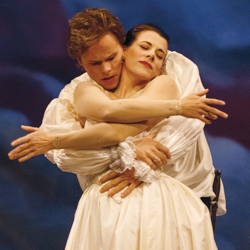
Opera Atelier is a perennial favourite experience of mine---especially because it is accompanied by Tafelmusik: one of my true Torontonian passions.   Orpheus and Eurydice, as explored in jubilant and buoyant colour and celebration of dance, song and love, by the talented repertory company is the perfect gateway opera. If you have not yet experienced opera or are reticent about it being dire and over-handed and sprawling ( and long), then this compact retelling of the famous myth is perfect. It looks and sounds extraordinary, it employs Hector Berlioz’s Victorian revision (and cross-dressing) and it never takes itself too seriously.  The ballet sequences are lush and gorgeous and crinolines sweep swiftly across the stage. Everything is mesmerizing. The music, too, is some of Gluck’s most familiar and will stay with you long after the final note. 

A night at the Elgin is an experience in and of itself ..... so make sure you go and see our OA friends in their perfect habitat. 


stage-door.com


My theatre goer Melanie can be found here 


Wednesday, February 25, 2015

Theatre!!!!

Theatre Theatre!

What is going on in the world of Torontonian Theatre?   I haven’t re-capped what I have seen in a while.

Before Christmas, a friend and I saw Arcadia: the Tom Stoppard rubik’s cube that still hurts my brain when I think about it.  It was so transcendentally intelligent as it switched between the present and a room of scholars and the Regency.  It was a wild maze of philosophy and romance and ideas and I have trouble winding my brain around all that happened.  It was more an exhilarating brain-dance than a night out at the theatre and I could deconstruct forever the platitudes it hoists itself upon and the vulnerable lows and depths it scrapes with its fluent and fragile word-span.

I loved it.


A friend and I saw Spring Awakening at the Lower Ossington a few weeks ago and I wasn’t sold on it.  Prior, I think the last Torontonian show I had seen was the usual Wicked launch that shows up every few years.


c/o the Star


On Saturday night, we trekked down to the Berkeley to see How Do I Love Thee: a painfully beautiful exploration of the tragic love between creative forces Robert Browning and Elizabeth Barrett Browning.   Honestly, it was wrenching. First, it was light and airy as correspondence was exchanged between the two poets, name-dropping Wordsworth and Coleridge, and their letters (literally) filling the air.  To add, the director staged bawdy innuendo that flitted in perfect beat alongside the passionate letters crossing between them.   They intersected---emotionally and creatively--- and eventually decided to marry and take off to Italy. Penniless.  But, once they wed, Barrett Browning (Ba, to her friends) showed a side more Kubla Khan than Westminster Bridge: she was addicted to opium to laudanum and to brandy.   A love story more like a wretched passion piece, How Do I Love Thee takes the idea of two people trapped in a marriage unsure of how to make their creative minds soar while bound to the expectations of each other, their patrons and the world.  It also delves deep into the heart of addiction: made more tenuous by the fact that it propels creative juice.

One of the most vibrant and sensual pieces of theatre I have seen--- it is equal parts lusty and erudite, passionate and sizzling ---it buzzes with words and the two titular characters step into the skin of these Victorian romantics and move around so comfortably I was surprised I wasn’t watching an age-old film reel.

Definitely made me want to exhume all the bare bones knowledge I had on both from my time at University.


c/o Manitoba Theatre Centre 

Last night I saw the pre-Broadway production of The Heart of Robin Hood: a Shakespearian, cross-dressing acrobatic affair which reimagines the legend in more of the BBC vein than the Errol Flynn. Here, it is Marion who is the brains and guts behind the outlaw operation,  two steps ahead of the weaselly Prince John and the maniacal Guy of Gisborne.  Featuring the anachronistic musical flare of Parsonsfield, it is a buoyant but odd production that was a little too pantomime for my taste. That being said, the staging and the lush green set (used to within an inch of its life ) was breath-taking to behold.
I quite enjoy re-imagining Marian as a cross-dressing, sword-wielding force of nature more at home in the forest than in the traditional upscale life meted out for her in the castle.  There was a nice zest of feminism here tempered with the slow, expected romance---- but even as they wed you know that Robin will meet her on equal terms.


Sunday, January 12, 2014

More proof that Toronto is the coolest city in the world

My musical theatre life started with Colm Wilkinson because he played Phantom of the Opera and Valjean here as I was growing up. In part, my love for theatre developed adjacent Colm Wilkinson's electric performances which I, being a Canadian near Toronto, had the privilege to see.


Ramin Karimloo, a native Canadian treasure ( having lived here since 1989, I would say that Colm is an adopted treasure ) is now set to perform the role of Valjean on Bway.

Last night, I attended a brilliant, brilliant and unforgettable performance wherein Colm played the Bishop and Ramin killed it as Valjean (it was my fourth time seeing him this round. RUN TO BWAY and get tickets when it heads there in Feb ).  The cast upped the ante, the orchestration was spine-tingling and at the end: they did this.


.


And you're all like: stop going to Les Miserables. Which is valid. But, last night was for charity :)


Wednesday, July 31, 2013

I take to writing again --- this time --- I can write about what I know: My CITY


As an aspiring writer, I realize that I need to keep my fingers tapping and my creative juices flowing.

There is a lot about writing that involves silence and waiting.  Rather than think and muse upon the finished book, I am encouraged to keep moving onward and upward producing more and keeping my little brain-wheels turning.

I wrote my first novel in a very intensive spurt and was very exhausted after it.   The querying and landing a place with an agency, the proposal and submission guidelines, the last-minute edits and suggestions--- all of it was scrunched together in the beginning part of this year and I needed a breather---which I happily took. To read, to recharge. To socialize with the people that I ignored while I was Boo Radley-ed up in my apartment and to watch baseball.

But  my fingers have started tapping again for a fresh new series idea: something that ( and this is the amazing thing about literary agents, they have brilliant ideas strewn from their close attention to market needs and trends) without a planted suggestion I never would’ve thought of trailing.

So now I am off and down the rabbit hole, hoppity hop, and giggling like a mad-woman because it is so silly and yet. so. Me.


As much as I enjoy the idea of my imagination planting a kernel which sprouts into a story of my own mental fruition; so I enjoy picking up a bread crumb and following a trail.

While my previous books (some in embryo ) take place in Eastern Canada, the new series idea is here. At home. In Victorian Toronto.

This locale is in and of itself, an exhale of relief for me.  While I am familiar with Nova Scotia from several trips and visits and musings and research, Toronto is my home.  Not my hometown. But, my home.    Weaving through the Old Town Toronto---through  the St. Lawrence neighbourhood, down Jarvis and the beginnings of the City of York. I love Victorian Toronto.  I love Toronto in general. I am in love with my city and setting a book here just sends little shivers down my spine because my city is so ingrained in my consciousness and so accessible.  When I write of Halifax I still  rely on a map. I don’t need a map of Toronto, I can walk its circumference with my eyes closed: looping down alleys, taking lesser known paths, following the peal of the St. James Church bells.  I know the smell of the harbour and the slip slope of the skyline as it would have looked before we planted skyscrapers. I know Toronto.

So I am kind of in love with this new book idea because I am kind of in love with where I live.


And while I am in love I giggle at the prospect and where my funny little brain comes up with this stuff.  Like, really giggle.


Giggle like this, giggle.


Saturday, December 29, 2012

Dickens on Screen: A Retrospective

A few weeks ago I had the privilege of attending a series of screenings and lectures on Dickens on Screen at the TIFF Bell Lightbox.

I have summarized it and this is posted over at Dickensblog.  Take a look.

Thanks, Gina... for letting me ramble :D


Monday, December 17, 2012

DICKENS DICKENS DICKENS DICKENS DICKENS

I have had the most amazing and informative weekend of Dickensian bliss.

Right now, at the TIFF Bell Lightbox, they are screening a multitude of Dickens films  in honour of the Bicentenary.


Since Thursday, Toronto has had the privilege of having Adrian Wootton ( late of the BFI and the curator of the Dickens and Film project) on hand to lecture and to introduce some of the fabulous and rare footage and films offered to avid Dickensians.

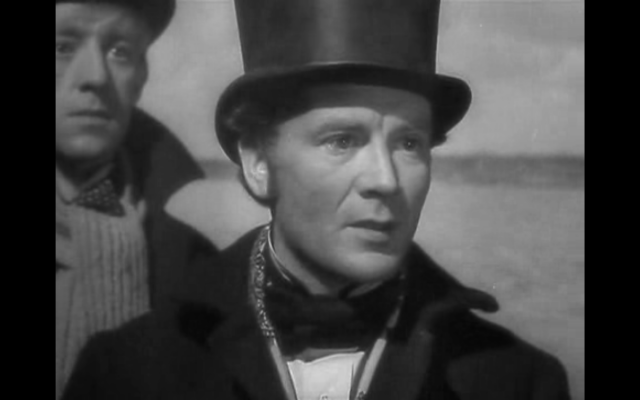
Thursday night, it started with the beautiful 1946 David Lean adaptation of Great Expectations; then continued Friday and Saturday with an array of lectures and screenings and.... oh my!

It  has been one of the highlights of my year. I enjoyed settling into Cinema 4 of the TIFF Bell Lightbox and immersing myself in all things Dickens.


As a precursor, I attended the Soulpepper Production of A Christmas Carol on Wednesday evening couched in the beautiful Victorian Christmas market.  At the same time, in the same place, the Word Festival 2012 celebrated Dickens with ongoing, voluntary reading of A Tale of Two Cities streamed everywhere in the world.

I will be writing about these lovely things in more detail; but wanted to check in on my blog readers and let them know that, yes, I DO live in the most magnificent city in the world.


WHAT LARKS!

Wednesday, November 07, 2012

Film Review: Showstopper: The Theatrical Life of Garth Drabinsky


I was lucky.  My passion for theatre developed in the brief, shining and glorious decade when Toronto, ranked with New York and London, was the theatre hub of the world.  Even though I lived in little Orillia, my nights were spent singing along to soundtracks; my days in school dreaming of the next production my family would see in the big city. At that time, Toronto theatre was at its height of varied artistry and endeavor.

It was the era of big Blockbuster Musicals. Before the age of the JukeBox musical and when everything was fresh and new and beguiling.  It married classics (the great revamp of Show Boat) with edgy kaleidoscopes of music and colour: Joseph!  Ragtime!! Les Miserables. Phantom!
Toronto in the 1990s was when I first knew it. Because the 1990s was the decade in which this 31 year old came of age.

Our assistant pastor’s wife loaned me The Canadian Cast of the Phantom of the Opera when I was in  grade 7 (Colm Wilkinson! Rebecca Caine) and I was hooked. I begged ( and got )vocal lessons from my parents so I could sing like Christine and I borrowed the Gaston Leroux novel from the library. A love affair was born. Very soon after Les Miserables followed, the singing continued and the incessant reading of classics began.  Not only classics of literature; but classics of the stage.  I was obsessed with the early beginnings of the stage: of operetta, of Gershwin, Porter, of the years that led us through the Golden Age to the modern renaissance. Indeed, musical theatre in the 1990s was evolving, yes, but often a renaissance.

Fortunately, for me, the city not too far-- with its lights sparkling and its performances awaiting-- was filled of touring companies and the productions that settled in for long, languid and brilliant runs. Lavish productions at beautiful theatres. Often productions would test here before heading to Broadway. Audra McDonald and Brian Stokes Mitchell in Ragtime , Clorish Leachman et al in Show Boat, Donny Osmond in Joseph! we were the perfect breeding ground. WE HAD COLM WILKINSON ( I have seen him on stage countless times)  The Mirvishs ran half the town ( The Princess of Wales, Royal Alex, the Elgin, the New Yorker which is now the Panasonic) and Garth Drabinsky’s Livent had shows at the Pantages ( now the Ed Mirvish Theatre) The Ford Centre ( now the Toronto Centre for the Arts) and the Hummingbird (now the Sony).  This was, as you can tell, before the days of sponsored signs when theatres were just like stepping back into a slice of heaven.

[COLM FRIGGIN' WILKINSON]

God in heaven, I was obsessed!  I saved my ticket stubs, bought programs, leafed through the playbills, recognized all the Canadian stars, geared up for the next production, asked for tickets for Christmas and birthdays. I LOVED miniBroadway!

Garth Drabinsky and his ilk fed my creative consciousness. Showstopper: the documentary which exposes the rise and fall of his fraudulent empire took me on a bitter-sweet whirl through the past. On the front, it was an excavation of Toronto in the 1990s. I moved here in 2001 and so while I was a visitor, it had yet to become my home. And yet, yet I remember the way it looked and how exciting it was to come on a visit.  To go to the theatre.

The documentary itself is fascinating especially in how it unravels the destruction of an empire; but how it best worked for me was as a recollection of what the theatre experience used to be like: a treasured and certain thing: a major event.

I have been to London’s West End, to Broadway, to the  great opera houses of Austria. I have seen more of the world in my adult life; but the magic of my formative years as a theatre attendant is unparalleled.  Certainly I live in the city ( where theatre and performance still thrives, if on a somewhat different scale); but while it is still special it is more readily available and it is the  build-up to a performance that I miss.

My family dressed up to the theatre. It was an event. We would talk about it before and after, we would sit quietly as in church reverently watching the action on the stage.  Vendors didn’t wander up and down the aisles dolling out ice cream and beer, cell phones were owned only by the police and Zach Morris.  The only light that occasionally went off was an illegal flash from a hand-held (non- digital ) camera. But, for the most part, audiences behaved differently.  The theatre was a place of reverence.

The film struck a dim chord with me mostly because it caused me to exhume what had long been buried: that moment, that memory of what it REALLY felt like to see a show: the orchestra tuning in the pit, the applause as the conductor wove his way to the front of the musicians, the first cymbal clash or note played, the first action on stage when the red or dark blue curtain was pealed back.   With the end of Drabinsky and Livent came the end of an era: not only for Toronto but also for Broadway. Things are different now: the scales and subjects and calibre of shows are different, the audiences are different, the producers and creators cater to different (and often absurd ) audience needs.

Anyone who is interested in the Blockbuster Age of musicals, in the Tony Awards, in any of the Livent mounted shows will appreciate this bittersweet piece.  A favourite moment occurred in one of the many great interviews (Elaine Stritch, Chita Rivera are just a few of the famed interviewed) where legendary Dihann Carroll speaks to Drabinsky’s risk in casting her as Norma Desmond in the Toronto production of Sunset Boulevard.  Here, Drabinsky broke the mold and a colour barrier.

This took me back and I think it will take a lot of people back: back to an age of my city before Yonge and Dundas Square, before SARS, before the insane amount of box stores and digitalization where the City was an adventure and not a sponsored entity.

Garth Drabinksy knew the moment The Lion King won the Tony that Ragtime ( his stake in the race) and his empire would soon crumble. I doubt the Toronto theatre community recognized that, on a smaller scale, it was also ushering the end of an era.

[if you don't know about Garth Drabinksy, read the wikipedia article and do a google search http://en.wikipedia.org/wiki/Garth_Drabinsky]

Friday, September 14, 2012

FIlm Review: 'Great Expectations, 2012'

Gina at Dickensblog was kind enough to post my review of the 2012 Great Expectations which debuted at the Toronto International Film Festival the other night....complete with my blurry blackberry pic :)

Take a gander at dickensblog


Thursday, June 21, 2012

Get your Canuck on, Kids

Next week.... all week.... at a blog near you......

we celebrate ALL THINGS CANADIAN in anticipation of CANADA DAY!


  • The Hey Canada! Blog Tour
  • The Canada Day Blog Hop
  • Giveaways
  • The Great Canadian Book Quiz
  • LM Montgomery
  • Sunshine Sketches of MY HOME TOWN
  • Nova Scotia
  • Guest Stars ( mainly Rachel's Canadian friends that she roped into doing stuff...)
  • the BEST in Canadian SCI FI, FANTASY, YA and LITERATURE
  • shameless promotion of the GREATEST COUNTRY on EARTH

and, last ( but not least) AWESOME CANADIAN VIDEOS

(like this one )


So, you hosers, get your poutine, eh?  and grab your toonies and loonies and go oot and aboot until you find yourself here.  Pull up your chesterfield, drink your Tim Hortons, gargle some maple syrup, chomp your ketchup chips, eat your smarties (serviette, please) and DVR your Flashpoint and your Rookie Blue; because we are going to have a regular old Canuck Style PARTY (le party en francais )

International visitors will learn more than they ever wanted to know about our history and our penchant for writing really, really bad provincial songs (like this one):


Wednesday, June 20, 2012

Sad Day in Bookland

When I was a kid and in my teen years I loved going to Toronto.  This small town Orillia girl always had a hankering for the big bustle of the city and it was inevitable I would eventually move here.  My minister father would sometimes have to come to Toronto to visit ill parishioners at one of the city's major hospitals.  I would tag a long and sometimes would find hours to myself betwixt the shelves of the World's Biggest Bookstore.  I loved it.  As a book lover who had just started collecting books, I was in heaven and remember buying my very first copy of "Tender is the Night" and "Little Women" from its fiction section.   I was at the point where I was no longer re-signing favourites out from the library; I was starting to collect.


Reading about X-Wing pilots on a  WBB visit 2 summers ago


Indubitably, the first thing I did when I started as a student at the University of Toronto was apply for a job there.  For 4.5 years as I completed my degree, I spent my after school hours working ( if you can call it that).  To work there you needed to know about books, be passionate about books, have diverse interests and tastes: interests and tastes I honed and developed spending hours between the bookshelves and speaking on a myriad of subjects with regulars and tourists, people from all over the world.

I also met some of my closest friends there ( including KAT twitter handle:@bitwhizzle) : students like me working part time who loved books like a disease.  They are some of my best friends to this day......


This place is more than just bricks and mortar; this place is part of my spirit, part of who I am.....

As we draw closer towards its inevitable demise, I will continue to traipse down memory lane.  This place built me as a reader and that is the most important thing to a biblophile.....


Sunday, May 27, 2012

Theatre Review: West Side Story


{pictures used are from our touring cast}


A girl friend and I traipsed out to the Toronto Centre for the Arts the other night to see the new Broadway production of West Side Story: by all accounts one of the most memorable and difficult musical undertakings in the history of theatre.

We are all familiar with this story: many from the popular 1960s film and many from recognizing the many, many famous tunes ripped from Leonard Bernstein's score ( as lyricized by Stephen Sondheim).  In short, the story tells the tale of two star-crossed lovers: the young and beautiful Puerto Rican girl Maria and the dashing former-gang member Tony amidst the gang violence of warring West Side Jets and Sharks and the juvenile turbulence stemmed from racism, hormones, lust, delinquency and passion.


This is very much, like its source material, Romeo and Juliet  an exploration in teen angst.  We find it hard to believe that Maria and Tony could look at each other at a colourfully confetti-lit school dance and fall immediately in eternal love; but we do DO believe that they could fall into teenage lust and so, their tragedy, is acting on their hormones.

As with the Jerome Robbins' choreography ( famous for its ballet-infused fight sequences, incessant snapping and moments of sheer, lucid dream-like fanaticism), the play itself moves liquid and fluid through a timeless world of heart-palpitating action and stern moments of sheer, stolen bliss.  The score is, indeed, another character in the triad of Tony and Maria's renowned tragedy as it propels all action with minor chords, odd-incidentals, clashing score and melancholia.  It is, I believe, one of the most operatic score treatments in musical theatre and, as a vocalist who sings Maria's part along to CD recording for warm-ups often, is cringe-worthy in the sheer magnitude of its forced effort.   To do West Side Story justice, you need, need, NEED to have a flawlessly talented vocal cast. Fortunately, this is where the production excelled. 

There are some noted changes to this most recent adaptation which gained a lot of buzz during Tony's season a few years ago when this production was re-mounted: most popularly the fact that many of the Sharks songs and dialogue is performed in Spanish rather than English. I thought this was brilliantly effectual and allowed the audience to greater sense the divide and the misplaced diaspora plaguing the young Puerto Rican teenagers who idealized America clashed so greatly from the harsh reality they are daily confronted with.  This is not a land of dreams but of ignorance and misunderstanding.
This tension, and the conflicts erupting continuously between the feuding gangs was well-placed against the brash diagonals of the set design and the odd, melodious lighting which painted dream worlds and dirty street-corners.


The performers were pitch-perfect, the singing was as ethereal as the playful and complex score and the choreography harkened back to that we know from Robbins' original conception.   My one complaint was the odd way in which the song Somewhere was realized: here, with Tony and Maria sharing the stage with the young, androgynous Anybodys: the feisty tomboy who yearns to be a Jet rather than a girl.  While they muse on what could be the rival gangs are seen dancing liquidly against a backdrop which recalls a fantasy island.  I found it odd and disconcerting: especially for one of the landmark numbers in the show.


All-in-all a GREAT production and it is touring everywhere: so, for my Toronto readers, catch it here; for those elsewhere, look for it nearby

Thursday, April 05, 2012

'War Horse'


Last night I saw the National Theatre’s Production of War Horse at the Princess of Wales here in Toronto.  Based on the best-selling novel by Michael Morpurgo and inspiration for the recent film (my review here), War Horse is a steady and episodic tale of the love between a horse and his boy amidst the turmoil of the Great War.


Raised from a foal by Devon farmboy Albert, Joey grows spirited and special: a plough horse even though a natural, thorough-bred hunter, and a constant companion to his adoring master.   Albert’s oft-drunk father Ted breaks a promise to his son and sells Joey to Major Nicholls when the bells toll and the outbreak of England’s war against Germany commences.  Joey finds himself on both sides of the lines in France and Albert, underage, runs to join the conflict in hopes to find his Devon Yeomanry and bring his horse back with him. A powerful and resonating tale as old as time: of an animal/human bond forged greater still by absence, War Horse is a touching story.

The play itself is magnificent, ultimately because the staging is so unique and the horse puppetry (propelled by humans at first visible through the skeletal structure of the horses until they blend behind the camouflage  of imagination) is so excellent.  The sets are simplistically haunting with a scrap of paper: as if torn from a novel or a page of Major Nicholl’s sketchbook spans the back of the proscenium arch matching the action of the players with sketches evoking Devon’s spires and farm fields and, later, the tyranny of the Somme and the action in No Man’s Land.  The action of the story is often interrupted by a wandering minstrel who sings old  Northern tunes while playing a fiddle.  While this was effective when backed with the harmonized chorus of the cast, it was sometimes off-setting and distracting: as you would settled into the quiet action and disturbance of a scene only to be drawn out by a repeated ditty.  The “canned” music which offers soundtracked canvas to the story can also seem a little melodramatic: sometimes silence is indeed better.

The play develops Joey and the physically grander Topthorn as living, breathing characters whose interactions with humans form the crux of the story. Indeed, it is through the eyes of the horses forced into War that humanity is exposed: from both sides uniting to untie Joey from barb-wire to the young French girl Emilie and the conflicted Calvary-officer Friedrich Mueller bonding over their common interest in the horses.  

Why War Horse works so well as a story is that it takes a bird’s eye (or horse’s eye) view of the War while evoking all sides of the War in an unbiased and gentle way: there are characters from torn France, Germany and England all moved by their exasperated situations and extracting the emotional investment of the audience.  Often, the horses are the common denominator in this bleak world of bloodshed and horror.

As mentioned, the staging is really quite remarkable: some scenes, including the trek of the soldiers and the horses bobbing along with a multitude of ships from Dover to Calais across the channel is artistically rendered and quite breathtaking.  The pulsing nearness of a life-sized tank and the ricocheting sounds of artillery and machine guns are also present and alive.  The audience is more drawn in by the usage of the entire theatre as a space for action: the horses and players widely use the aisles to run back and forth spreading the canvas of the stage to the entire theatre. I sat orchestra just right of center and had a beautiful view aligning the action; but still far enough back to not see every wire and detail. 

The story itself is  an exercise in simple magnificence: farm boy far from home trying to reconnect a severed bond between himself and his spunky horse.  The end of the story will move anyone to tears and the well-familiar lump in your throat will recur throughout the action.

This is a wonderful piece of theatre, expertly staged.  Further, it is a lovely homage to a hard-to-tell novel by one of the strongest writers in contemporary children’s literature.


Friday, September 09, 2011

Wuthering Heights: 2011 dir. Andrea Arnold

From the Toronto International Film Festival Programmer's Notes:No starched lace, no panoramic views, no sweeping score — Andrea Arnold has reinvented Wuthering Heights.  
director Andrea Arnold

This Bronte Aficionado has been fortunate this year: first, I had the privilege of attending an advanced screening of Jane Eyre  (my review here) and tonight I had the opportunity to attend the North American premiere of Andrea Arnold’s bold new Wuthering Heights at the Toronto International Film Festival. According to the director’s preluding talk, this film was only finished last Thursday and I am one of the first appreciative handfuls to have witness it on screen.

Before I speak to the visionary adaptation, I feel led to couch my opinions within a broader framework. First, I think when speaking to Wuthering Heights, we should reserve the term Romance to infer its original, philosophical connotation and not its inclusion in modern sensibility (namely, flowers, kissing, sweeping violin music). Secondly, I must confess to coming to this story through a lens of someone who appreciates the source material; but has been more befuddled than fond of  it. Truthfully, I have not read Wuthering Heights since high school. I referenced it in undergrad; but never a full-on re-visitation. However, to speak to the novel’s stoic implantation on my formative psyche, tonight proved that reams of its prose are still firmly housed---verbatim--- in my memory….Why?....
"Heathcliff" and "Catherine" at a screening at the Venice Film Festival

...Because Wuthering Heights acts as empathy to our darker, stormier sensibilities and Arnold’s vision encapsulates this vapid and bleak spot. This is not your Grandmother’s Wuthering Heights with flowerily cravat-ed Laurence Olivier, nor is it your Masterpiece Theatre Wuthering Heights. This adaptation strips the novel to its barest infrastructure. It reads between Emily Bronte’s lines and excavates what is implied; yet previously unsurfaced in film. In a line of adaptations which blot out sensual realism with swelling music and refined, passionate poses, this adaptation dares to go where we don’t want Wuthering Heights to go: beyond the seeming endless romance to the sinister world of abuse and alienation.

As does the novel, the film begins with Heathcliff book-ending his relationship with the now deceased Catherine Linton, nee Earnshaw. His dirty fingers greedily trace their imprinted names on crude cement (writings on the wall are a major motif in the film), his forehead bears the marks of self-inflicted despair and the window above him is victim to the portentous scraping of branches against grimy glass.  From here, we begin Heathcliff’s journey as residual outcast on the humble farm, Wuthering Heights.

While I took notes throughout the film, my perception of the film will be at times infused with Arnold’s speaking to it in the  Q and A following. Relevant here is passion for location.  She wandered Emily Bronte country and found that unlike the grand estates our mind’s eye might paint when we hear the names Wuthering Heights and Thrushcross Grange, her encounters were with humble hill farms, bleak solitude, and couplings of houses that never once stretch to becoming a full village or hamlet.  Into this solitude wanders Heathcliff, a tow-along by the proprietor of Wuthering Heights, the violent Mr. Earnshaw.  Bronte describes Heathcliff as having the physiognomy of a “dark skinned gypsy” and here, reasonably (and cited at least 6 times in the novel, according to Arnold’s research), played by a black actor. 

From Heathcliff and Cathy’s first encounter they are tied by a virile passion which very much pits them (and pairs them ) against the stormy land which they love.  As much as Heathcliff is abused by Cathy’s older, envious brother Hindley, so Heathcliff and Cathy abuse each other: wrestling often physically for an odd equality.

Their developing relationship is told almost wordlessly and entirely through Heathcliff’s perspective, as the whole of the film is.  Through chinks in broken glass, the sliver of light through a crude door, always barred and alienated, we see the workings of this dirty farmhouse through Heathcliff who desperately wants to find belonging in a home without homeliness. He is given half a perspective, often, as he is given half of a thriving life.

His is a cold world and the elements match his rather stormy and ardently violent make-up.  A sensuous film, the cinematography sweeps through the Moors: gutting the murky under-earth of torrid soil, catching a small bird or bug mid-flight, the bloodletting of a sheep, a rabbit caught in a trap.  Heathcliff is paired with animal characteristics: he is the trapped rabbit, the hounded dog, the butting horse.  It is an elemental and earthy film which sets the landscape up as the character it plays in the novel.  Don’t expect a soundtrack to lead your emotional experience as the noise bleating from the screen reflects the bold nature therein: the breathy grunts of a horse, the panting of a man out of breath, the sound of a whip against Heathcliff’s punished flesh.  Arnold spoke to how she wanted you to feel greatly while watching the film and throughout I noted how sensuous it was: from Heathcliff running his hands over a wool carpet, or touching Catherine’s hair, to the scrape of firewood, to frozen breath escaping in the bleak midwinter, Arnold uses her canvas well.

What is not spoken is surmised and what is spoken is done so when only in Heathcliff’s hearing. This is his story so the famous scene wherein Catherine reveals she means to marry Edgar Linton, while still loving Heathcliff, is truncated by Heathcliff’s abrupt leaving.


As Victorian psychology played with the idea of “good blood” and “bad blood”, original sin and inherent evil, so this exploration of cruelty speaks to how one’s circumstance, experiences in compassion (and likewise droughts without) inform one’s later years.  In a strangely sad cycle, the film which begins with Heathcliff tormented as an outsider, ends with Hareton showing the same sadistic tendencies: trapped at Wuthering Heights, treating harmless animals the same way he feels treated.

Human nature is starkly observed here.  This is not Romance in the traditional sense.  This is not a warm story and certainly not one I would recommend to those who love period dramas as played by the BBC.  However, for Bronte purists, this adaptation is a must.  While you will rail against seeing this resounding classic stroked with grey, you will admit this visceral and vapid incarnation speaks to the level of Bronte’s dimensional psyche. 

Arnold spoke of being confounded by the book, found it a work that she feels is unable to be translated into another medium. She had never seen previous adaptations and so took her vision directly from the novel.  She hit on points we rose-gloss over in our need to derive some proper sense of sentimentality and sensuality   Wuthering Heights is a novel based so much on undying love as undying lust, of strange, sadistic passion, obsession and the need to cling to the one human who acknowledges you with even the slightest bit of companionship. When we see Heathcliff desperately clinging to Cathy’s dead form we know that he is trying to extract any bit of warmth that might still hold him to earth.

 Arnold joked in both pre and post talk of how everyone will need a really stiff drink or two after the viewing and how sweet dreams will come only with valium.  She was right: this is an utterly disturbing and horrifying film. But, at its basest, so is the novel.  We can wrap it in a neat package and serve it to high school students: tapping into the innate anger they experience with their growing pains and capitalizing on raging hormones that echo the teenage virility of Catherine, Heathcliff and their surrounding moors... but this is a dark and hopeless exploration of the darkest recesses of human spirit. Heathcliff is not a loveable roguish bad boy. Instead, he is a sadistic abuser: to Catherine, to Hindley and Hareton, to animals, to his wife, Isabella, and mostly to himself.

As there is no redemption in the novel and as Cathy’s ghost, still bleeding formlessly out on the moors, never quite materializes in the way Heathcliff curses it to, we are left feeling empty, horrified, beguiled---  Moreso by the fact that a parson’s daughter with little social connection in the wide spaces of Ha’worth could construct such a confounding plot than by the “timeless” and “epic” romance enduring between two of the most problematic and unlikeable characters in the Western Canon.

[Thanks, Kat, for making this happen!]

Note: this film is disturbing with scenes of animal cruelty, violent abuse and realistic sexuality. This is not, as mentioned, your typical Masterpiece adaptation of a classic and before you hunt it out on screen, you should go in expecting to be shocked by its mature content.

Thursday, August 18, 2011

Books I Wouldn't Usually Read VOL I: From This Moment On by Shania Twain


In this, the first edition of Books I Wouldn't Usually Read, I speak to From This Moment On, Shania Twain's autobiography which I (score!) borrowed from the Toronto Public Library


Oh Shania Twain: you're like Canada's Cinderella!

I must confess to having never been a fan of her music; but having been appreciative of her background and the fact that she seemingly remembers her roots.
Truth be told, you aren't going to pick up this autobiography for earth-shattering statements on the state of the world; nor sparkling of literary merit. However, if you, like I, are beguiled by human interest pieces that frame a rags-to-riches journey, then this book is worth a go.

Shania blatantly speaks to the severe poverty her family endured during her formative years. Indeed, this experience fills half of the book ( which is largely devoted to her family, her upbringing and her memories of coldness and malnutrition). The other half is devoted to her role in the music industry and her climb to incredible success. I was more attuned to the steps that led her to the top.

Shania is at her strongest when writing about childhood memories like playing with blades of grass, walking home from school with her siblings in the harsh Canadian winter, or singing for relatives at holidays. Her shards of memory paint a sharp contrast between the life she led as a youngster (descriptions include a maggot-invested basement carpet and her father making mustard sandwiches on account of their being nothing else for the packed school lunches) and the life she leads as one of the most successful recording artists in the world. The sublimely humane recollections of the past help ground her successful future. Though at the opposite end of the social spectrum, her upbringing and the tragic early death of her parents informs even the latter part of her story.

For those hoping that her autobiography will colour in the blanks of her well-publicized divorce and personal love life, I found that Twain wisely stayed minimal when speaking to the circumstances surrounding the break-up of her marriage. We all know that I am not a celebrity gossip girl and one of the greatest attributes of Twain's tale is that it speaks largely to human experience and emotion and doesn't prey as heftily on celebrity.

The book did not contribute to my opinion of Shania Twain as an artist and I must say I am as disinterested in her creative output musically as before. However, like all Canadians, I recognize her contribution to our presence on a national front and as such respect her as an individual--- more so now that I have heard first-hand some of the travails she overcome to fulfill her lifelong passion.


Wednesday, July 27, 2011

Women's Pulp Fiction: Now we KNOW where chicklit comes from


Have you ever read the Best of Everything? Well, you should. It’s about promise and hope and career girls who smoke cigarettes and drink coffee out of jars and hang out with dashing men.

It’s also scandalous for its time: with abortion and affairs and women abstaining ( or not ) from sex and talking way too much about all of it.

It features a publishing company at the end of the 1950s and a girl who is driven to become an editor and often sacrifices relationship for career.

A career? For a woman? In the 1950s? As fast as you can say TV Dinners, Jello and Spam, every preconceived notion you had about women of this era is stripped by the author to reveal a woman’s work world: with the same gossip, double standards and salary issues many young women face today.

It was made into a film, by the way, with Joan Crawford and Hope Lange and Stephen Boyd ( did I mention Stephen Boyd?) and Louis Jourdan ( but I think I need to mention Stephen Boyd again).

My friend Martha loaned me Skyscraper by Faith Baldwin ( a little pulp gem she had discovered at BMV here in Toronto) to take with me on a trip to New Orleans. I read it on the plane and then by the hotel pool.

Basically, the novel, as in the Jaffe story, features a young career driven woman. This time the scene is New York in the 1930s and the depression is keeping many from flourishing work. While our heroine dreams of climbing the company ladder, she is also severely loyal to her fiancé. Problem is, if she marries, she is no longer employed. During the depression years, jobs were given to those who didn’t have a support system: to marry meant a woman no longer “needed” to work and thus ambition was replaced by a docile domestic realm of motherhood and servitude.


What this incredibly cheesy ( at least to our standards) melodrama does is prove a very pertinent and lasting point: that women often feel they must choose one or the other: family --- or career. Though written and published near 80 years ago, this novel is surprisingly still relevant. Sure, the toned language, the hair rollers, the sweet dates and dutch treats and “wild” girls have been replaced by all of the mumbo jumbo that revolves around our 21st Century life--- but I don’t feel that the circumstances that plague said career girl are that different. She feels judged for choosing ambition over love and judged for feeling attraction to a man who doesn’t fit into the cookie cutter social status she is a result of .


These are two very interesting “chicklits” of yesterday which surprisingly feature the same ingredients as our modern fare of the same ilk: clothes, drinks out with boys, talks of sex and illicit acts, an obsession with shoes, double standards in the workplace and a wistful yearning for love and self-fulfillment at the same time. Sophie Kinsella this ain’t--- but you can see where she is coming from….


There are a few other titles in the same publication series as Skyscraper, under the umbrella Femmes Fatales: Women Write Pulp). Check out some of their other offerings, including the source material for the popular noir film, Laura.

Monday, June 20, 2011

Film Review: Midnight in Paris


Friday night I indulged in this splendidly imagined movie with a movie-going friend who has the world's most detailed eye for sets and costume. We both were spirited into a magical world that fulfilled the title character's dream life and I, so obsessed with Paris' once literary elite, was re-invigorated in remembering the authors and their lives as they stole through my consciousness in University.


I cannot talk of the Golden Age of Artistic Paris: the effervescent 1920s without casting a thought for Morley Callaghan whose own A Moveable Feast, That Summer in Paris so held my imagination in my early, creative 20s.


A snippet of what I wrote on the anniversary of Morley Callaghan's Birthday:


"Morley Callaghan would have been 100 years old today. And what a jam-packed century he would have had. He already filled more than a lifetime usually allots in the first fifty years. His best writing was done when he was young, his greatest adventures played out mighty early, and all of his literary flings and acclaims came at a young age. Yes, I have romanticized Morley's early years, what with their splash of Parisian panache ( and what with his clobbering of Ernest Hemingway---- don't make me get into the climax of That Summer in Paris as a Canadian literary metaphor again ), but he defines a golden age of sorts for me. I envision him wandering aimlessly around 1920's Toronto---every snippet of his life reading out of the pages of his novel, A Varsity Story. I imagine him, as I often was, curled up in one of the red leather chairs of the Hart House Library at U of T and looking over the courtyards and spires, slightly interrupted by the pealing of the tower bell.And then, there is Paris and Morley's dappling into the lives of the Literary Elite. He defines Paris for me. Whenever I think of it with its dazzling life, parties and pizazz, I rarely think of anything I did not read of in the pages of Callaghan's autobiography. Forget We Were all so Young or A Moveable Feast. Canadians had their own agent in the flapper years!


When I discovered that Allen's latest was an homage to arguably one of the most artistically important decades of the 20th Century, I was eager to see how his vision matched my imaginative strolls by L' Arc de Triomphe and along the Seine.


How impressed I was at the marriage of modern with fabled past. Certainly Hemingway, Gertrude Stein, Salvidor Dali, Scott and Zelda Fitzgerald et. al are characterizations against a backdrop of glittering, gilded golden age; but it is the treatise on the power of imagination and creative sundry that most beguiled me.


Modern writer Gil is disenchanted with the city he yearns to roam in the rain. He is constricted to Hollywood scripts and his naggy fiance seems to strip the romance out of a city he has long harboured a passion for. At midnight, every night, he is catapulted back to his Golden Age: there, he meets the literary and artistic greats fully realizing the wealth of the decade that has spirited into his nostalgic writing.


Of course, come sun-up, the world is gone and nought but the strains of a Cole Porter tune follow him from the starry beyond. What the experience offers him in terms of creative development and how he learns that each artist pines for an era that, when recreated, can only be drained of its spark and pizzazz, is magic....


Woody Allen understands me. He understood me in Purple Rose of Cairo when he allowed a fictional world to seep into the "real" one and he understands how, like the beautiful Adriana, I have long desired to spirit back to the 19th Century: the canvas of gaslit lamps and the clomp of hansom cab hooves. But, he also explains what is lost when we attempt to catch a fleeting moment. As enchanted as Gil's moonlight walks are, he is well aware that living in the past would only strip it of its incessant charm. That, like those who yearned to live in pasts before him, no one can completely capture the Golden Age. Like clouds or stars, it would evaporate quickly upon our fleeting touch.


‎Midnight in Paris was divine. Like Purple Rose of Cairo, it makes me feel like Woody Allen holds a slice of my psyche. It's a treatise on nostalgia: the Golden Age, La Belle Epoque. It tampers with we imaginative sorts and expels the subtle threads of revelry that steal into commonplace thought. It's magical, deliciously Romantic, delightful.


I referred to it as 20th Century Literary porn: if you have ever cackled at Hemingway's hyper-masculinity or snickered at Dali's obsession with animal abstracts then this is the film for you.


Allen is just as enchanted and obsessed as we are; but his eye and savvy camera glance re-affirm us that what is best dreamt stays just where it is--- in dreams.